
Loading, please wait...
LOT 0713
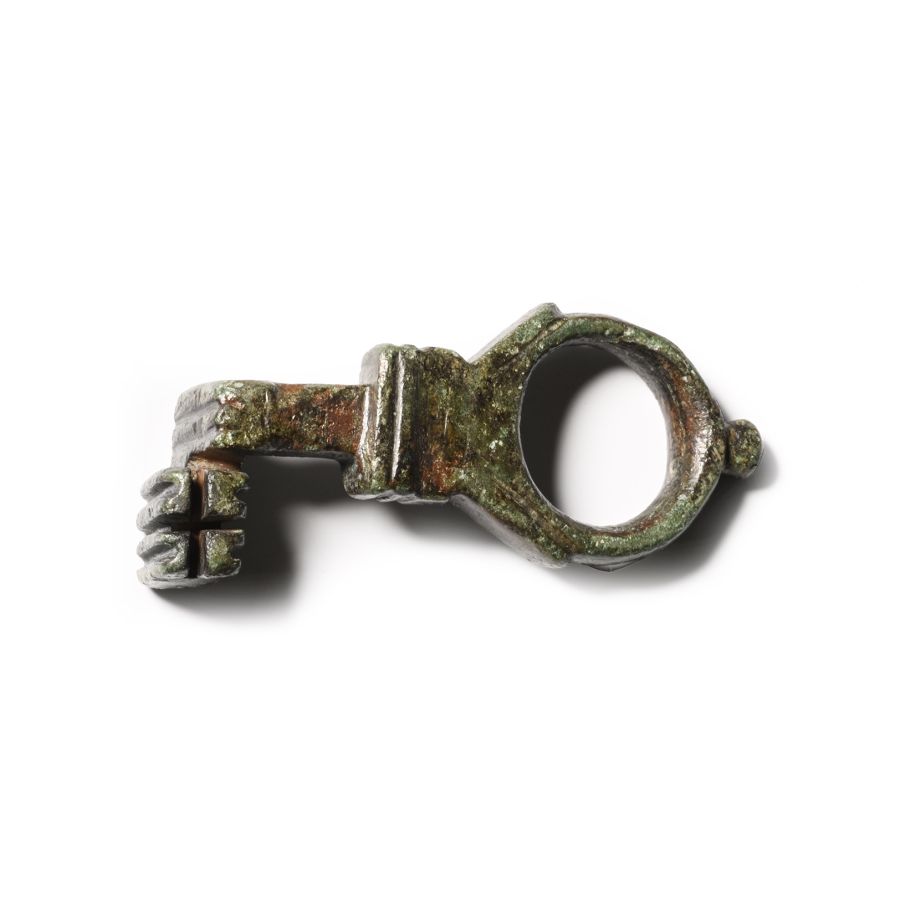
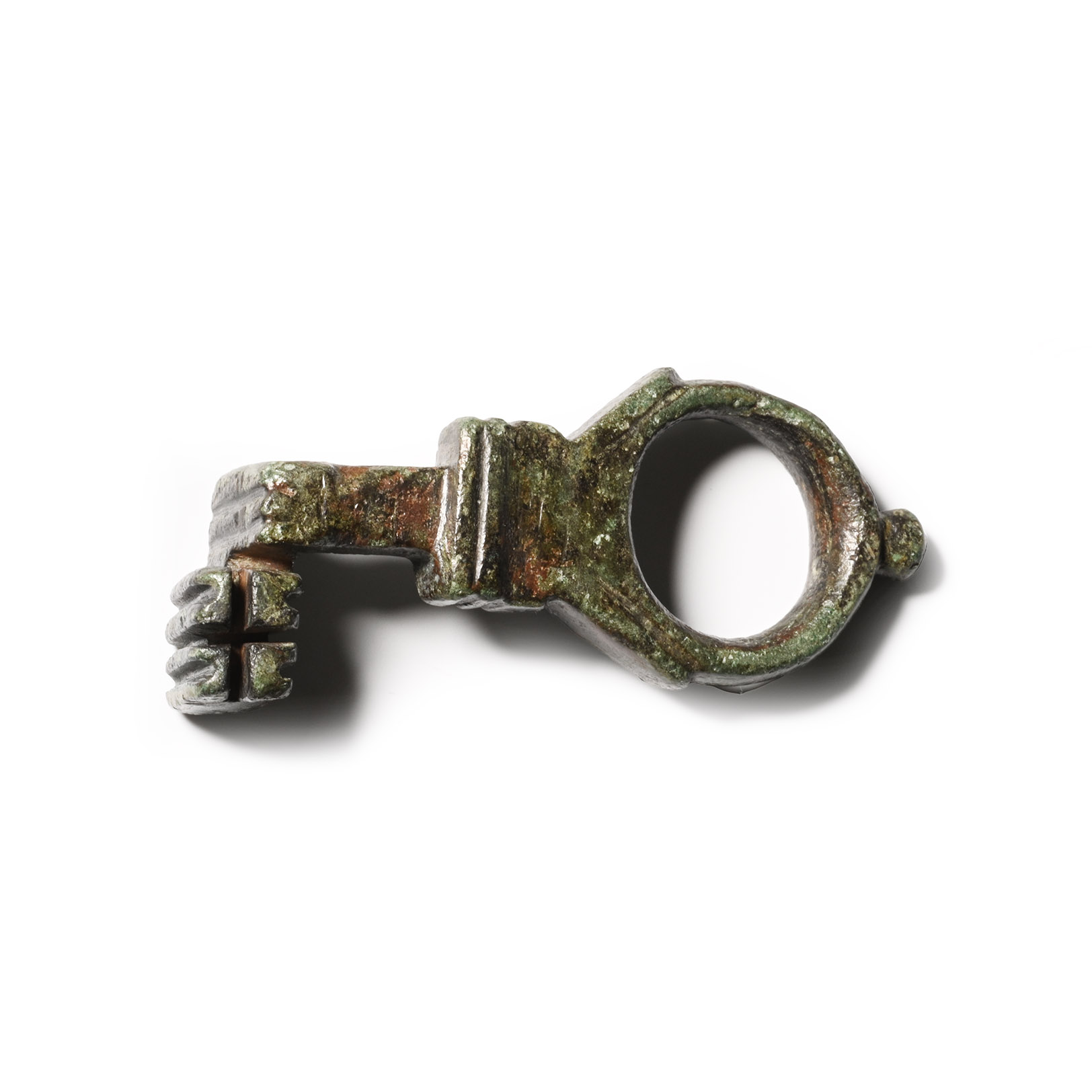
Roman Bronze Casket Key
CIRCA 1ST-4TH CENTURY A.D.
2 1/4 in. (33.2 grams, 58 mm).
With large loop handle and short shank, knop above the loop. [No Reserve]
ProvenanceAcquired on the UK art market before 2000.
Property of a Surrey, UK, collector.
TimeLine Auctions follows a vetting process to ensure the authenticity and legality of all items, reinforcing our commitment to integrity and responsible trading. Each antiquity, antique, and coin lot undergoes thorough examination by a vetting committee of at least ten external specialists, professional trade association members, scientists, and archaeologists: Our Vetting Process
AUCTIONS:
TimeLine is a leading auction house specialising in antiquities, ancient art, collectables, natural history, coins, medals, and books. Our auctions offer museums, collectors, historians, and enthusiasts the opportunity to acquire unique and historically significant pieces.
-

Roman Gold Ring with Carnelian Cameo of Eros
Early 3rd century A.D.Sold for (Inc. bp): £1,170
Composed of a convex hoop with expanding angled shoulders, oval bezel set with carnelian cameo gemstone carved with the head and face of Eros with pinched features and centrally-parted hair; a marriage. 7.09 grams, 21.79 mm overall, 17.87 mm internal diameter (approximate size British H 1/2, USA 4, Europe 6.81, Japan 6)
Acquired 1990s-early 2000s. East Anglian private collection.
This ring belongs to the typology of gold rings with gem (Type II, Variant I) of Ruseva-Slokoska classification. -

Roman Censer Intaglio Gemstone
Circa late 1st century B.C.- early 1st century A.D.Sold for (Inc. bp): £325
With frond, tripod censer, coiled serpent and other objects; supplied with a museum-quality impression. 0.86 grams, 15 mm
From the collection of a Swiss gentleman formed in Europe from 1970-1980s; thence by descent from the family in London. -

Roman Gold 'Bunched Grape' Jewellery Set
1st century A.D.Estimate: £5,000 - 7,000 (+bp*)
Opening Bid: £2,500
Group of three gold pendants comprising: two formed as a cluster of granules with three lobes, larger granule to each apex and coiled wire suspension; one of similar profile, larger with filigree lines and coils to both faces, trumpet-shaped finial with loop; repaired; housed in a custom-made display case. 8.83 grams total, 24-32 mm
Acquired in the late 1980s-early 1990s. Important North West London collection. Accompanied by an academic report by Dr Raffaele D’Amato. This lot has been checked against the Interpol Database of stolen works of art and is accompanied by search certificate number no.11934-210479.
Typologically related earrings were particularly common in the Caucasus, where they have been dated by archaeologists to the first centuries A.D. This was a product of Hellenised workers of the area of Pontus or Asia Minor, mainly, and the material culture of the Greek cities of the North Pontus region was completely absorbed by their new Roman rulers and largely diffused in style and orientation in the Eastern Roman provinces.
