
Loading, please wait...

LOT 0750
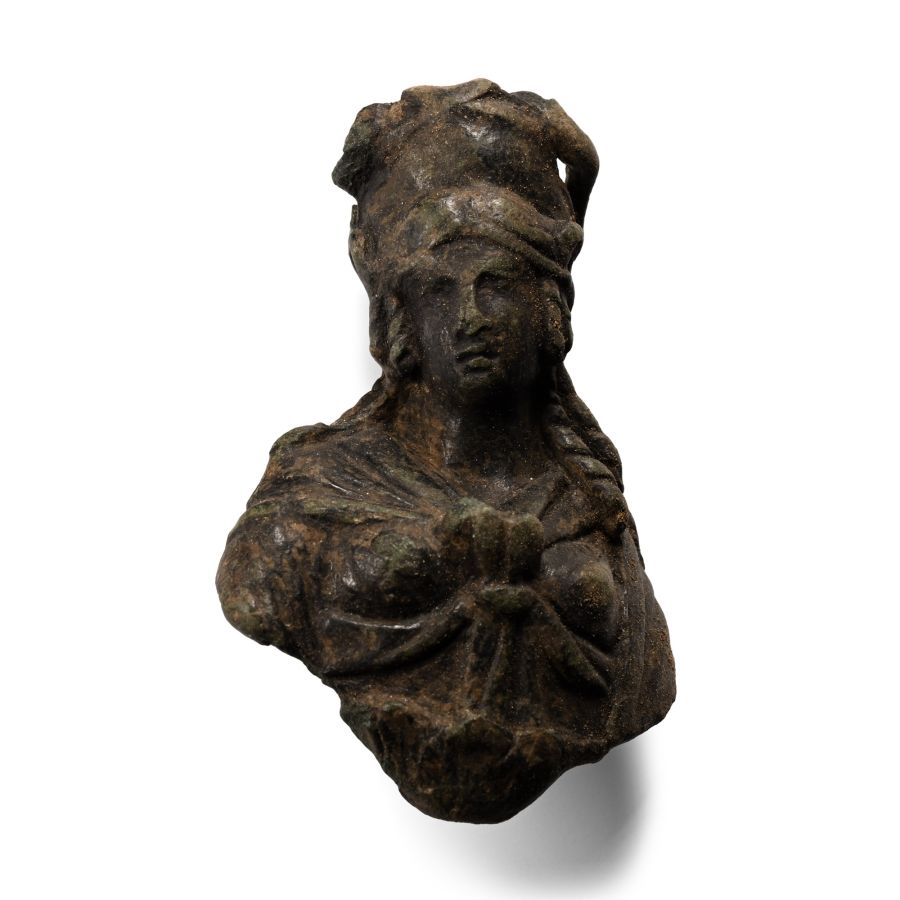
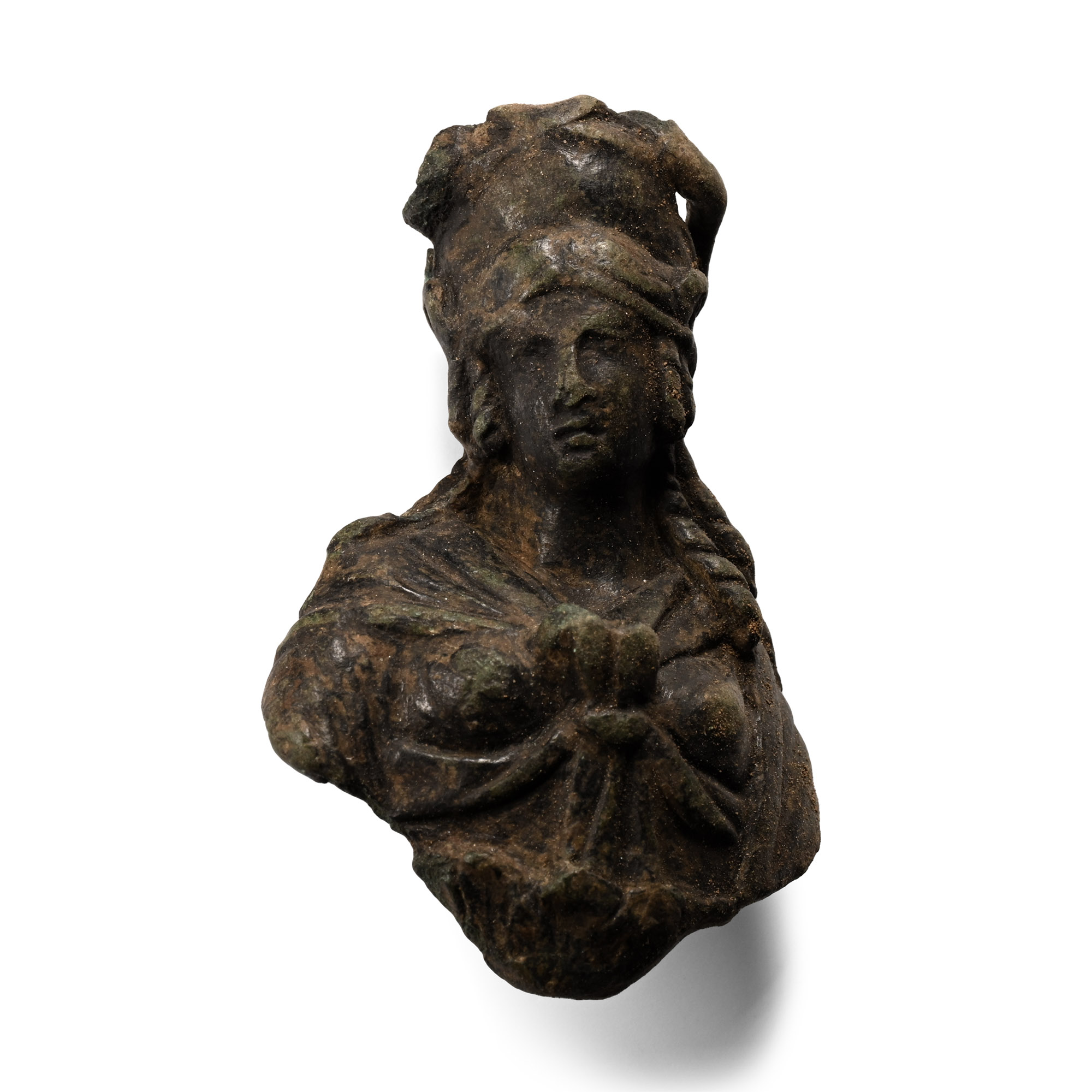
Roman Bronze Bust of Isis
2ND-3RD CENTURY A.D.
2 3/8 in. (58 grams, 60 mm).
Modelled in the round with tall diadem, hair braided and hanging in hanks to the shoulders, palla tied between the breasts; hollow to the reverse. [No Reserve]
ProvenanceFound North Yorkshire, UK, circa 2005.
Acquired UK, circa 2009.
Ian Wilkinson collection, Nottinghamshire, UK, formed since 1985.
This lot is accompanied by an illustrated lot declaration signed by the Head of the Antiquities Department, Dr Raffaele D’Amato.
See Witt, R.E., Isis in the Ancient World, London, 1997, for a discussion of the iconography of the cult of Isis in the Greek and Roman world.
CONDITIONTimeLine Auctions follows a vetting process to ensure the authenticity and legality of all items, reinforcing our commitment to integrity and responsible trading. Each antiquity, antique, and coin lot undergoes thorough examination by a vetting committee of at least ten external specialists, professional trade association members, scientists, and archaeologists: Our Vetting Process
AUCTIONS:
TimeLine is a leading auction house specialising in antiquities, ancient art, collectables, natural history, coins, medals, and books. Our auctions offer museums, collectors, historians, and enthusiasts the opportunity to acquire unique and historically significant pieces.
-
Roman Bronze Bow Brooch
2nd century A.D.Estimate: £100 - 140 (+bp*)
Opening Bid: £50
P-shaped bow brooch with three onion-shaped knops to the upper edge of the headplate, chord and pin to reverse, deep bow with ribbed section above junction with the rectangular foot; catch to reverse. 38.4 grams, 69 mm
Ex important German collection, 1990s. This lot is accompanied by an illustrated lot declaration signed by the Head of the Antiquities Department, Dr Raffaele D’Amato. -
Roman Blue Glass Beaker
3rd-4th century A.D. or laterSold for (Inc. bp): £715
Thick-walled, cylindrical beaker with inwardly curved mouth, rolled rim; shallow dimples to exterior; mold-blown type with slight iridescence; old label to base 'N14075'. 152 grams, 79 mm
Dr K. and W.Z., Rheinland-Pfalz, Germany; acquired 1977 on the German art market. This lot is accompanied by an illustrated lot declaration signed by the Head of the Antiquities Department, Dr Raffaele D’Amato. -
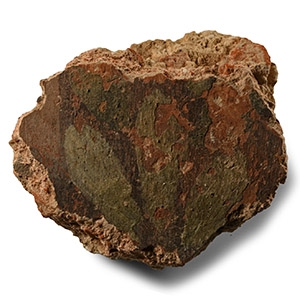
Romano-British Fresco Wall Plaster with Turquoise Petalled Flower
3rd-4th century A.D.Sold for (Inc. bp): £156
Fragment of plaster with inclusions, dressed face with red painted field and painted flower (perhaps a snowdrop Galanthus). 159 grams, 80 mm
Found Leicestershire, UK. Acquired from a collector in 2012. Ian Wilkinson collection, Nottinghamshire, UK, formed since 1985. This lot is accompanied by an illustrated lot declaration signed by the Head of the Antiquities Department, Dr Raffaele D’Amato.
