
Loading, please wait...

LOT 0804
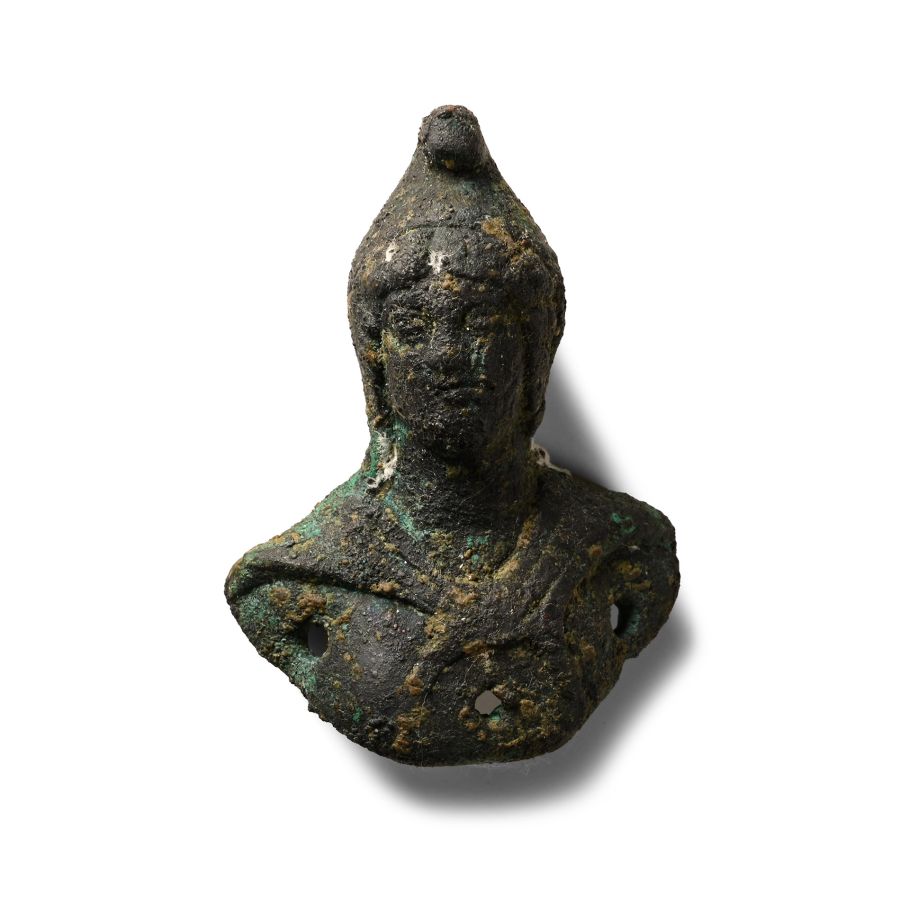
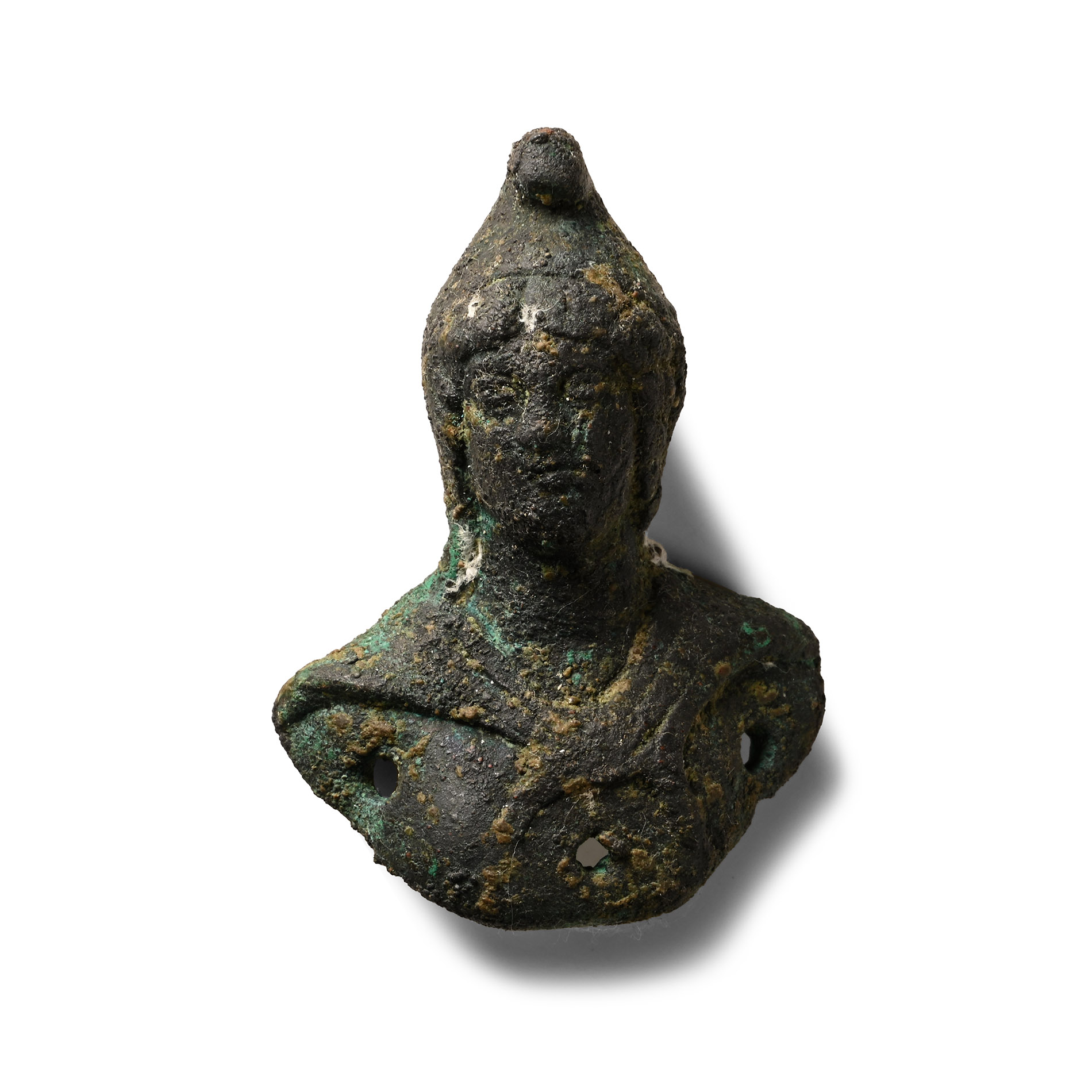
Roman Bronze Bust of a Man
2ND-3RD CENTURY A.D.
2 5/8 in. (68.6 grams, 68 mm).
Modelled in the round wearing a crested Phrygian cap and mantle; three piercing to the chest to accept mounting pins.
ProvenanceAcquired in the mid 1980s-1990s.
Private collection, Switzerland, thence by descent.
Private collection, since the late 1990s.
TimeLine Auctions follows a vetting process to ensure the authenticity and legality of all items, reinforcing our commitment to integrity and responsible trading. Each antiquity, antique, and coin lot undergoes thorough examination by a vetting committee of at least ten external specialists, professional trade association members, scientists, and archaeologists: Our Vetting Process
AUCTIONS:
TimeLine is a leading auction house specialising in antiquities, ancient art, collectables, natural history, coins, medals, and books. Our auctions offer museums, collectors, historians, and enthusiasts the opportunity to acquire unique and historically significant pieces.
-
Roman Terracotta EXOFIVSTI Factory Oil Lamp
Circa 2nd century A.D.Sold for (Inc. bp): £195
Squat in profile with pierced lug handle, short nozzle, low-relief image of a horseman to the discus and crescent panels to the shoulder; underside stamped 'EXOFIVSTI'; old collectors' inked legends '1-70' and 'R6-45'. 80 grams, 11.2 cm
Acquired Bideford, Devon, UK, collection. From the private collection of Kenneth Machin (1936-2020), Buckinghamshire, UK; with collection no.OL1; his collection of antiquities and natural history was formed since 1948; thence by descent. -
Roman Bifacial Terracotta Forger's Coin Mould
1st-4th century A.D.Sold for (Inc. bp): £520
Discoid in plan, both sides with a radiate profile bust of an emperor, legend surrounding. 4.9 grams, 27 mm
From the collection of a gentleman, acquired on the London art market in the 1990s. -
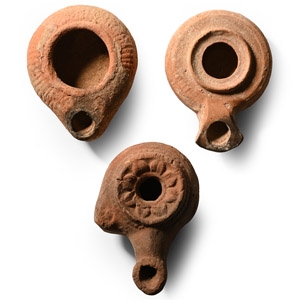
Roman Terracotta Oil Lamp Group
Mid 1st century B.C.-5th century A.D.Sold for (Inc. bp): £78
Comprising a low discoid type with trapezoidal nozzle and radiating lines which appears to be from the Herodian period (50 BC to 70 AD); one with conical nozzle and radiating lines to the shoulder; and one with a long tapering nozzle, lateral spur handle and low-relief rosette to the discus. 150 grams total, 76-83 mm
From a family collection mostly formed in the 1940s-1950s, thence by descent.
The lamp on the upper left side appears to be from the Herodian period (50 BC to 70 AD).
