
Loading, please wait...
LOT 0638
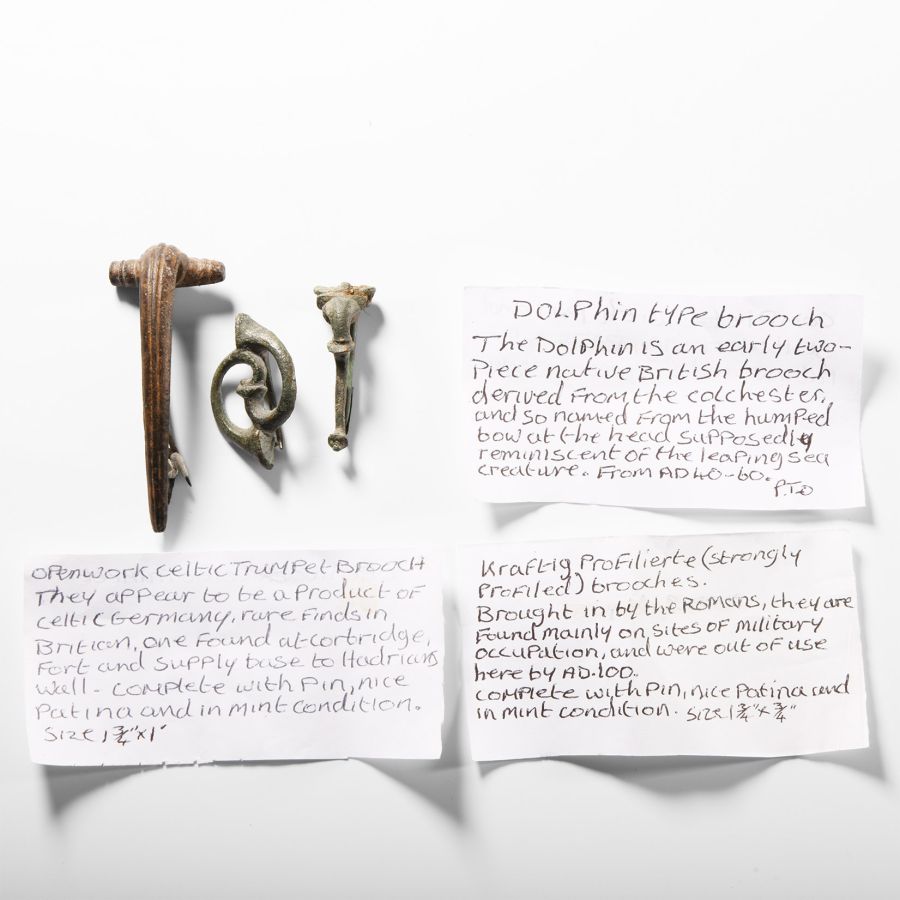
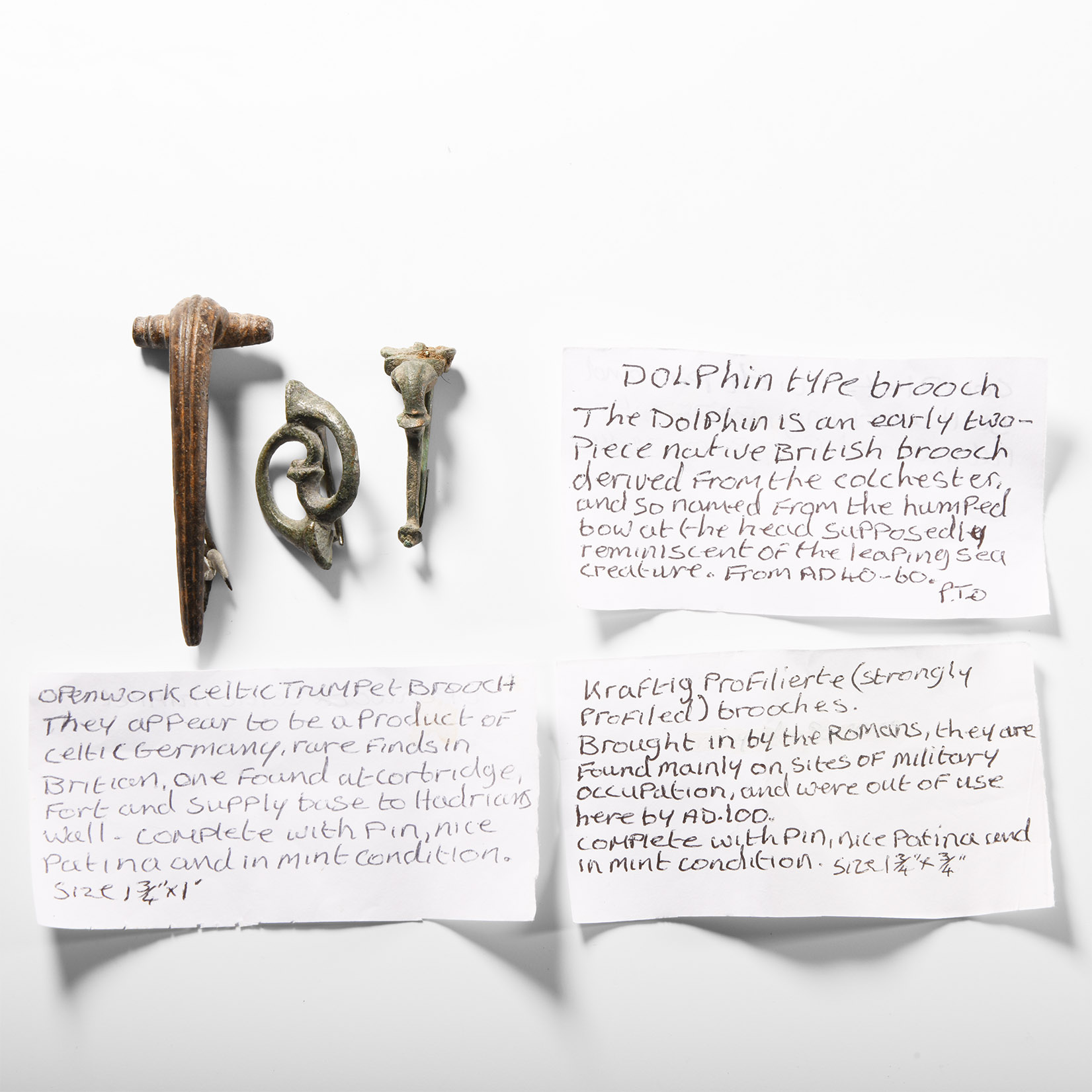
Roman Bronze Brooch Collection
CIRCA 1ST-2ND CENTURY A.D.
1 1/2 - 2 3/4 in. (53 grams total, 40-72 mm).
Group of three brooches comprising: trumpet brooch with spring and pin; dolphin-type bow brooch with hinged pin; kräftig profilierte bow brooch. [No Reserve]
ProvenanceFound East Anglia, UK.
Acquired early 2000s.
Property of a Stowmarket, UK, gentleman.
Accompanied by three old handwritten cataloguing slips.
TimeLine Auctions follows a vetting process to ensure the authenticity and legality of all items, reinforcing our commitment to integrity and responsible trading. Each antiquity, antique, and coin lot undergoes thorough examination by a vetting committee of at least ten external specialists, professional trade association members, scientists, and archaeologists: Our Vetting Process
AUCTIONS:
TimeLine is a leading auction house specialising in antiquities, ancient art, collectables, natural history, coins, medals, and books. Our auctions offer museums, collectors, historians, and enthusiasts the opportunity to acquire unique and historically significant pieces.
-
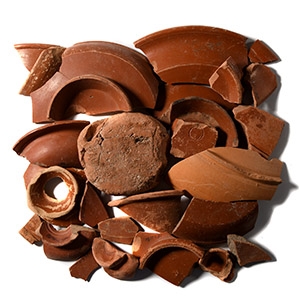
Roman 'Leicestershire' Redware Sherd Collection
3rd-4th century A.D.Sold for (Inc. bp): £208
Comprising a large quantity of mixed vessel fragments, mostly displaying part of the base or rim, and a lump of unworked clay; some with old pencilled or inked collection numbers. 900 grams total, 3.1-13.5 cm
Acquired from a private collector in 2004. Property of a Nottinghamshire gentleman. -
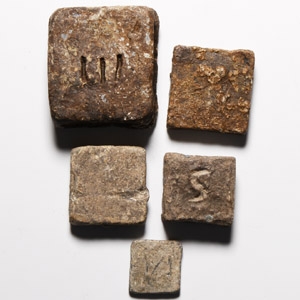
Roman Lead Weight Group
1st-4th century A.D.Sold for (Inc. bp): £33
Group of five lead-alloy square weights, one with 'III' marking, one with 'S' and one with 'N'. 179 grams total, 14-33 mm
Ex Simmons Gallery, London E11, UK, in the 1990s. From a North London collection. -
.jpg)
Roman Early Christian Globus Cruciger Carnelian Gemstone
Circa 4th century A.D.Sold for (Inc. bp): £390
With a saint and globus cruciger; supplied with a museum-quality impression. 0.60 grams, 12 mm
From the collection of a Swiss gentleman formed in Europe from 1970-1980s; thence by descent from the family in London.
