
Loading, please wait...
LOT 1004
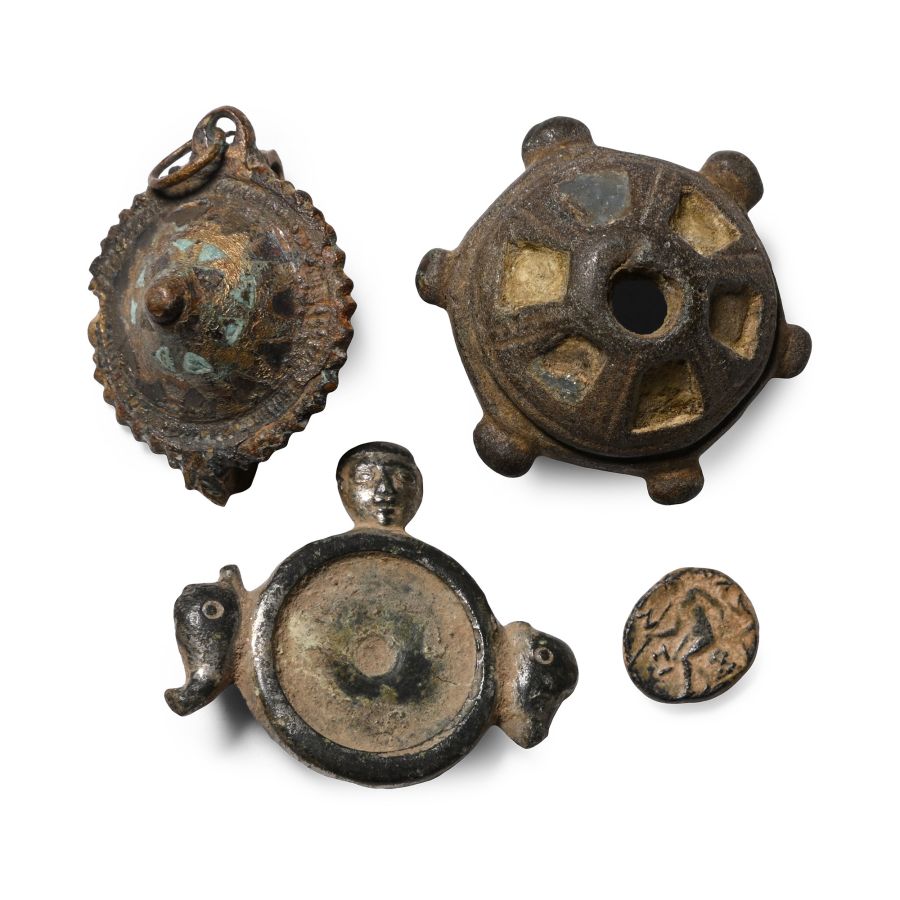
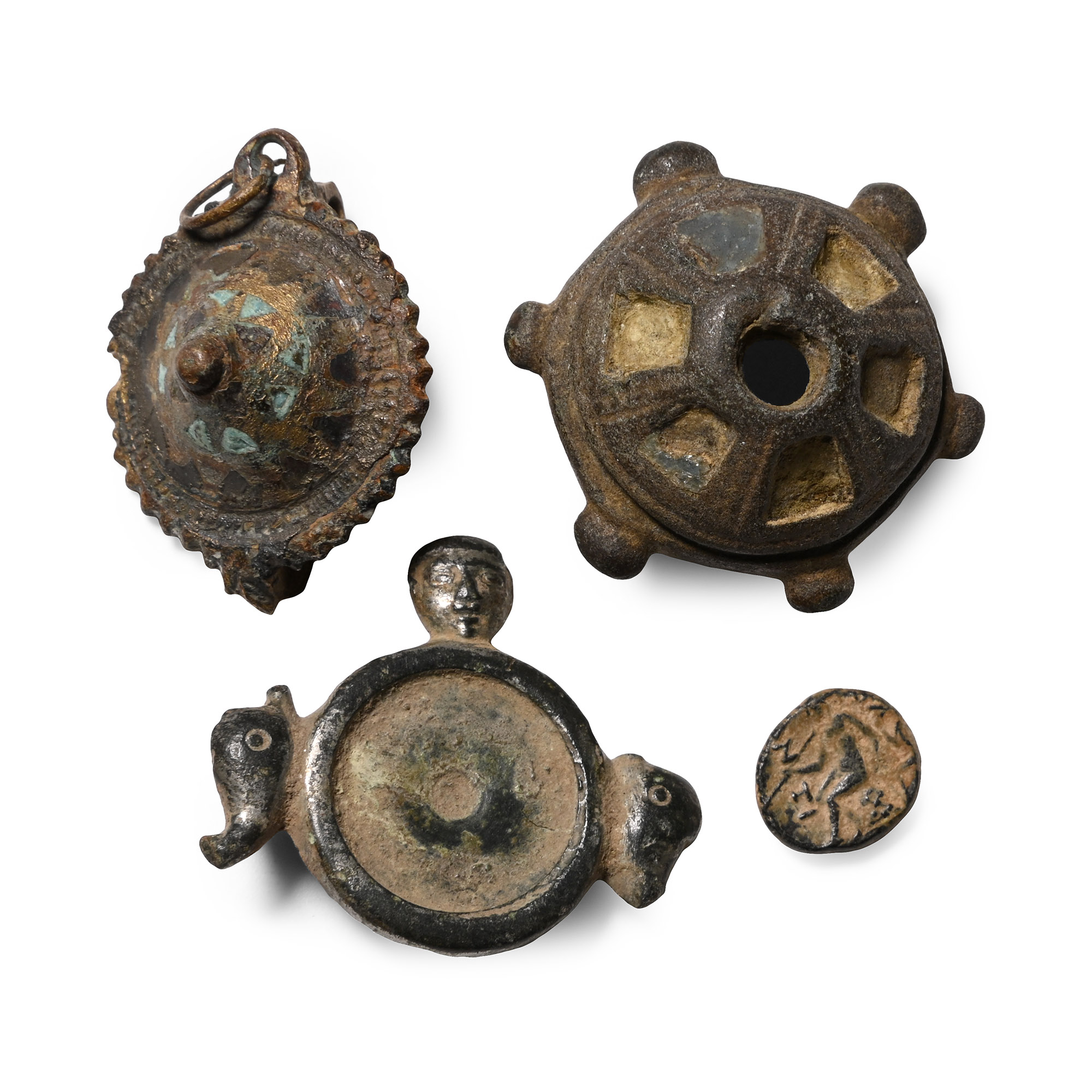
Roman Bronze Brooch and Artefact Collection
1ST-4TH CENTURY A.D.
1/4 - 1 in. (25.1 grams total, 9.6-26 mm).
Comprising: a discoid brooch with two animals and a male head on the perimeter; an enamelled brooch with a raised central boss and a loop on the outer edge; a domed mount with enamelled fields and radiating bosses on the outer edge, two T-shaped lugs on the reverse; a small coin(?) with a profile bust on the obverse and a seated figure on the reverse. [4, No Reserve]
ProvenanceFrom the private collection of a European gentleman (1942-2024), formed since the 1970s.
CONDITIONTimeLine Auctions follows a vetting process to ensure the authenticity and legality of all items, reinforcing our commitment to integrity and responsible trading. Each antiquity, antique, and coin lot undergoes thorough examination by a vetting committee of at least ten external specialists, professional trade association members, scientists, and archaeologists: Our Vetting Process
AUCTIONS:
TimeLine is a leading auction house specialising in antiquities, ancient art, collectables, natural history, coins, medals, and books. Our auctions offer museums, collectors, historians, and enthusiasts the opportunity to acquire unique and historically significant pieces.
-
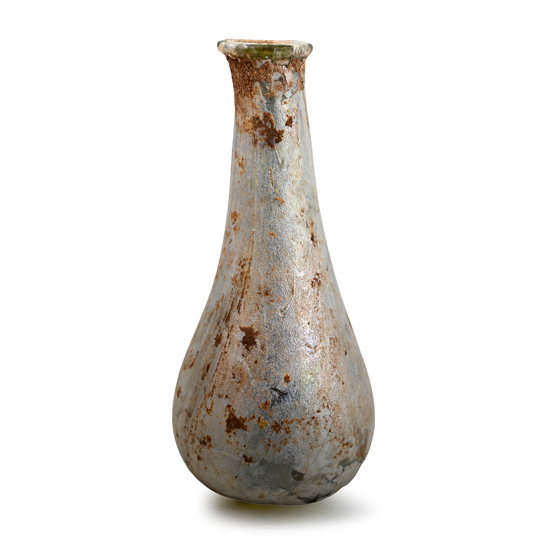
Roman Iridescent Glass Vessel
1st-4th century A.D.Sold for (Inc. bp): £156
Comprising a piriform body with everted folded rim to the mouth and iridescent surface. 17.4 grams, 91 mm
Ex London, UK, art market 1990s. -
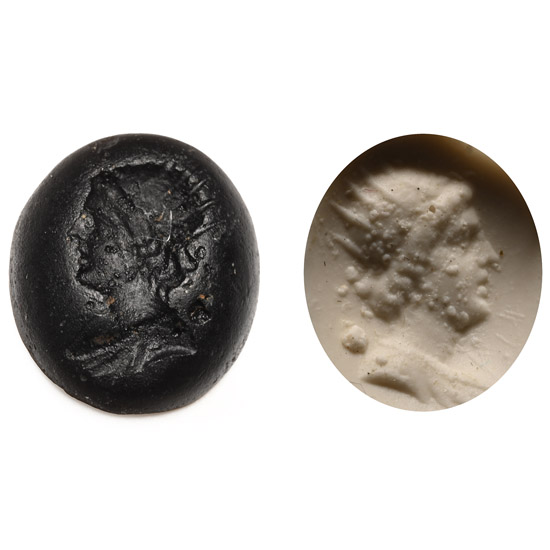
Roman Glass Gem with Bearded Bust
2nd-3rd century A.D.Sold for (Inc. bp): £124
With intaglio profile bust, bearded and wearing a solar crown; supplied with a museum-quality impression. 0.81 grams, 13.91 mm
From the private collection of a European gentleman (1942-2024), formed since the 1970s. -
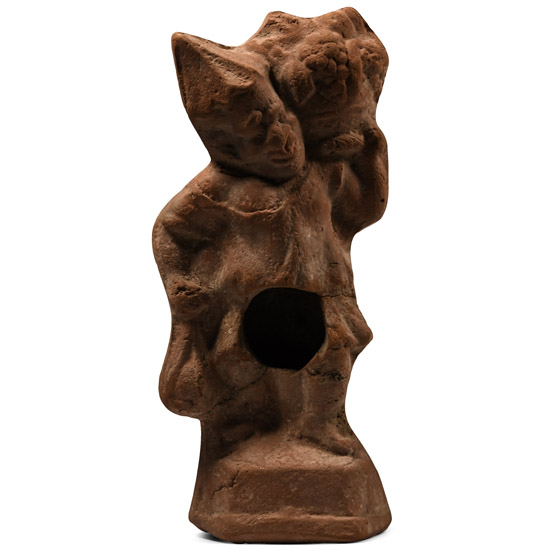
Romano-Egyptian Terracotta Figure of a Slave with Fruit Basket
1st century A.D.Sold for (Inc. bp): £221
Hollow-formed figure of a servant with grotesque facial features, pointed cap and a short tunic, carrying a pouch in the right hand and shoulders an overflowing fruit basket on the left; a large recess between his legs may be for the insertion of an oversized model phallus; pierced lug to rear of neck for suspension. 286 grams, 17.5 cm
Acquired from Galerie Puhze, Freiburg, between 2002 and 2010. From the collection of R. L., Lower Saxony. Ex Gorny & Mosch, auction 300, Munich, no.75. Accompanied by a certificate from Galerie Günter Puhze and a German export licence.
Grotesque and exaggerated figurines were produced in late Hellenistic times, especially in Alexandria. The artisans, fascinated with realism, started to reproduce scenes and figures from daily life, and seemed to have a preference for emphasis on ill and deformed persons. The characters with caricature features are usually referred to as grotesques.
