
Loading, please wait...
LOT 0988
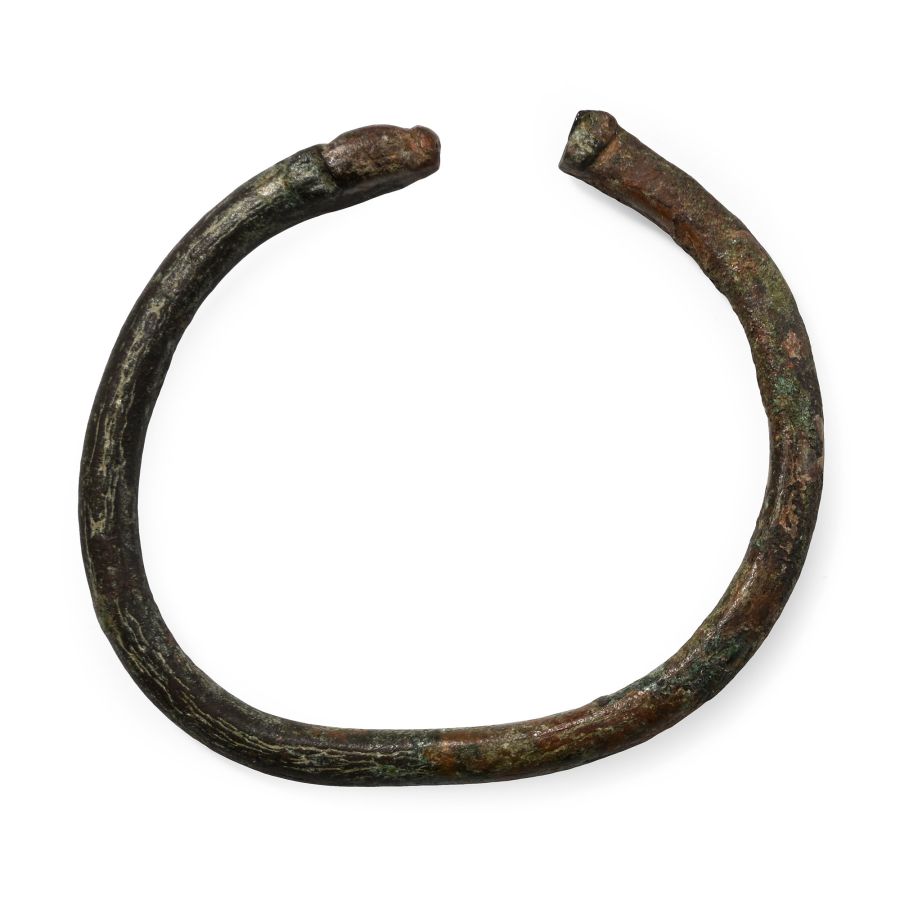
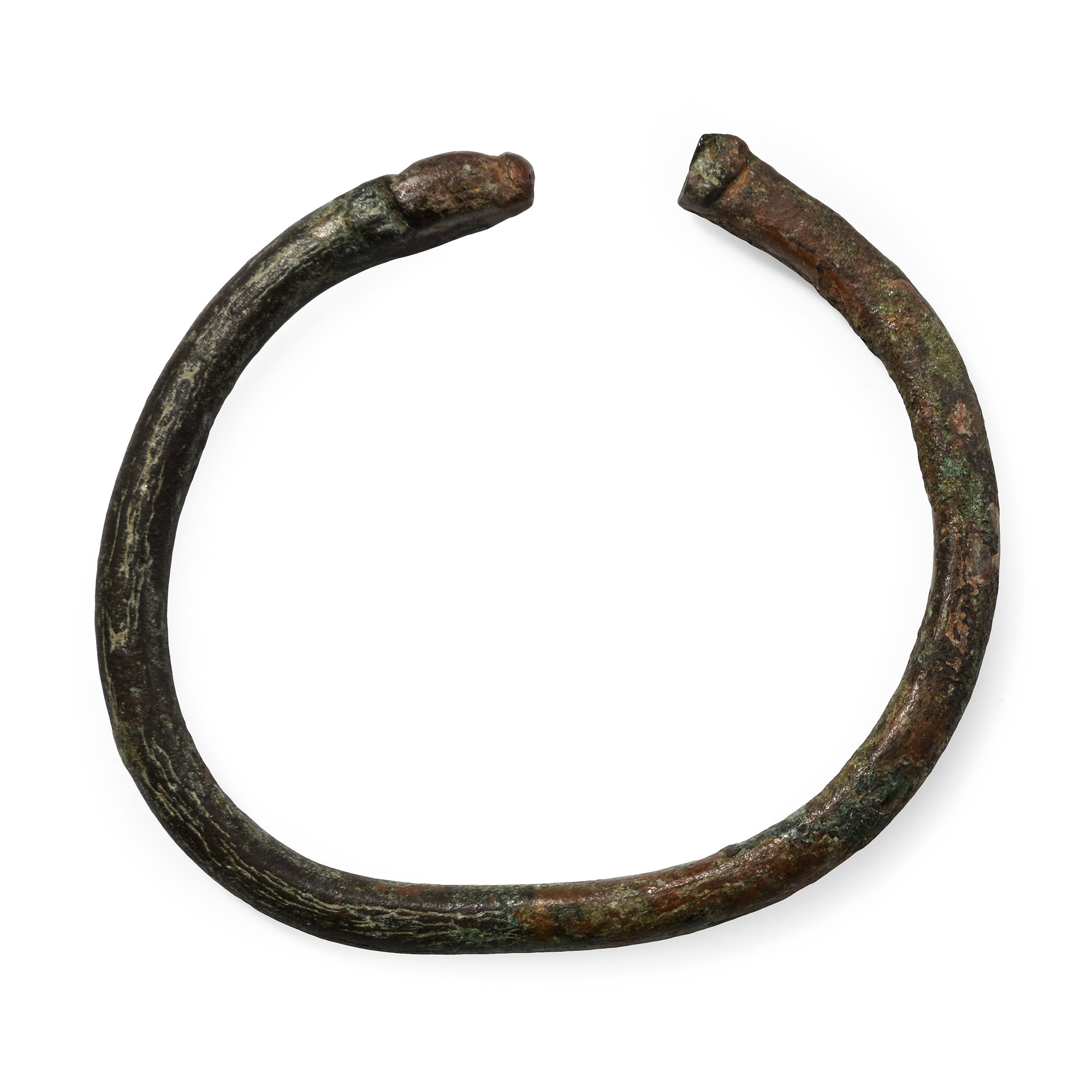
Roman Bronze Bracelet with Animal Head Terminal
1ST-4TH CENTURY A.D.
2 5/8 in. (39.2 grams, 67 mm).
Lentoid in section with opposed beast-head finials, one absent. [No Reserve]
ProvenanceFrom the private collection of Mr Brian Edwards, New Malden, Surrey, UK, formed from the late 1970s-early 1980s; thence by descent.
CONDITIONTimeLine Auctions follows a vetting process to ensure the authenticity and legality of all items, reinforcing our commitment to integrity and responsible trading. Each antiquity, antique, and coin lot undergoes thorough examination by a vetting committee of at least ten external specialists, professional trade association members, scientists, and archaeologists: Our Vetting Process
AUCTIONS:
TimeLine is a leading auction house specialising in antiquities, ancient art, collectables, natural history, coins, medals, and books. Our auctions offer museums, collectors, historians, and enthusiasts the opportunity to acquire unique and historically significant pieces.
-
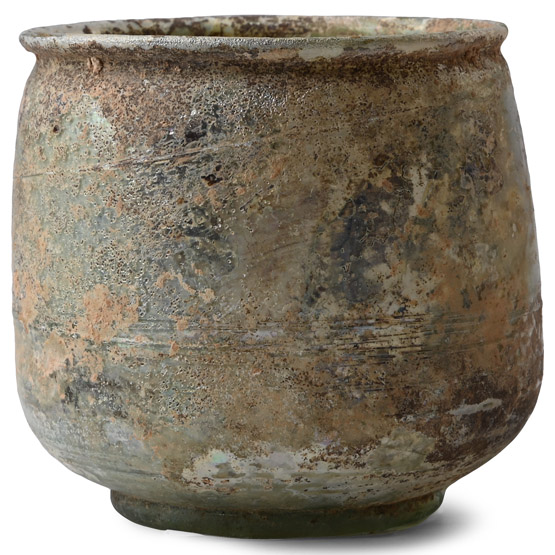
Roman Iridescent Glass Cup with Trail
Circa 1st-4th century A.D.Sold for (Inc. bp): £312
Drum-shaped body on a low basal ring and everted rim, bands to the outer face; iridescent surface. 33.8 grams, 71 mm
From a London, UK, collection of glass, 1970-2000s. -
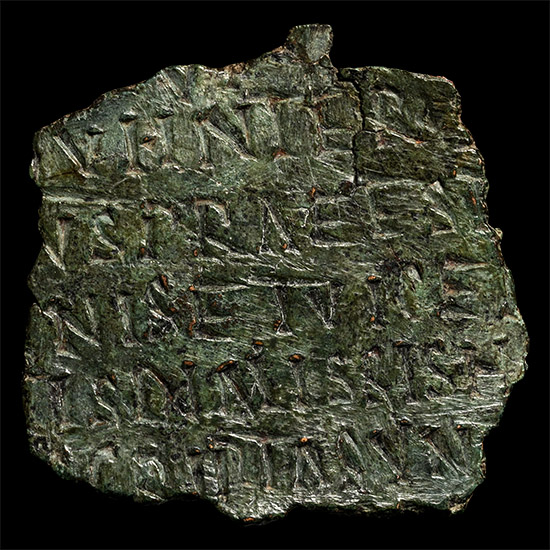
Fragment of a Roman Bronze Military Diploma Granted by Emperor Septimius Severus
195 A.D.Sold for (Inc. bp): £1,300
Issued for a member of the equites singulares Augusti, the emperor’s horse guards; granted by Septimius Severus in the summer of AD 195, during his Parthian expedition; obverse with seven lines of text with well engraved letters: (1) [… IMP] • VI • C[OS …] / (2) [EQVITIBVS Q]VI•INTER•S[INGVLAR MILITAVERVNT CASTRIS] / (3) [NOVIS QVIB]VS PRAEEST [. . .] / (4) [TRIBVNVS QVI]NIS ET VICEN[IS PLVRIBVSVE STIPENDIS] / (5) [EMERI]TIS DIMISSIS H[ONESTA MISSIONE QVORVM] / (6) [NOMINA SVB]SCRIPTA SVNT [CIVITATEM ROMANAM] / (7) . . . + ++ . . . . On the inner face traces of 7 lines of text: (1) [- - -]MAX·TR[IB / (2) [- - -]+ COS [- - -] / (3)[EQVITIBVS QVI I]NTER·SINCV[LAR MILITAVER CASTRIS] / (4) [NOVIS QVIBVS] PRAEEST + [- - -] /(5) TRIBVNVS] QVINIS ET VI[CENIS PLVRIBVSVE STIPENDIS] / (6) [EMERITIS] DIM[ISSIS HONESTA MISSIONE QVORVM] / (7) +++. 27.13 grams, 50 mm
Property of a European gentleman, acquired on the London art market. -
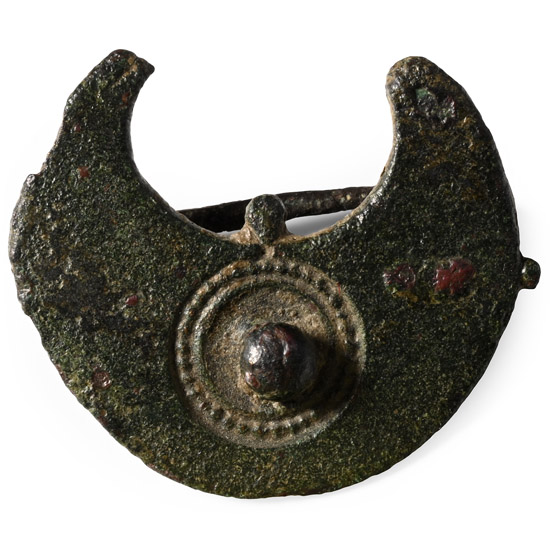
Roman Bronze Crescentic Plate Brooch
2nd-3rd century A.D.Sold for (Inc. bp): £143
Plate brooch with concentric lines around a raised boss; pin-lugs, pin and catchplate to the reverse. 5.77 grams, 29 mm
From the private coin collection of a West London, UK, gentleman, formed since the mid 1980s.
