
Loading, please wait...
LOT 0720
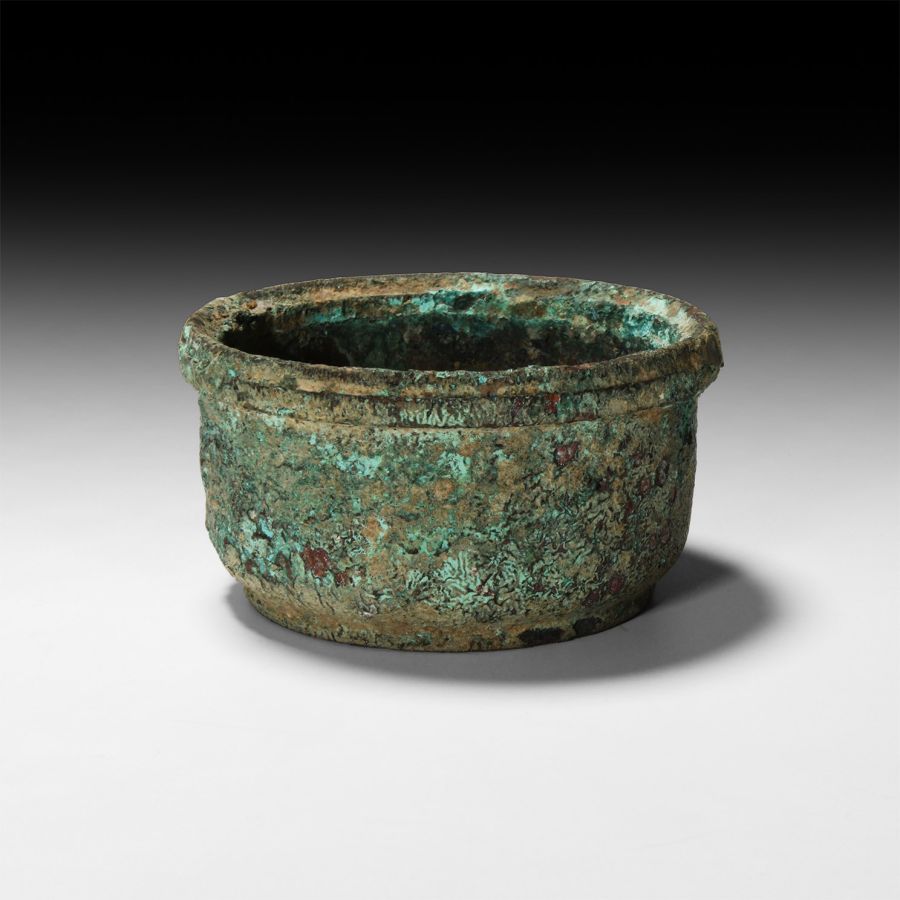
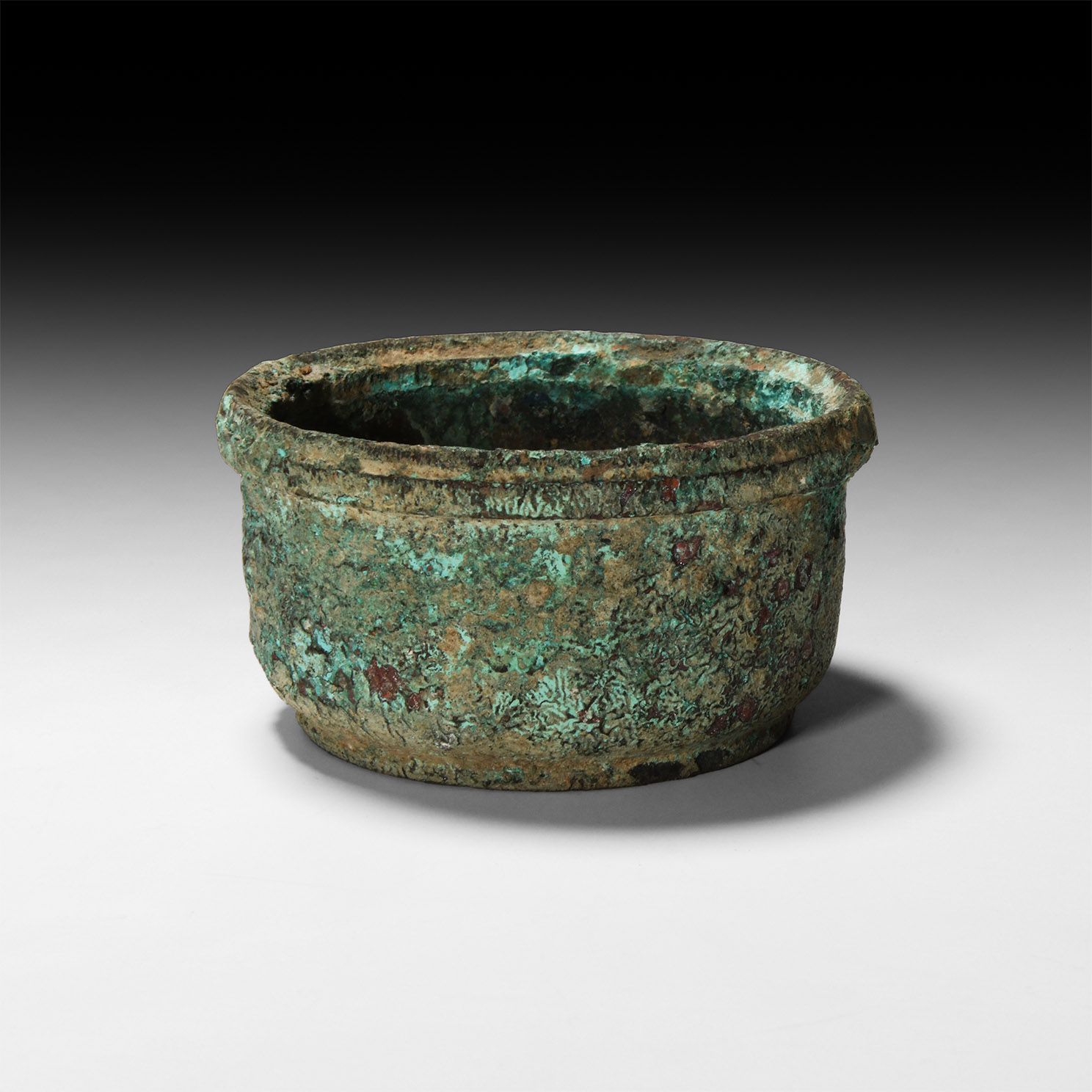
Roman Bronze Bowl
1ST-3RD CENTURY A.D.
3 in. (335 grams, 78 mm wide).
A bronze bowl with a squat, barrel-shaped body, broad rim and foot; concentric raised basal rings; old French collection label to the body.
ProvenanceEx collection of Louis-Gabriel Bellon (1819-1899), France.
LiteratureCf. Boucher, S. et al., Musée De La Civilisation Gallo-Romaine A Lyon: Bronzes Antiques 1, Lyon, 1976, p.137, for comparable basins.
CONDITIONTimeLine Auctions follows a vetting process to ensure the authenticity and legality of all items, reinforcing our commitment to integrity and responsible trading. Each antiquity, antique, and coin lot undergoes thorough examination by a vetting committee of at least ten external specialists, professional trade association members, scientists, and archaeologists: Our Vetting Process
AUCTIONS:
TimeLine is a leading auction house specialising in antiquities, ancient art, collectables, natural history, coins, medals, and books. Our auctions offer museums, collectors, historians, and enthusiasts the opportunity to acquire unique and historically significant pieces.
-

Large Roman Aubergine Glass Twin-Handled Jar
3rd-4th century A.D.Sold for (Inc. bp): £1,778
An aubergine glass jar with onion-shaped body, cylindrical neck, trumpet-style mouth and rolled lip; two applied green glass handles and pie crust frill around neck, body with decorative raised lobes; some iridescence. 246 grams, 18 cm high
Fine condition.
Mitsukoshi, Tokyo, Japan, 1981. Kokusai Bijutsu: Ninth International Art Exhibition, no.46. Acquired Bonhams, New Bond Street, 28 November 2019, lot 146. Ex J.L. collection Surrey, UK. Accompanied by copies of the Bonhams catalogue pages. -
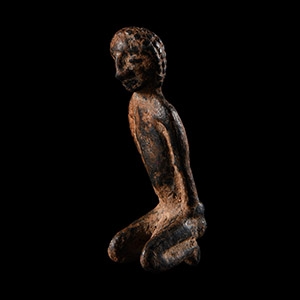
Roman Statuette of a Bound Barbarian Captive
2nd-4th century A.D.Sold for (Inc. bp): £702
A bronze statuette of a bound Mauritanian prisoner with his hands tied behind his back, naked body with exposed genitals, hair arranged in tight curls. 40 grams, 60 mm high
Acquire in the 1990s. Ex Cambridgeshire, UK, collection.
The face of this bound barbarian, who is forced into a squatting position by the way he is bound, is framed by rich locks betraying his Moorish origin. Numerous statuettes of bound barbarians have been found at the Empire’s outer boundaries. Many have vertical and horizontal bores, which have led to the interpretation that they were ornaments for horse bridles or snaffle fittings. -
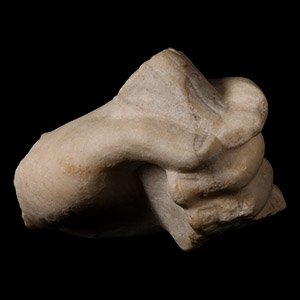
Roman Marble Hand Holding Rope
1st-2nd century A.D.Sold for (Inc. bp): £260
A marble left hand modelled in the round gripping a sinuous object, likely a rope; semi-naturalistic detailing to the nails and palm. 738 grams, 12 cm
New York art market, 1992.
