
Loading, please wait...
LOT 0656
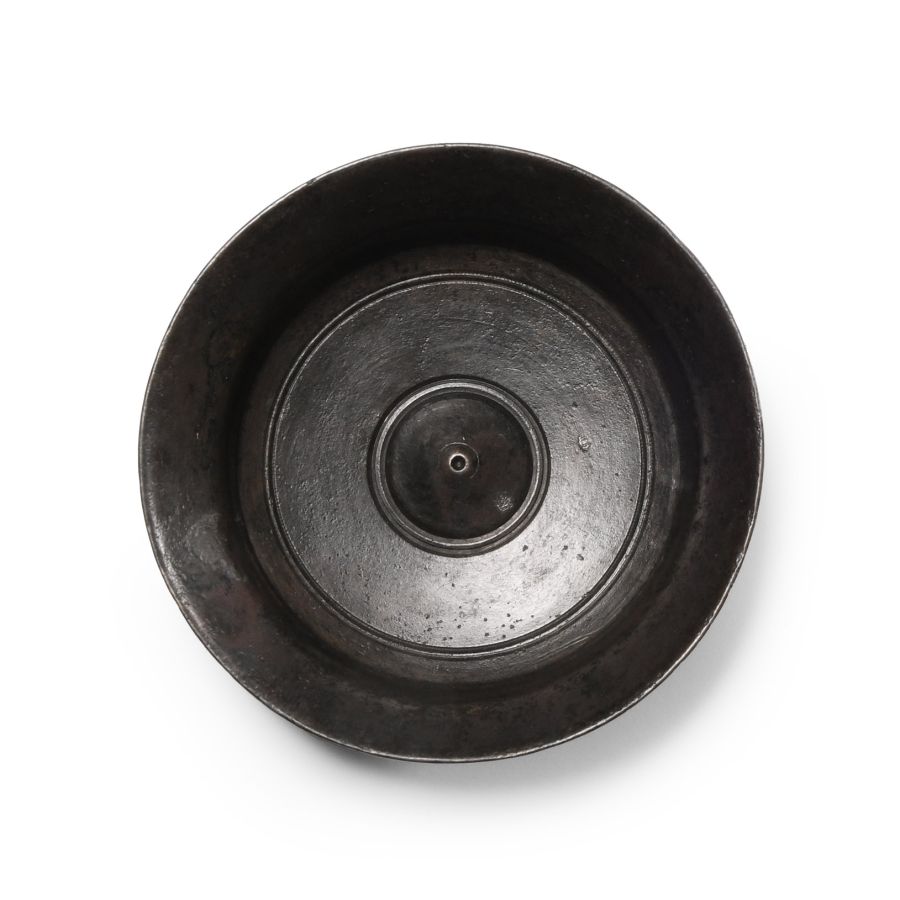
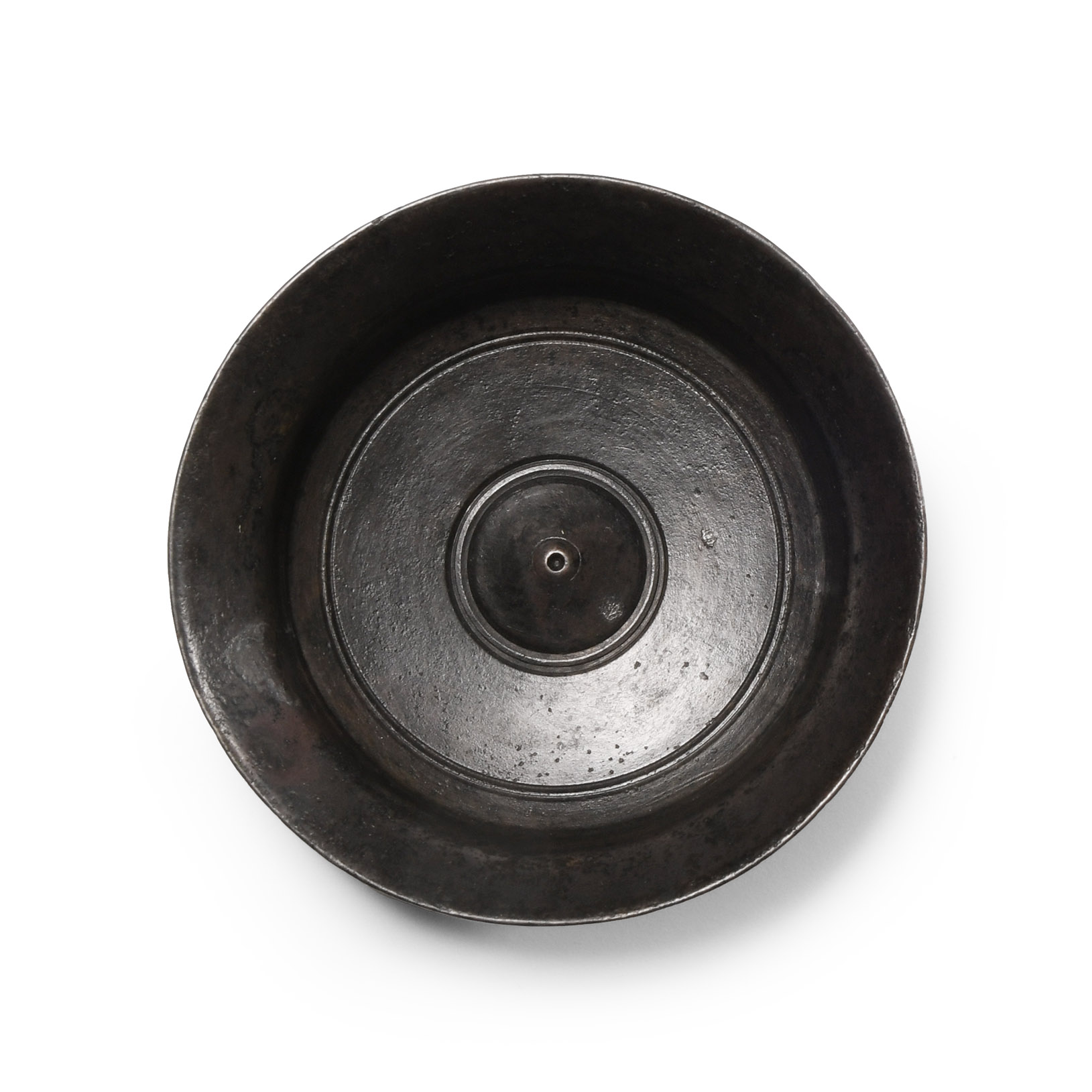
Roman Bronze Bowl with Concentric Circles
1ST-3RD CENTURY A.D.
3 1/4 in. (142 grams, 83 mm).
With flat base and central boss, flared rim, incised rings to the inner face.
ProvenanceAcquired 1980-2015.
Ex Abelita family collection.
TimeLine Auctions follows a vetting process to ensure the authenticity and legality of all items, reinforcing our commitment to integrity and responsible trading. Each antiquity, antique, and coin lot undergoes thorough examination by a vetting committee of at least ten external specialists, professional trade association members, scientists, and archaeologists: Our Vetting Process
AUCTIONS:
TimeLine is a leading auction house specialising in antiquities, ancient art, collectables, natural history, coins, medals, and books. Our auctions offer museums, collectors, historians, and enthusiasts the opportunity to acquire unique and historically significant pieces.
-
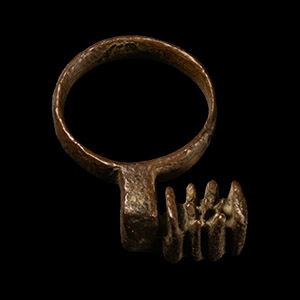
Roman Bronze Ring Key
1st-3rd century A.D.Sold for (Inc. bp): £52
Composed of a hoop with convex outer edge, short stem and tooth-like rectangular bit. 7.9 grams, 25 mm
Acquired on the UK market, 1990s. Property of a retired academic. -

Large Roman Silvered Bronze Patera
1st century A.D.Estimate: £2,000 - 3,000 (‡+bp*)
Opening Bid: £1,000
With a deep bowl and flat-section handle with integral loop; shallow concentric grooves around the exterior of the neck, rolled rim, concentric rings to the underside; finished on a lathe; cracked and split. 903 grams, 33 cm wide
Acquired in Europe before 1993. Private collection, Europe. This lot has been checked against the Interpol Database of stolen works of art and is accompanied by search certificate number no.11788-206494.
In contrast to their elaborate counterparts, paterae such as this were likely carried as part of the standard kit of Roman soldiers, used as a general cooking and eating utensil. The regular heap up (sarcina) of the legionaries is well represented on the reliefs of the Trajan column. It was composed of a T stake (furca), to which a linen bag (sacculus) was hung, as well as the leather haversack for 15-20 days supplies (trinum nundinum) and personal effects, a pot (ollula), a cup (patera), and a basket for work on the fields. -
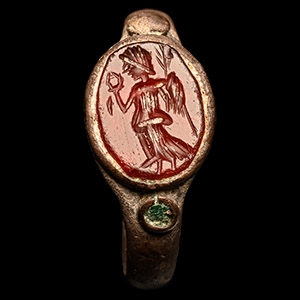
Eastern Roman Silver Ring with Victory Holding Wreath and Palm Branch Gemstone
2nd-3rd century A.D.Estimate: £500 - 700 (+bp*)
Opening Bid: £278
With circular hoop expanding at the shoulders, oval bezel flanked by two bosses; the bezel set with a carnelian gemstone engraved with the winged goddess Victory, dressed in a chiton with overfold, walking on tiptoes to the left and holding a laurel wreath in her right hand and a palm branch in her left. 3.20 grams, 19.78 mm overall, 16.22 mm internal diameter (approximate size British K, USA 5 1/4, Europe 9.95, Japan 9)
Acquired in the late 1980s-early 1990s. Important North West London collection.
This type derives from a statue by Lysippos and appears on statues, reliefs, coins, and gems for purposes of political propaganda. In some variants on gems, Victory has her foot up on a globe, is seated and wears a helmet, an Erote gives her a palm, or the shield is propped against a trophy, a column or a palm tree.
