
Loading, please wait...
LOT 0673
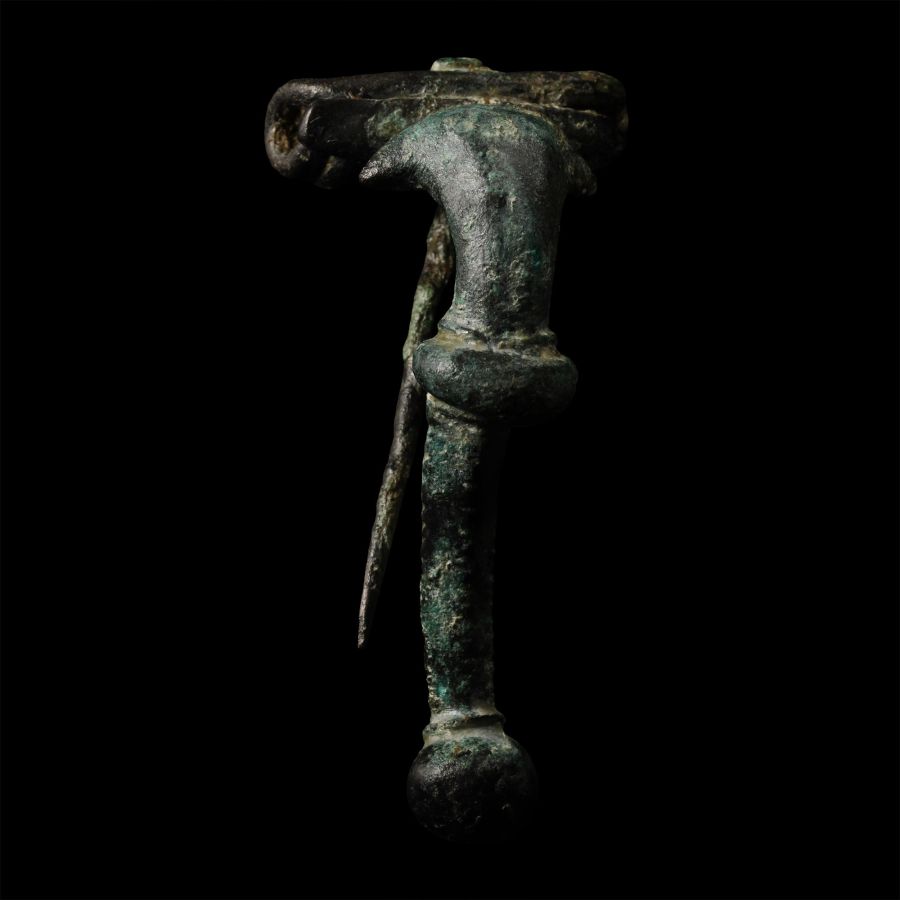
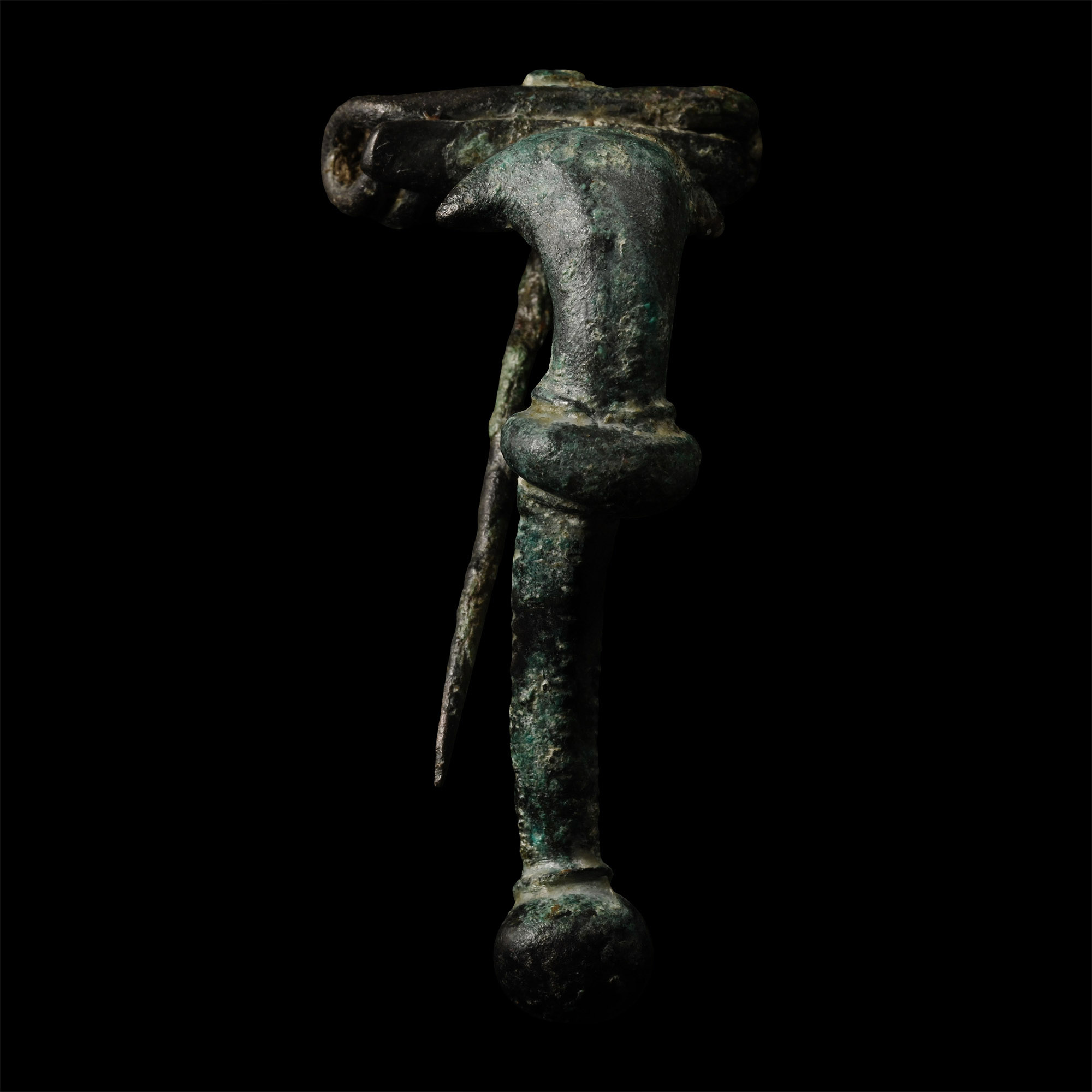
Roman Bronze Bow Brooch
2ND CENTURY A.D.
2 1/8 in. (26.6 grams, 54 mm).
With chord and pin (now detached) at the head, D-section bow with lateral spurs, collar and swept foot with notched detailing, bulb finial, catch to the reverse. [No Reserve]
ProvenanceEx important German collection, 1990s.
LiteratureCf. Hattatt, R., Iron Age and Roman Brooches, Oxford, 1985, item 332, for type; Palagyi, T., Facsady, A., Romains de Hongrie, Lyon, 2002, p.43, and fig.43.
FootnotesThis type of fibula, common in Pannonia, was typically worn in men's clothing. It closed the paenula on the chest, arranged horizontally. Naturally, it could also be worn with military attire.
CONDITIONTimeLine Auctions follows a vetting process to ensure the authenticity and legality of all items, reinforcing our commitment to integrity and responsible trading. Each antiquity, antique, and coin lot undergoes thorough examination by a vetting committee of at least ten external specialists, professional trade association members, scientists, and archaeologists: Our Vetting Process
AUCTIONS:
TimeLine is a leading auction house specialising in antiquities, ancient art, collectables, natural history, coins, medals, and books. Our auctions offer museums, collectors, historians, and enthusiasts the opportunity to acquire unique and historically significant pieces.
-
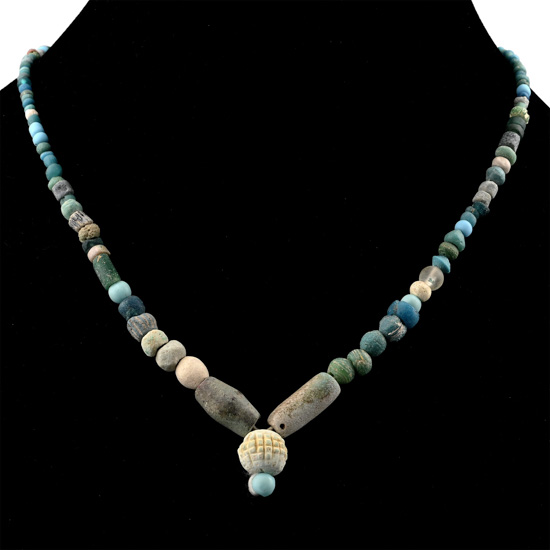
Roman Glass and Other Bead Necklace String
1st-4th century A.D. and laterSold for (Inc. bp): £72
A restrung designer necklace composed of graduated beads with larger beads as a central feature. 16.56 grams, 38.7 cm
From London, UK, gallery collection, 1990s. -
.jpg)
Roman Gold Ring with Green Chalcedony Gemstone with Pantheistic Deity
1st century A.D.Sold for (Inc. bp): £2,340
Cabochon with intaglio standing male deity, possibly Asclepius, surrounded by attributes including a wreath, caduceus, ant, sistrum and others; supplied with a museum-quality impression. 9.91 grams, 23.93 mm overall, 19.33 mm internal diameter (approximate size British L 1/2, USA 6, Europe 11.87, Japan 11)
Private collection, England. -
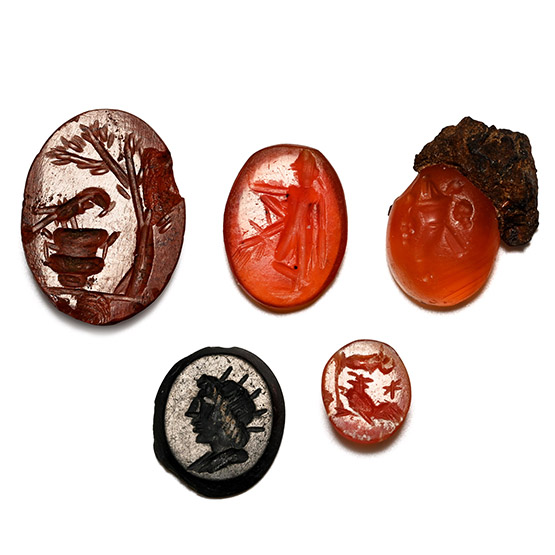
Roman Gemstone Collection
1st-2nd century A.D.Estimate: £380 - 480 (+bp*)
Opening Bid: £210
Mixed group including a standing female, a perching bird and others; each supplied with a museum-quality impression. 2.66 grams total, 7-16 mm
From the collection of a gentleman, acquired on the London art market in the 1990s.
Two of the gemstones in this collection show cockerels. The motif of fighting or individual cockerels was very popular in the classical world, and individual cockerels (the animal often associated with gods, such as Mercury or Sol/Helios) were also often depicted in a standing position. Another gemstone appears to represent a nude figure of Dionysos/Bacchus draped in a long cloak, and another shows Helios with a radiate crown.
