
Loading, please wait...
LOT 1007
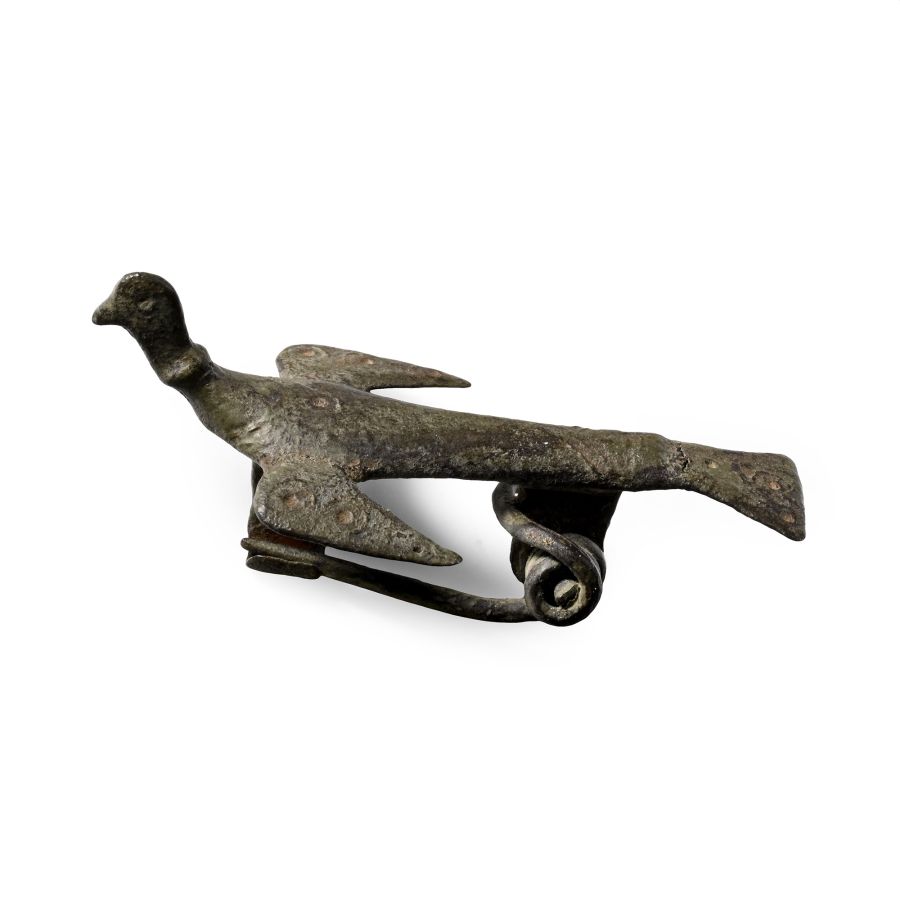
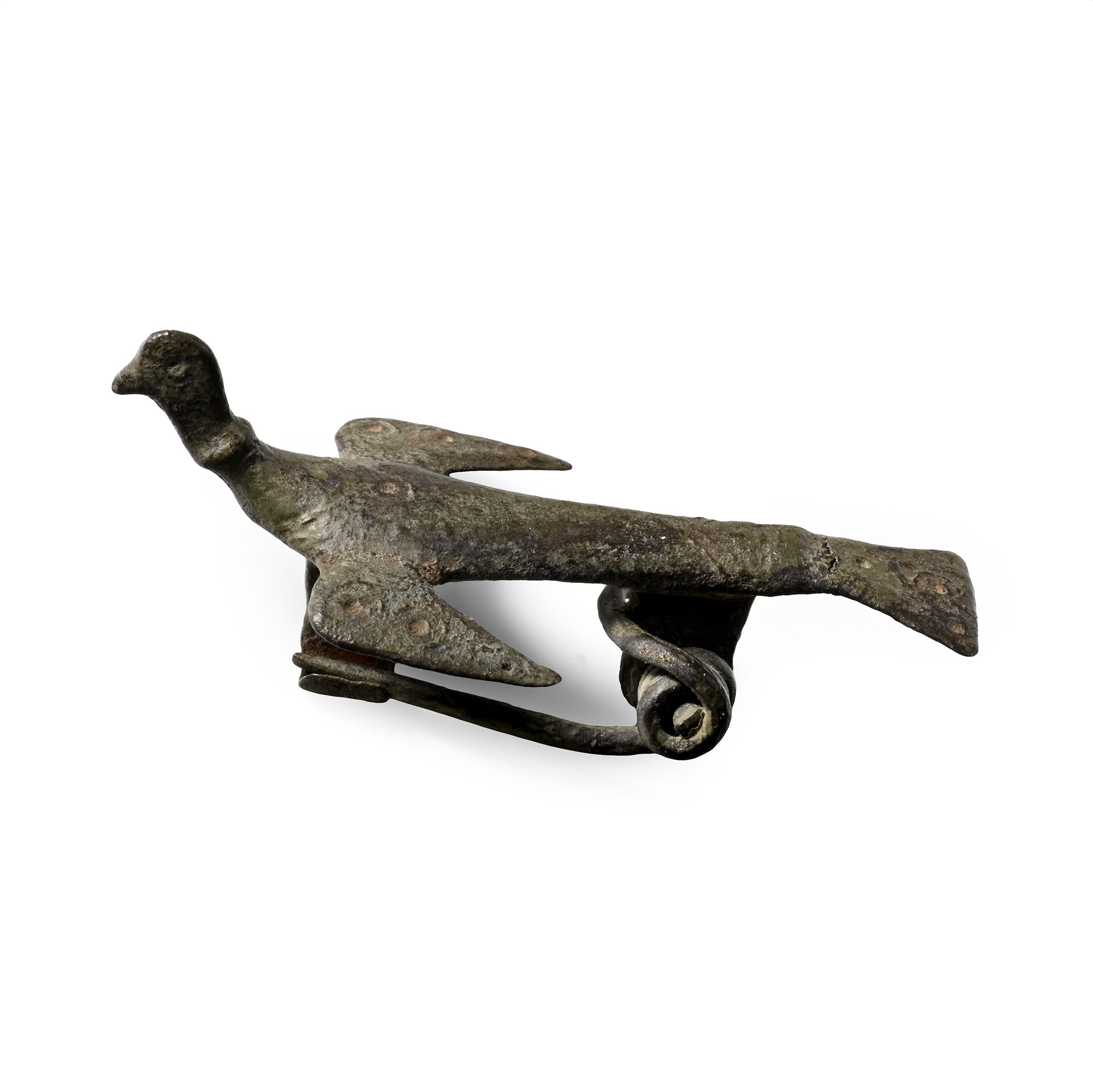
Roman Bronze Bird in Flight Plate Brooch
5TH CENTURY A.D.
1 5/8 in. (5.89 grams, 41 mm).
Depicting a bird with open wings and a fan-shaped tail, a springed pin, and a catchplate on the reverse. [No Reserve]
ProvenanceFrom the private coin collection of a West London, UK, gentleman, formed since the mid 1980s.
CONDITIONTimeLine Auctions follows a vetting process to ensure the authenticity and legality of all items, reinforcing our commitment to integrity and responsible trading. Each antiquity, antique, and coin lot undergoes thorough examination by a vetting committee of at least ten external specialists, professional trade association members, scientists, and archaeologists: Our Vetting Process
AUCTIONS:
TimeLine is a leading auction house specialising in antiquities, ancient art, collectables, natural history, coins, medals, and books. Our auctions offer museums, collectors, historians, and enthusiasts the opportunity to acquire unique and historically significant pieces.
-
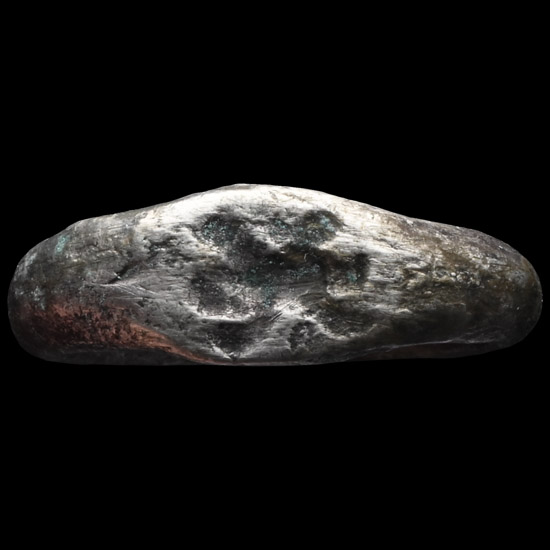
Roman Silver Ring with Lizard
1st-3rd century A.D.Sold for (Inc. bp): £78
Round-section hoop with flat plaque, incuse lizard motif. 5.06 grams, 21.46 mm overall, 14.96 x 14.00 mm internal diameter (approximate size British G 1/2, USA 3 1/2, Europe 5.55, Japan 5)
From the private collection of Mr Brian Edwards, New Malden, Surrey, UK, formed from the late 1970s-early 1980s; thence by descent. Accompanied by the original collector's data sheet(s) with reference no.A78. -
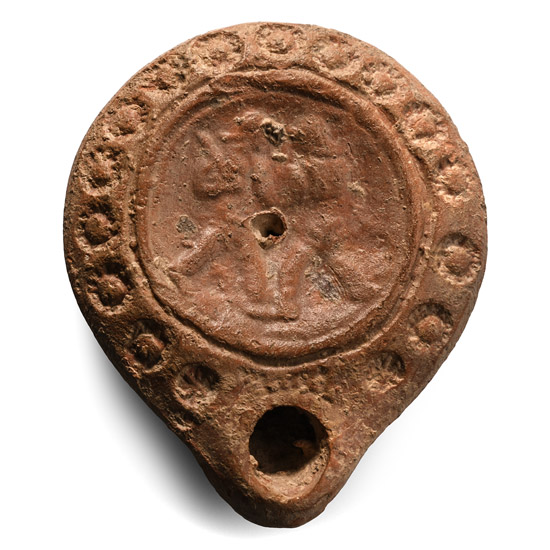
Roman Terracotta Oil Lamp with Fighting Gladiators
2nd century A.D.Estimate: £200 - 300 (+bp*)
Opening Bid: £100
Broad and squat with short stub nozzle, concentric rings to the base, row of impressed annulets to the shoulder, discus with central filler hole; low-relief scene of two murmillo gladiators in combat. 62 grams, 82 mm
From a German private collection, 1980s. Property of an Essex, UK, gentleman. -
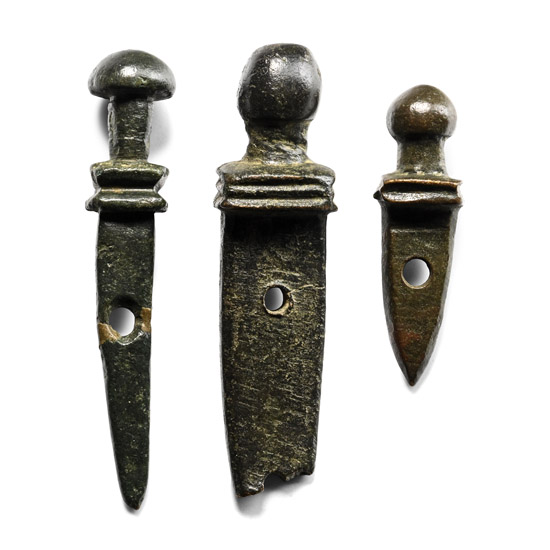
Roman Bronze Gladius Sword Pendant Collection
1st-2nd century A.D.Sold for (Inc. bp): £208
Comprising three gladius pendants, each with a domed pommel and pierced through the blade. 19.7 grams total, 28-42 mm
Ex German art market, 2000s. Acquired from an EU collector living in London. From the collection of a Surrey, UK, gentleman.
