
Loading, please wait...
LOT 0811
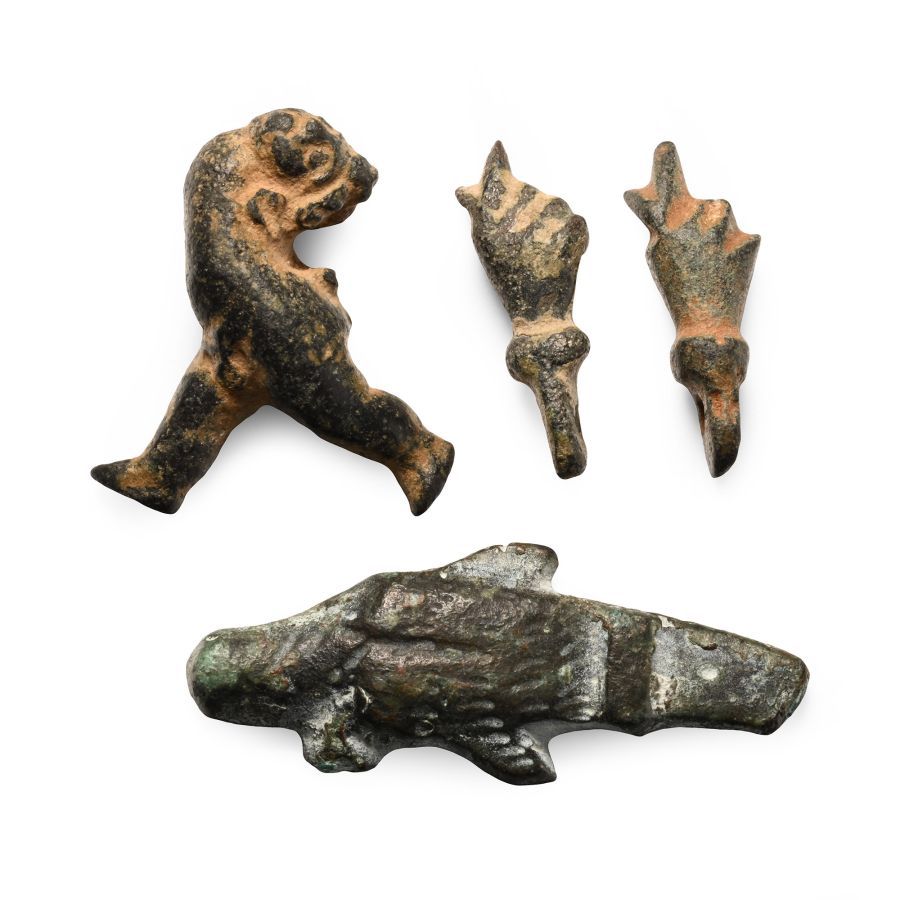
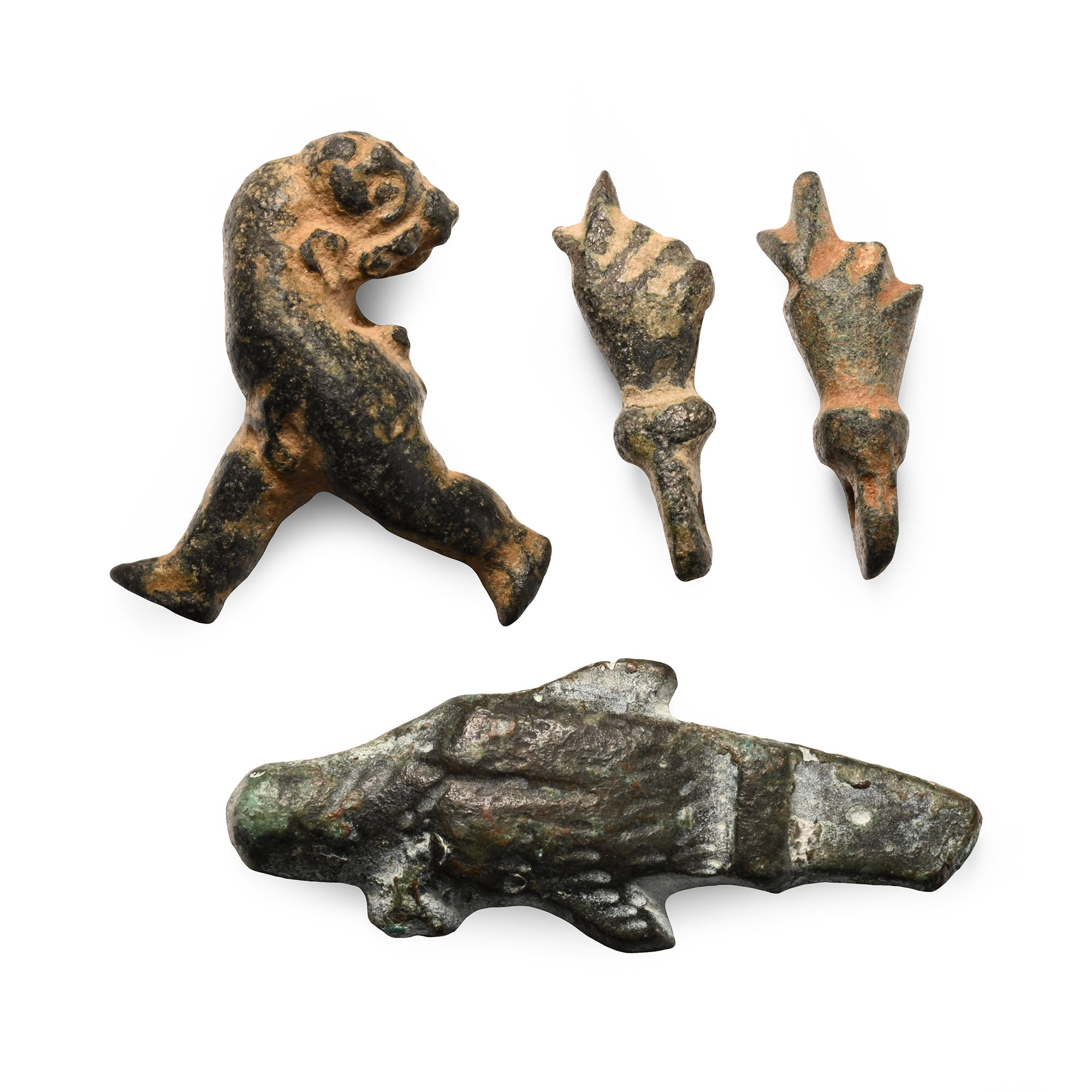
Roman Bronze Artefact Group
1ST-4TH CENTURY A.D.
1 - 1 3/4 in. (38.7 grams total, 25-45 mm).
Comprising: a lion-headed nude male figure in running position; two hand pendants making the fica gesture; a wolf-head(?) shaped mount. [4, No Reserve]
ProvenanceFrom the collection of a gentleman, acquired on the London art market in the 1990s.
LiteratureCf. a similar 'Manus Fica' amulet in PAS (FindID 256624-KENT-4DA2EF).
FootnotesThe 'manus fico' (literally 'fig sign') is a gesture made with the hand, and fingers curled, with the thumb thrust between the middle and index fingers. In Roman culture, this was a sign of fertility or good luck and would have warded off the evil eye. Phallic amulets were popular items amongst the Roman army.
CONDITIONTimeLine Auctions follows a vetting process to ensure the authenticity and legality of all items, reinforcing our commitment to integrity and responsible trading. Each antiquity, antique, and coin lot undergoes thorough examination by a vetting committee of at least ten external specialists, professional trade association members, scientists, and archaeologists: Our Vetting Process
AUCTIONS:
TimeLine is a leading auction house specialising in antiquities, ancient art, collectables, natural history, coins, medals, and books. Our auctions offer museums, collectors, historians, and enthusiasts the opportunity to acquire unique and historically significant pieces.
-
.jpg)
Roman Bronze Oil Lamp with Mask Handle
1st-3rd century A.D.Sold for (Inc. bp): £1,820
Hollow-formed pear-shaped body with waisted nozzle, recessed discus with phallus-shaped void, arched strap handle to rear with reflector plate formed as an actor's mask with palmette below; integral socketted base. 442 grams, 14.2 cm
Acquired on the German art market before 2000. Ex European private collection. -
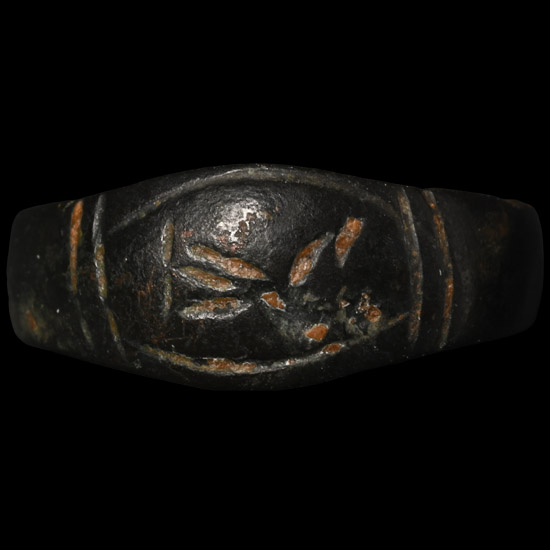
Roman Bronze Ring with Bird
1st-4th century A.D.Sold for (Inc. bp): £59
Comprising a gently domed hoop and an oval bezel with a stylised bird motif. 2.84 grams, 19.40 mm overall, 16.59 mm internal diameter (approximate size British L 1/2, USA 6, Europe 11.87, Japan 11)
From the private collection of a European gentleman (1942-2024), formed since the 1970s. -
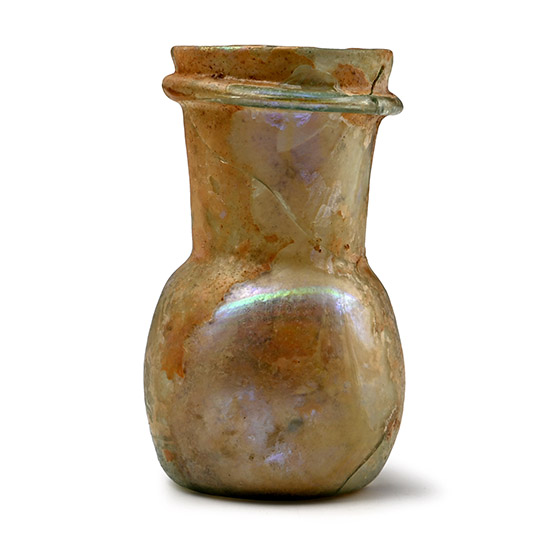
Roman Glass Flask
Circa 1st-4th century A.D.Sold for (Inc. bp): £130
With dimpled base, flared neck and carinated flange below the mouth, rounded rim. 37 grams, 86 mm
From a London, UK, collection of glass, 1970-2000s.
