
Loading, please wait...
LOT 0936
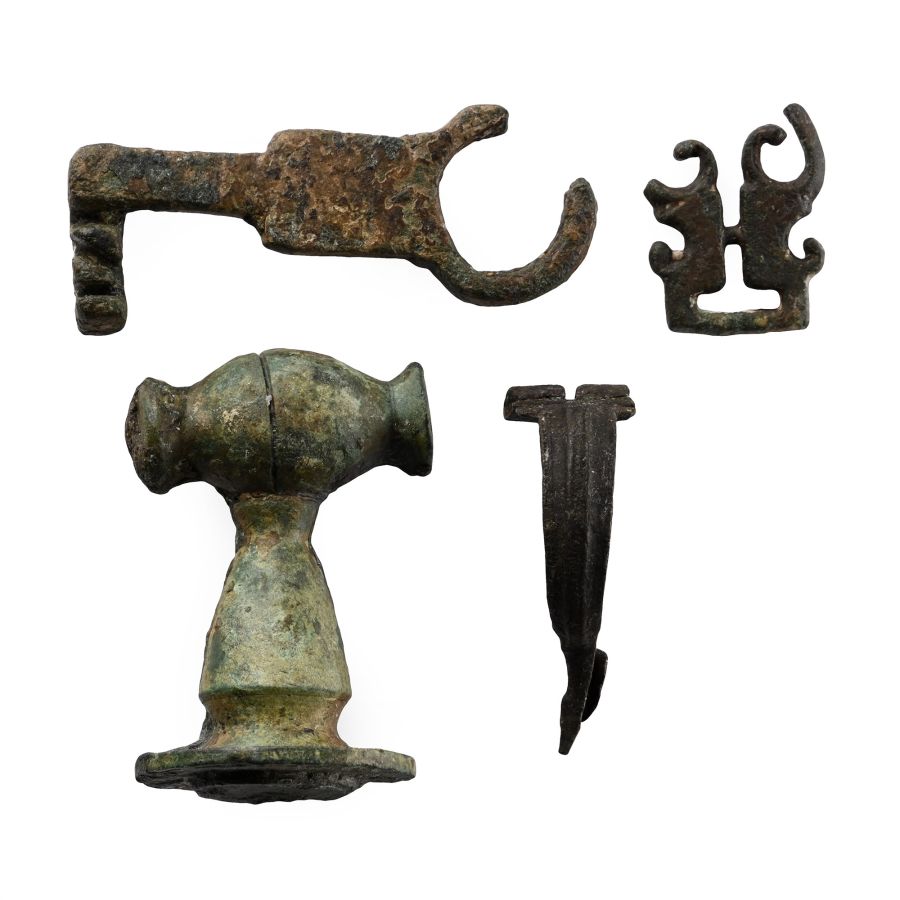
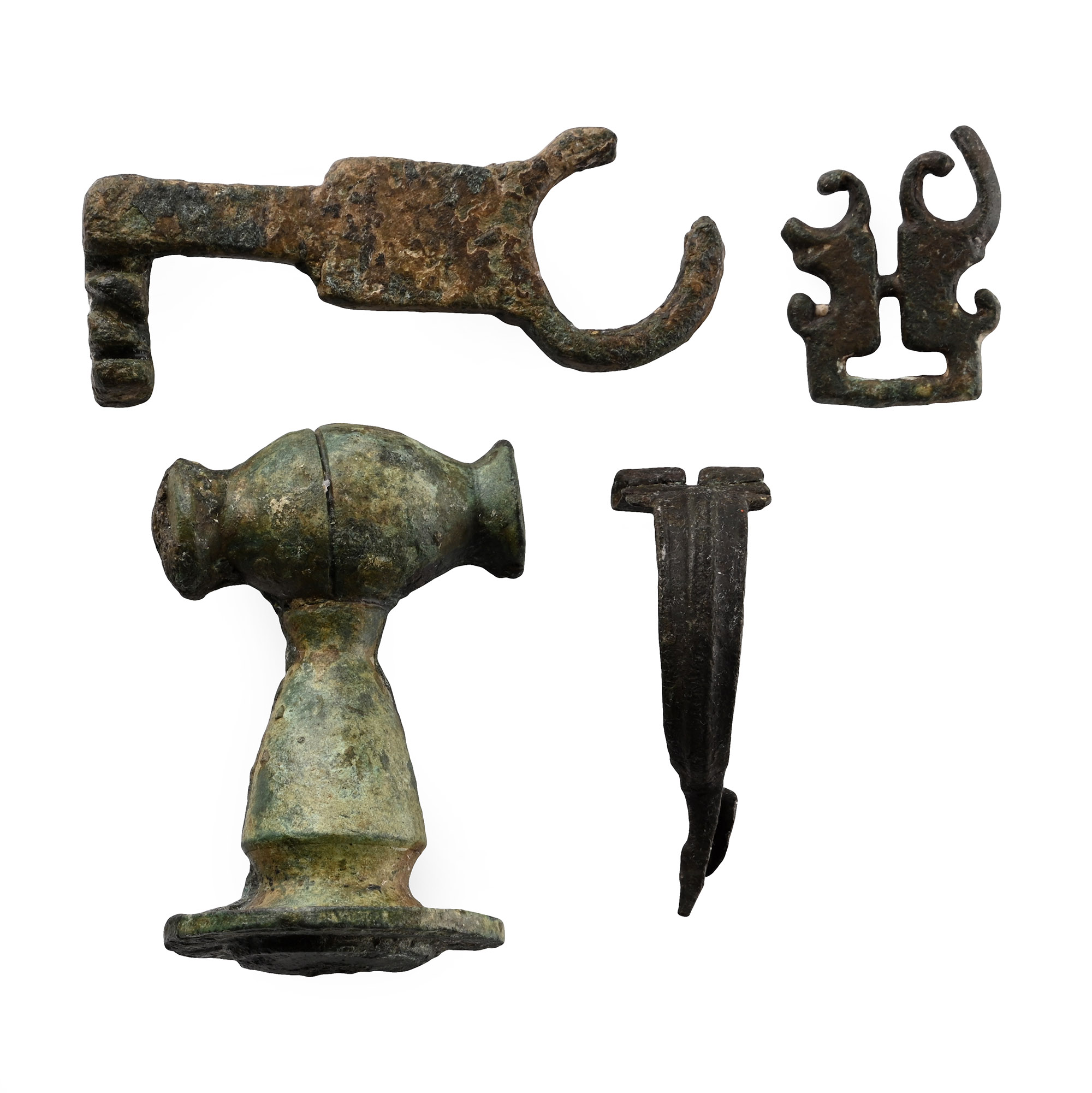
Roman Bronze Artefact Group
1ST-4TH CENTURY A.D.
1 1/8 - 2 1/2 in. (154 grams total, 28-65 mm).
Comprising of a bow fibula fragment, openwork mount, key with lateral lobe with teeth, a conical handle(?) with discoid base. [4, No Reserve]
ProvenancePrivate collection of a North London lady before 2000.
Property of a London, UK, gentleman.
This lot is accompanied by an illustrated lot declaration signed by the Head of the Antiquities Department, Dr Raffaele D'Amato.
TimeLine Auctions follows a vetting process to ensure the authenticity and legality of all items, reinforcing our commitment to integrity and responsible trading. Each antiquity, antique, and coin lot undergoes thorough examination by a vetting committee of at least ten external specialists, professional trade association members, scientists, and archaeologists: Our Vetting Process
AUCTIONS:
TimeLine is a leading auction house specialising in antiquities, ancient art, collectables, natural history, coins, medals, and books. Our auctions offer museums, collectors, historians, and enthusiasts the opportunity to acquire unique and historically significant pieces.
-
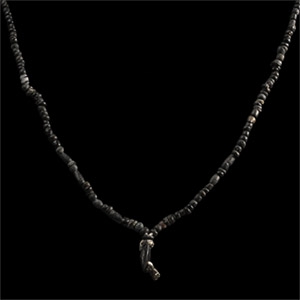
Roman Black Glass Bead Necklace String
1st-4th century A.D. and laterSold for (Inc. bp): £85
Composed of mainly oblate and annular beads; restrung. 8.52 grams, 48 cm
From the London, UK, art market in the 1990s. This lot is accompanied by an illustrated lot declaration signed by the Head of the Antiquities Department, Dr Raffaele D'Amato.
In the Roman period there was a strong formal and chromatic diversity of glass beads used for necklaces and bracelets. The most common beads in forms were small biconical (lenticular), barrel-shaped, spherical and annular; the most common colours were dark blue, followed by green and yellow. The succession of glass beads often imitates jewellery made of costly materials (gold, silver, semi-precious and precious stones). Green, blue-green, blue, yellow, and black drawn and rounded glass beads (like here) are late Roman types. -
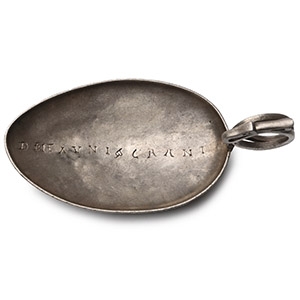
Roman Silver Spoon Property of the God Faunus Cranus
4th century A.D.Sold for (Inc. bp): £3,640
Shallow oval bowl with a coiled handle and a duck or swan head facing outwards, Latin inscription 'DEIFAVNI CRANI', '(Property) of the god Faunus Cranus’. 32 grams, 91 mm
UK private collection, 1990s. with Artemission, London, UK. Private collection, London, UK. This lot is accompanied by an illustrated lot declaration signed by the Head of the Antiquities Department, Dr Raffaele D'Amato.
Professor Dr phil. Peter Rothenhöfer writes: 'In RIB the inscription is categorized as 'religious dedication'; this must be rejected as we would expect the Dative case: deo Fauno ... - for the god Faunus ... But we read the genitive case: dei Fauni Crani: (property of) the God Faunus Cranus. This indicates that all these spoons were used (or intended to be used) during religious ceremonies (connected with meals) probably in a sanctuary of Faunus Cranus. The use of deus (= god) and the Celtic epitheton Cranus indicates a provincial cult with strong indigenous elements.' -
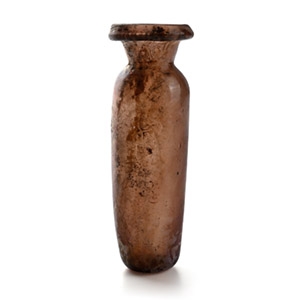
Roman Aubergine Glass Flask
1st-4th century A.D.Estimate: £300 - 400 (+bp*)
Opening Bid: £150
Core formed with rounded base, everted rim. 39 grams, 10.5 cm
Ex Mayfair, London, UK, gallery, 1990s-2000s. From an important collection of glass, the property of a London gentleman. This lot is accompanied by an illustrated lot declaration signed by the Head of the Antiquities Department, Dr Raffaele D'Amato.
