
Loading, please wait...

LOT 0783
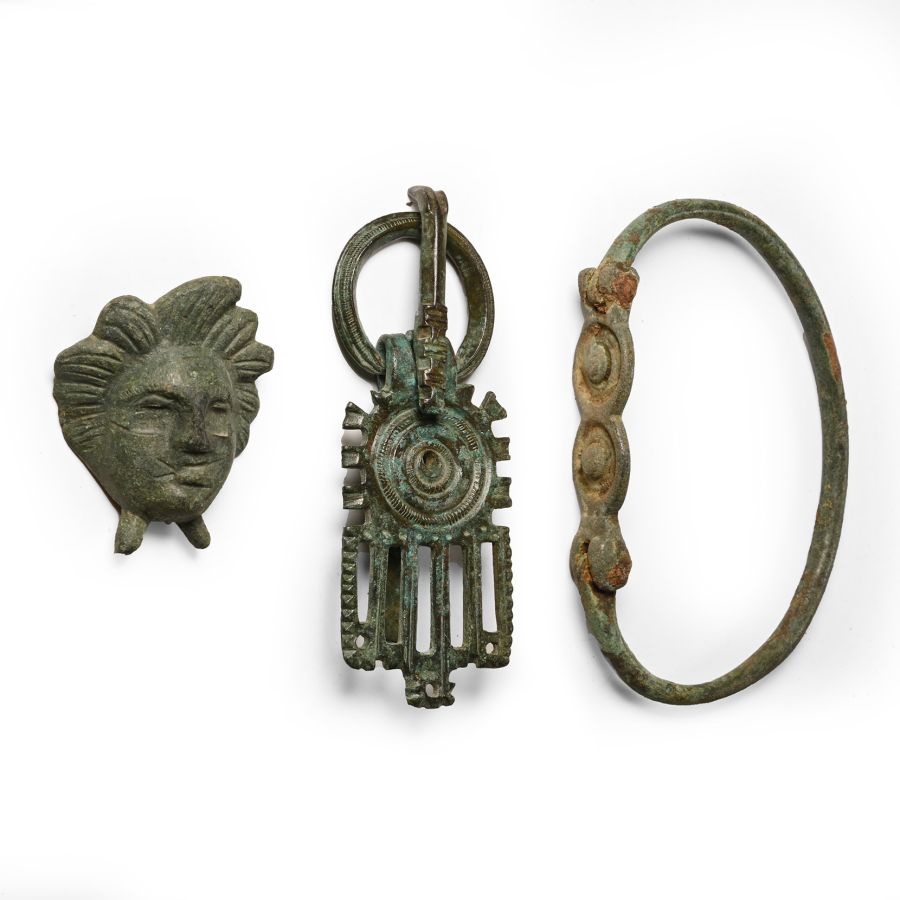
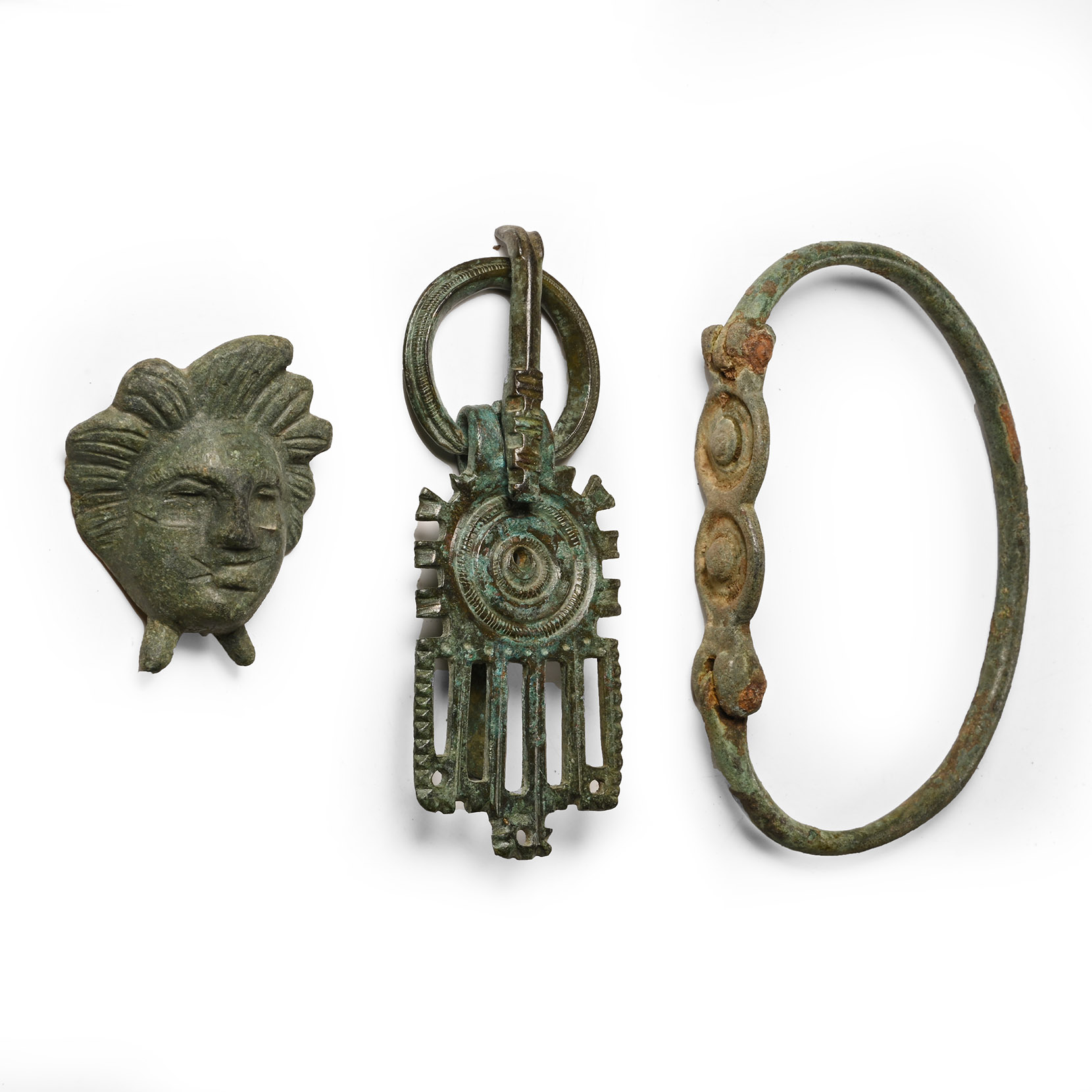
Roman Bronze Artefact Group
1ST-2ND CENTURY A.D.
1 3/4 - 3 3/4 in. (132 grams total, 45-95 mm).
Including a hinged bracelet, belt buckle and plate, and other items. [3]
ProvenanceFrom the private collection of Mr K.A., acquired in the 1990s-early 2000s.
CONDITIONTimeLine Auctions follows a vetting process to ensure the authenticity and legality of all items, reinforcing our commitment to integrity and responsible trading. Each antiquity, antique, and coin lot undergoes thorough examination by a vetting committee of at least ten external specialists, professional trade association members, scientists, and archaeologists: Our Vetting Process
AUCTIONS:
TimeLine is a leading auction house specialising in antiquities, ancient art, collectables, natural history, coins, medals, and books. Our auctions offer museums, collectors, historians, and enthusiasts the opportunity to acquire unique and historically significant pieces.
-

Roman Bronze Chi Rho Weight
4th century A.D.Sold for (Inc. bp): £7
Barrel-shaped in profile with incised radiating arms, possibly a Christogram. 16 grams, 17 mm
Acquired on the UK art market before 2000. Property of an Essex, UK, gentleman. -
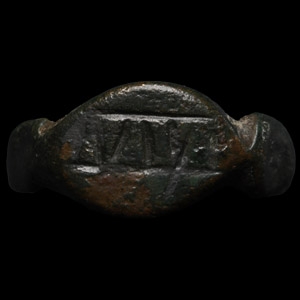
Roman Bronze Ring with 'may he live' Inscription
2nd-3rd century A.D.Sold for (Inc. bp): £52
With scrolled shoulders, ellipsoid bezel, low-relief inscription 'VIVA[T]' (may he live). 2.73 grams, 19.43 mm overall, 15.22 mm internal diameter (approximate size British I 1/2, USA 4 1/2, Europe 8.07, Japan 7)
UK private collection before 2000. Acquired on the UK art market. Property of a London gentleman. -

Large Roman Bronze Chariot Fitting with Imago Clipeata of a Priest of Mithras
Late 3rd-early 4th century A.D.Estimate: £25,000 - 35,000 (+bp*)
Opening Bid: £12,500
Representing a facing bust of a mature man with his head turned slightly to the right; short hair and a full, neatly trimmed beard, furrowed brow and strong eyebrows, deep-set eyes with heavy eyelids, eyes marked with pupils; dressed in a short-sleeved tunic draped around the neck and wearing a conical cap, holding an egg in his left hand; pierced through the surrounding roundel; mounted on a custom-made display stand. 1.8 kg total, 24.5 cm including stand
J.J. Klejman, New York, 1963. with Gallery Six, New York, 1991. with Christie's, New York, 11 December 2014, no.156 ($50,000-$70,000). Private collection, London. Accompanied by an academic report by Dr Raffaele D'Amato. This lot has been checked against the Interpol Database of stolen works of art and is accompanied by search certificate number no.12361-226874.
In the Mithraic cult the egg is a symbol of eternal time, and associated with the birth of god Mithras. The cult of Mithras, the god of the legions, whose symbol was the Sol Invictus, was popular during the 3rd century and in Tetrarchic Age. The chariot which this fitting adorned possibly wouldn't have been used in war, but in triumphal and religious processions, or simply for transport of priests.
