
Loading, please wait...
LOT 0848
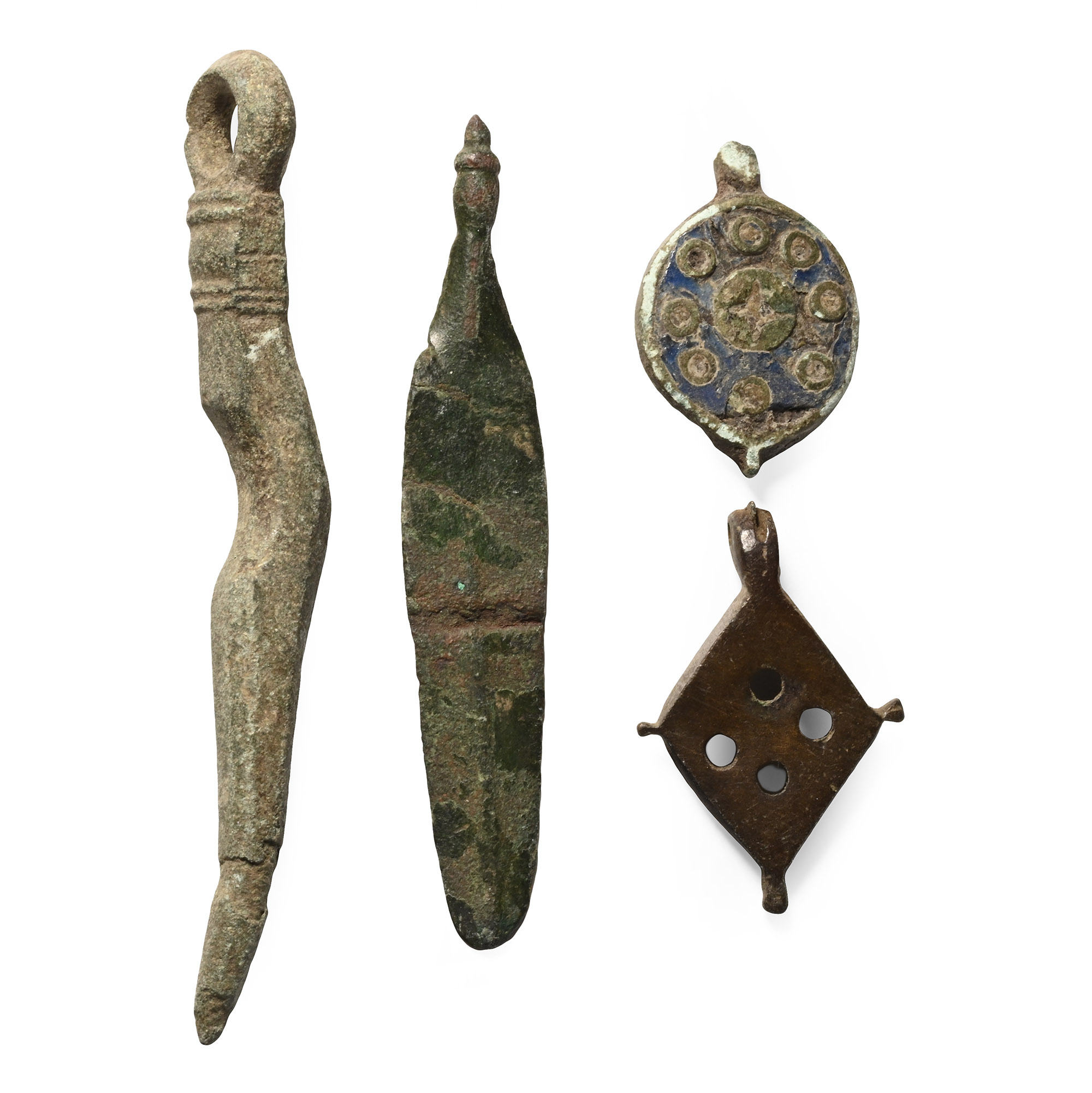
Roman Bronze Artefact Collection
1ST-4TH CENTURY A.D.
1 - 2 in. (30.69 grams total, 27-79 mm).
Including two seal box lids and other items. [4, No Reserve]
ProvenanceFound Norfolk, UK.
CONDITIONTimeLine Auctions follows a vetting process to ensure the authenticity and legality of all items, reinforcing our commitment to integrity and responsible trading. Each antiquity, antique, and coin lot undergoes thorough examination by a vetting committee of at least ten external specialists, professional trade association members, scientists, and archaeologists: Our Vetting Process
AUCTIONS:
TimeLine is a leading auction house specialising in antiquities, ancient art, collectables, natural history, coins, medals, and books. Our auctions offer museums, collectors, historians, and enthusiasts the opportunity to acquire unique and historically significant pieces.
-
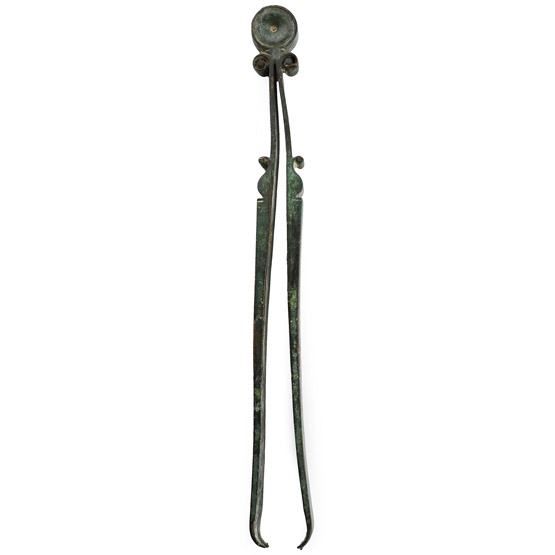
Roman Bronze Serrated Medical Forceps
1st-2nd century A.D.Sold for (Inc. bp): £286
With long rectangular-section arms serrated at the end, finial formed as a disc with scroll decoration; accompanied by a slip reading 'Roman, Decorated Bronze Forceps, C. 1st-2nd century AD. Large, finely decorated pair of bronze forceps, with long, slightly expanding arms & serrated grips, indicating it may have been used as a medical instrument. Provenance: O'Bee Collection, acquired in the 1980's & believed to have been found in East Anglia. Published in Bennets R-22-0106, pg 232. ref. Similar example in Metropolitan Museum of Art, no: 74.51.5435.' 46 grams, 14.2 cm
Believed found in East Anglia, UK. Ex M. O'Bee collection; acquired in the 1980s. Ex Noonans, London, UK. Accompanied by a previous catalogue information slip. -
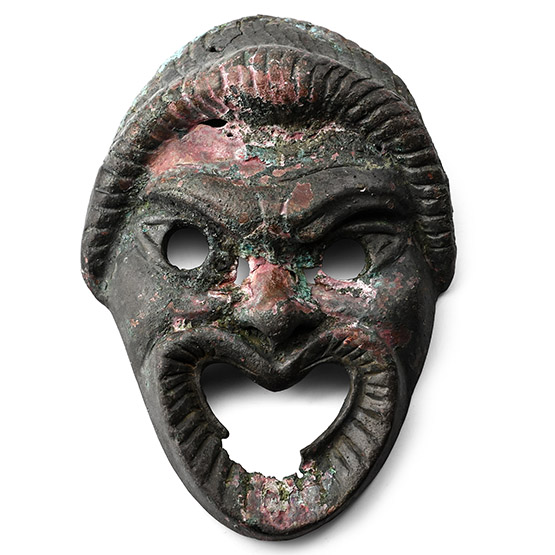
Roman Bronze Actor's Mask
1st-2nd century A.D.Sold for (Inc. bp): £234
Modelled in the half-round, with grotesque facial features and scooped crescentic mouth, segmented hair. 84 grams, 82 mm
Ex German art market, 2000s. Acquired from an EU collector living in London. From the collection of a Surrey, UK, gentleman. -
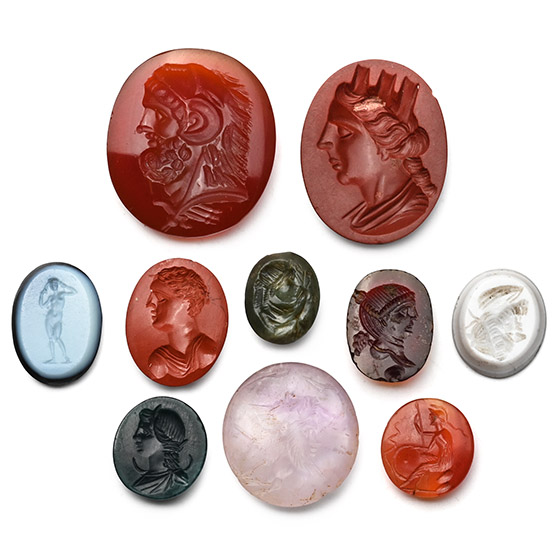
Roman and Later Hardstone Gemstone Collection
2nd century A.D. and laterSold for (Inc. bp): £1,404
Including profile bust and gryllus types, nicolo of Venus and others; supplied with a museum-quality impression. 20.6 grams total, 13-27 mm
Private collection, England.
