
Loading, please wait...
LOT 0869
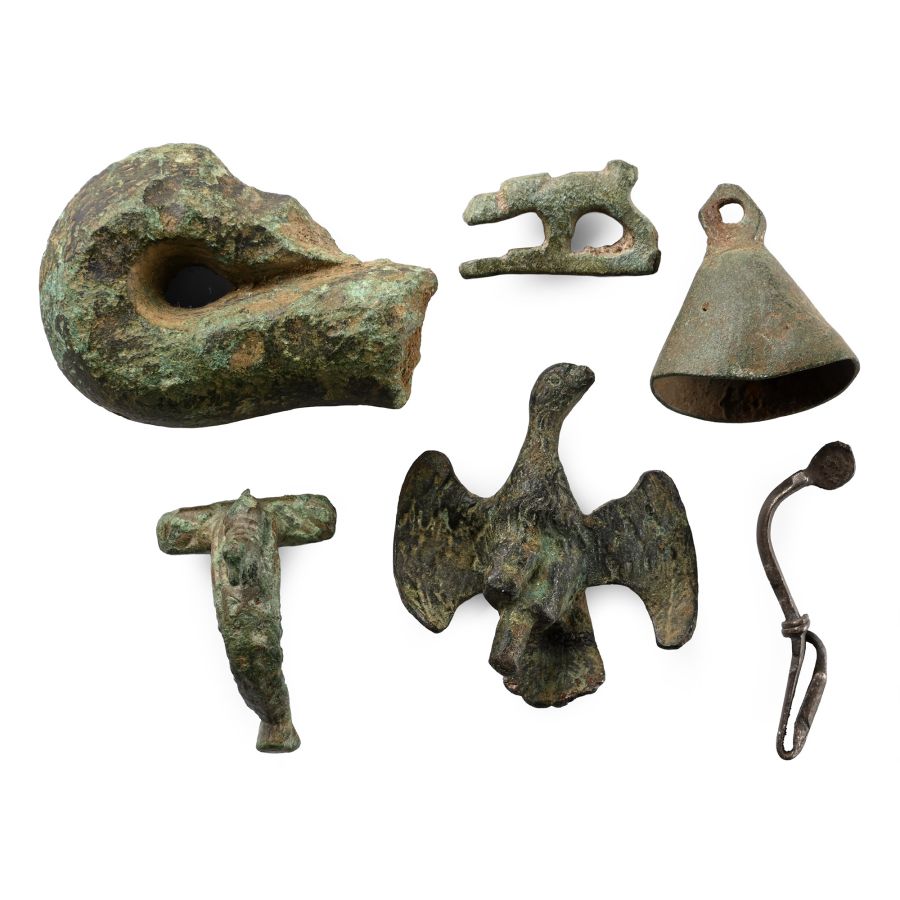
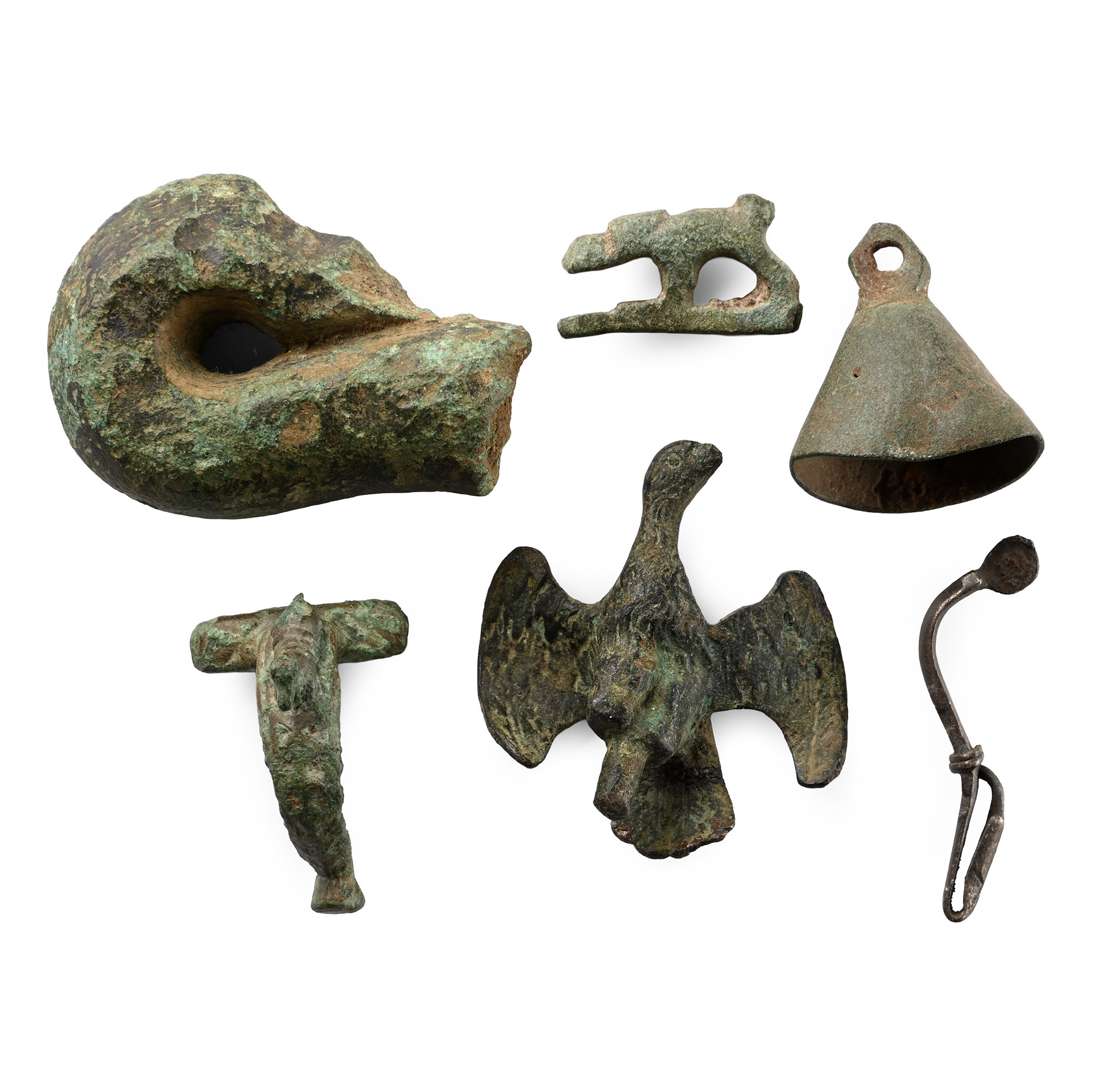
Roman Bronze Artefact Collection
1ST-4TH CENTURY A.D.
1 - 1 7/8 in. (161 grams total, 25-48 mm).
Comprising: an eagle statuette; a bell; a dog-shaped knife pommel; two brooch fragments; a furniture mount in the shape of a swan head. [6, No Reserve]
ProvenanceAcquired on the UK art market.
Property of an East Anglia, UK, gentleman.
This lot is accompanied by an illustrated lot declaration signed by the Head of the Antiquities Department, Dr Raffaele D'Amato.
TimeLine Auctions follows a vetting process to ensure the authenticity and legality of all items, reinforcing our commitment to integrity and responsible trading. Each antiquity, antique, and coin lot undergoes thorough examination by a vetting committee of at least ten external specialists, professional trade association members, scientists, and archaeologists: Our Vetting Process
AUCTIONS:
TimeLine is a leading auction house specialising in antiquities, ancient art, collectables, natural history, coins, medals, and books. Our auctions offer museums, collectors, historians, and enthusiasts the opportunity to acquire unique and historically significant pieces.
-
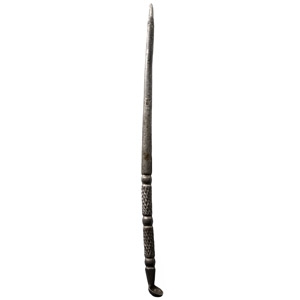
Roman Silver Ligula with Stylus
2nd-3rd century A.D.Sold for (Inc. bp): £182
Slender shank with tiered balusters to the upper end, bowl-shaped finial. 9.16 grams, 11.1 cm
Ex German art market, 2000s. Acquired from an EU collector living in London. From the collection of a Surrey, UK, gentleman. This lot is accompanied by an illustrated lot declaration signed by the Head of the Antiquities Department, Dr Raffaele D'Amato. -
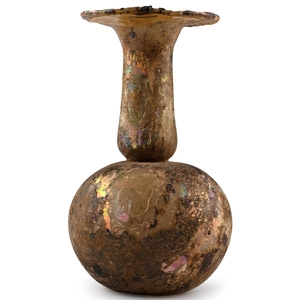
Roman Glass Bottle
3rd-4th century A.D.Sold for (Inc. bp): £130
With broad flange rim, tapering neck and globular body with narrow base. 27 grams, 82 mm
From the private collection of Kenneth Machin (1936-2020), Buckinghamshire, UK; his collection of antiquities and natural history was formed since 1948; thence by descent. This lot is accompanied by an illustrated lot declaration signed by the Head of the Antiquities Department, Dr Raffaele D'Amato. -
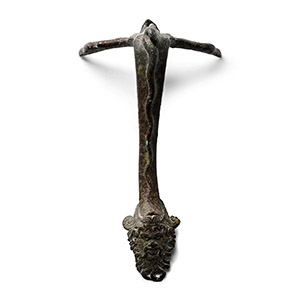
Roman Bronze Vessel Handle with Face
1st century A.D.Estimate: £1,200 - 1,700 (‡+bp*)
Opening Bid: £600
Swept in profile comprising a horizontal crescentic panel to attach to the rim, with inlaid silver detailing, recurved cobra-shaped thumb pad, raised serpent to the outer face of the tapering handle, finial a mask of Bacchus or Pan, facing with volute scrolls to the brow and thick splayed beard; silver diadem. 118 grams, 14.4 cm
Private collection. with Christie's, London, 11 June 1997, no.97 (part). with Bonhams, 13 April 2000, no.198. Private collection, Europe. This lot is accompanied by an illustrated lot declaration signed by the Head of the Antiquities Department, Dr Raffaele D'Amato.
