
Loading, please wait...

LOT 0815
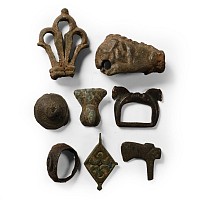
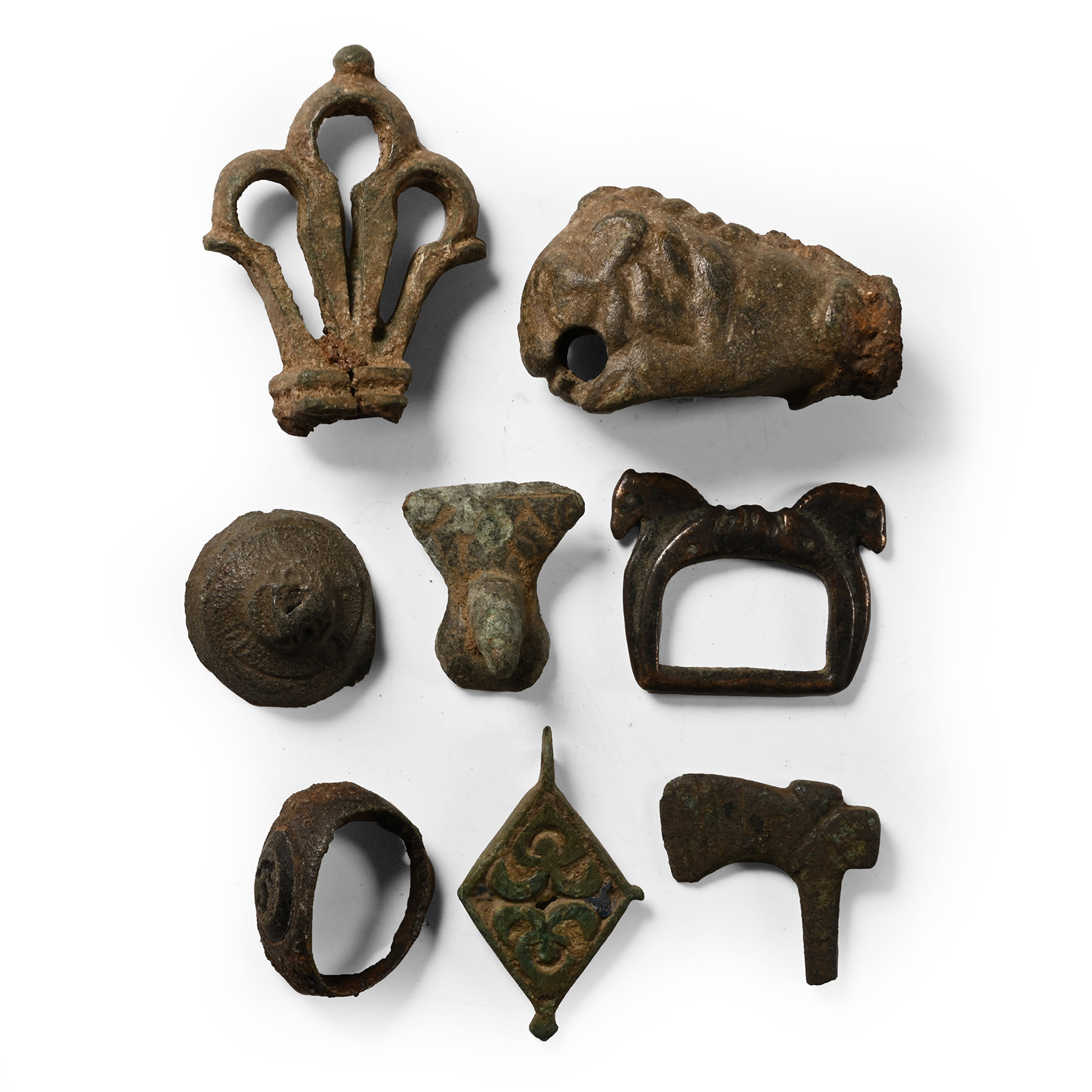
Roman Bronze Artefact Collection
1ST-4TH CENTURY A.D. AND LATER
3/4 - 1 5/8 in. (68.5 grams total, 20-40 mm).
Including a knife pommel, buckle loop with addorsed horse-heads, phallic mount and other items. [8, No Reserve]
ProvenanceAcquired on the European art market since the early 2000s.
From the private Northern Ireland collection of R.M.
TimeLine Auctions follows a vetting process to ensure the authenticity and legality of all items, reinforcing our commitment to integrity and responsible trading. Each antiquity, antique, and coin lot undergoes thorough examination by a vetting committee of at least ten external specialists, professional trade association members, scientists, and archaeologists: Our Vetting Process
AUCTIONS:
TimeLine is a leading auction house specialising in antiquities, ancient art, collectables, natural history, coins, medals, and books. Our auctions offer museums, collectors, historians, and enthusiasts the opportunity to acquire unique and historically significant pieces.
-
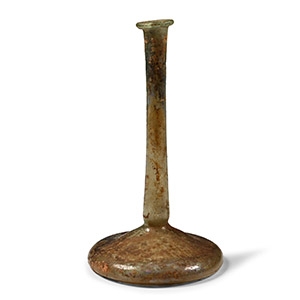
Roman Glass Flask with Base
1st-3rd century A.D.Estimate: £400 - 600 (+bp*)
Opening Bid: £200
Tall thin translucent pale green vessel with wide base and flared rim. 34.2 grams, 15 cm
Acquired on the German art market, 1989-1995. with The Museum Gallery, 19 Bury Place, London, WC1, UK, 1998-2003. Property of a London based academic, 2003-present. -
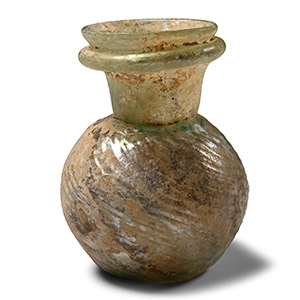
Roman Glass Sprinkler Flask with Iridescence
1st-3rd century A.D.Estimate: £400 - 600 (+bp*)
Opening Bid: £200
With rounded body, swirl detailing and rolled lip at the shoulder, cylindrical neck and deep, tiered rim; internal shelf at shoulder level with small central opening; iridescence to surfaces; pontil base. 75.6 grams, 91 mm
Acquired on the German art market, 1989-1995. with The Museum Gallery, 19 Bury Place, London, WC1, UK, 1998-2003. Property of a London based academic, 2003-present. -
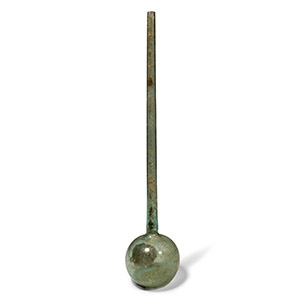
Large Roman Glass Flask with Long Slender Neck
1st-3rd century A.D.Sold for (Inc. bp): £780
Aqua-green glass with piriform body and dimpled base, gently tapering tubular neck with flat rim. 73 grams, 34.5 cm
Acquired on the German art market, 1989-1995. with The Museum Gallery, 19 Bury Place, London, WC1, UK, 1998-2003. Property of a London based academic, 2003-present.
