
Loading, please wait...
LOT 0943
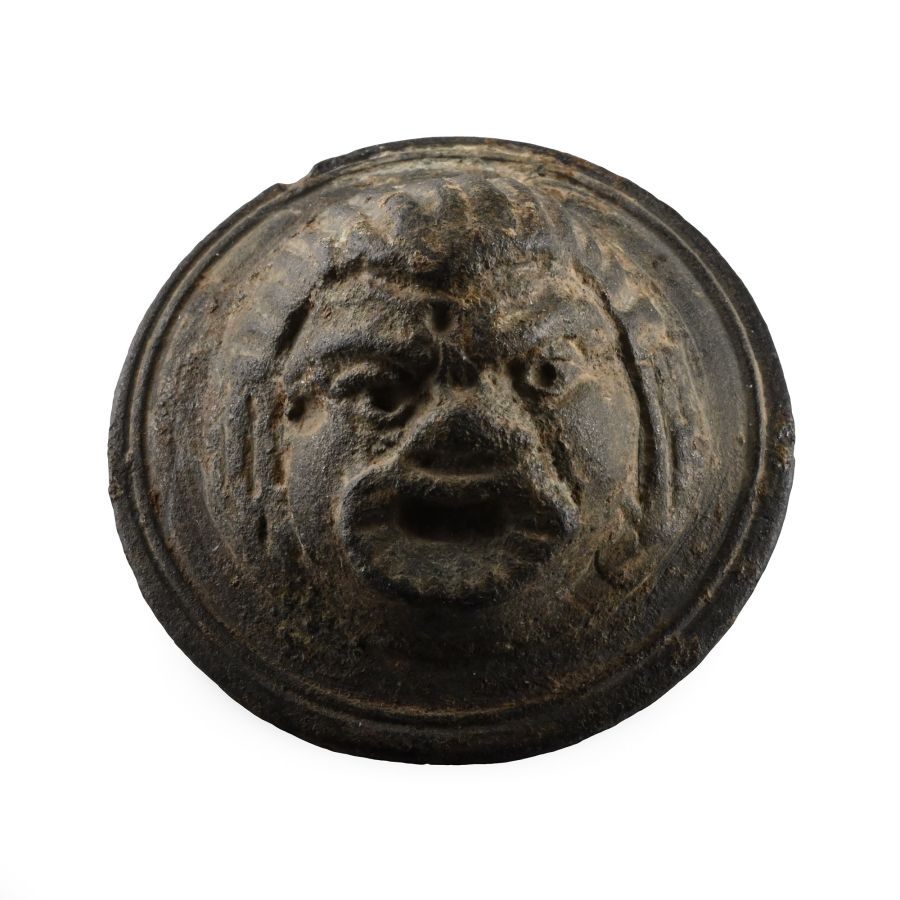
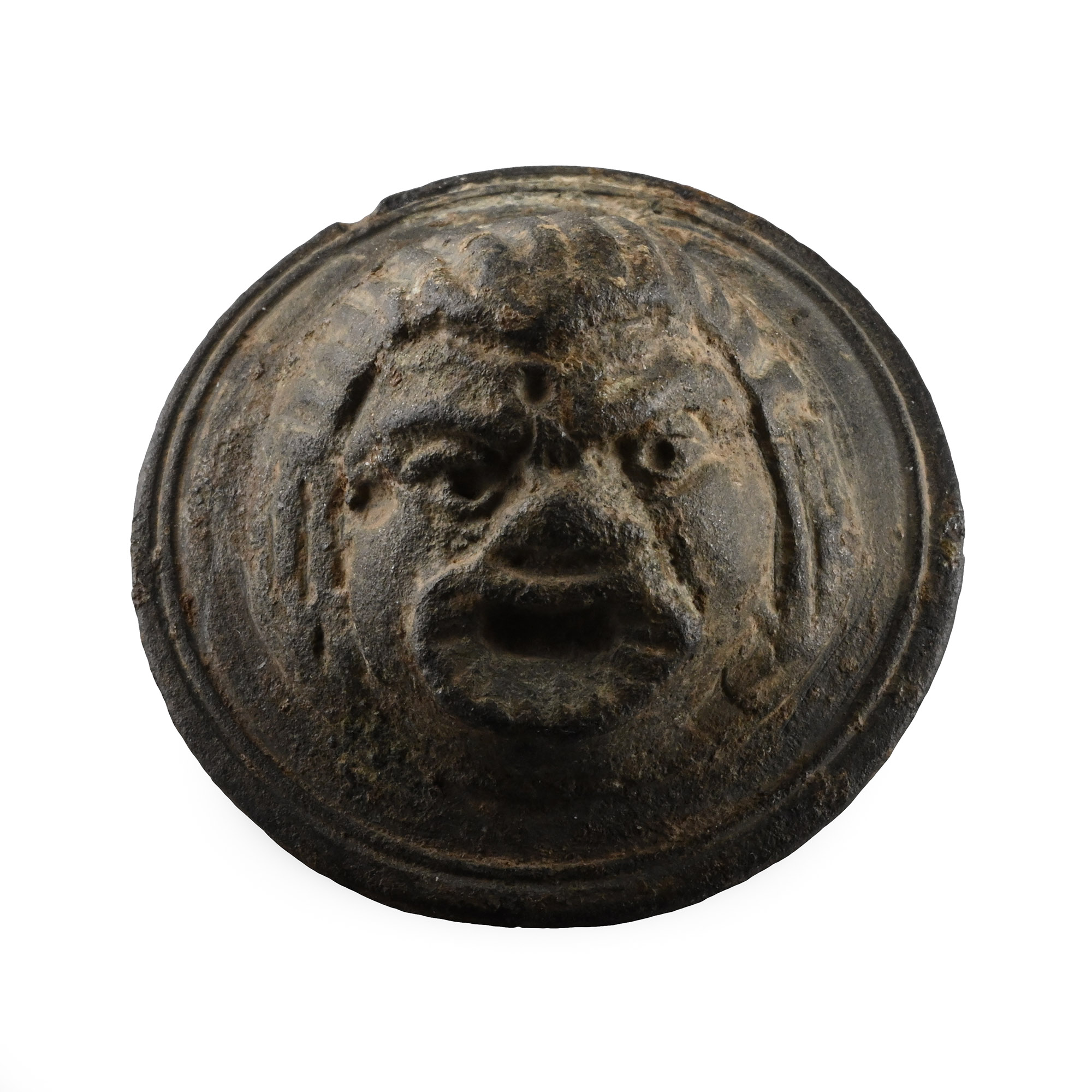
Roman Bronze Applique of Actor's Mask
2ND CENTURY A.D.
1 1/2 in. (38.8 grams, 38 mm).
Discoid with flange rim, central high-relief actor's mask with D-shaped mouth.
ProvenanceAcquired in the 1992.
Private collection, Switzerland, thence by descent.
Private collection, since the late 1990s.
This lot is accompanied by an illustrated lot declaration signed by the Head of the Antiquities Department, Dr Raffaele D'Amato.
TimeLine Auctions follows a vetting process to ensure the authenticity and legality of all items, reinforcing our commitment to integrity and responsible trading. Each antiquity, antique, and coin lot undergoes thorough examination by a vetting committee of at least ten external specialists, professional trade association members, scientists, and archaeologists: Our Vetting Process
AUCTIONS:
TimeLine is a leading auction house specialising in antiquities, ancient art, collectables, natural history, coins, medals, and books. Our auctions offer museums, collectors, historians, and enthusiasts the opportunity to acquire unique and historically significant pieces.
LOT 0943
Roman Bronze Applique of Actor's Mask
Estimate £200 - 300€230 - 350 (for guidance only)$270 - 410 (for guidance only)
-
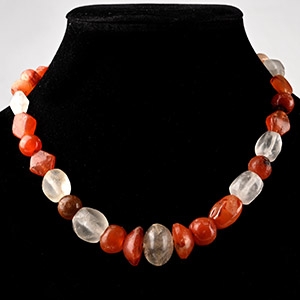
Roman Rock Crystal and Carnelian Bead Necklace String
1st-4th century A.D. and laterSold for (Inc. bp): £124
A short designer necklace composed of spherical, biconical, barrel and other bead types. 85 grams, 47 cm
From the private collection of a London gentleman, from his grandfather's collection formed before the early 1970s. This lot is accompanied by an illustrated lot declaration signed by the Head of the Antiquities Department, Dr Raffaele D'Amato. -
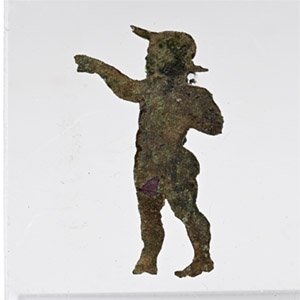
Roman Bronze Gladiator Figure
1st-4th century A.D.Sold for (Inc. bp): £117
Sheet-bronze silhouette figure of a gladiator in murmillo helmet; mounted on a display stand. 26.6 grams total, 41 mm
Ex London, UK, gentleman 1980-1990s. This lot is accompanied by an illustrated lot declaration signed by the Head of the Antiquities Department, Dr Raffaele D'Amato. -
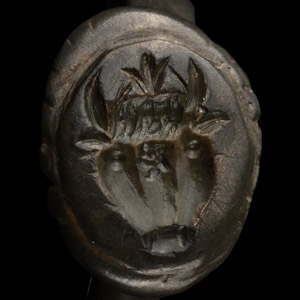
Roman Bronze Signet Ring with Bull's Head
4th-5th century A.D.Sold for (Inc. bp): £221
Ellipsoid bezel with incuse bucranium motif, star between the horns. 5.93 grams, 23.28 mm overall, 19.28 mm internal diameter (approximate size British R, USA 8 1/2, Europe 18 3/4, Japan 18)
Ex German art market, 2000s. Acquired from an EU collector living in London. From the collection of a Surrey, UK, gentleman. This lot is accompanied by an illustrated lot declaration signed by the Head of the Antiquities Department, Dr Raffaele D'Amato.
The bull-head motif is used in Mithraism, where it represents masculine power.
