
Loading, please wait...
LOT 0704
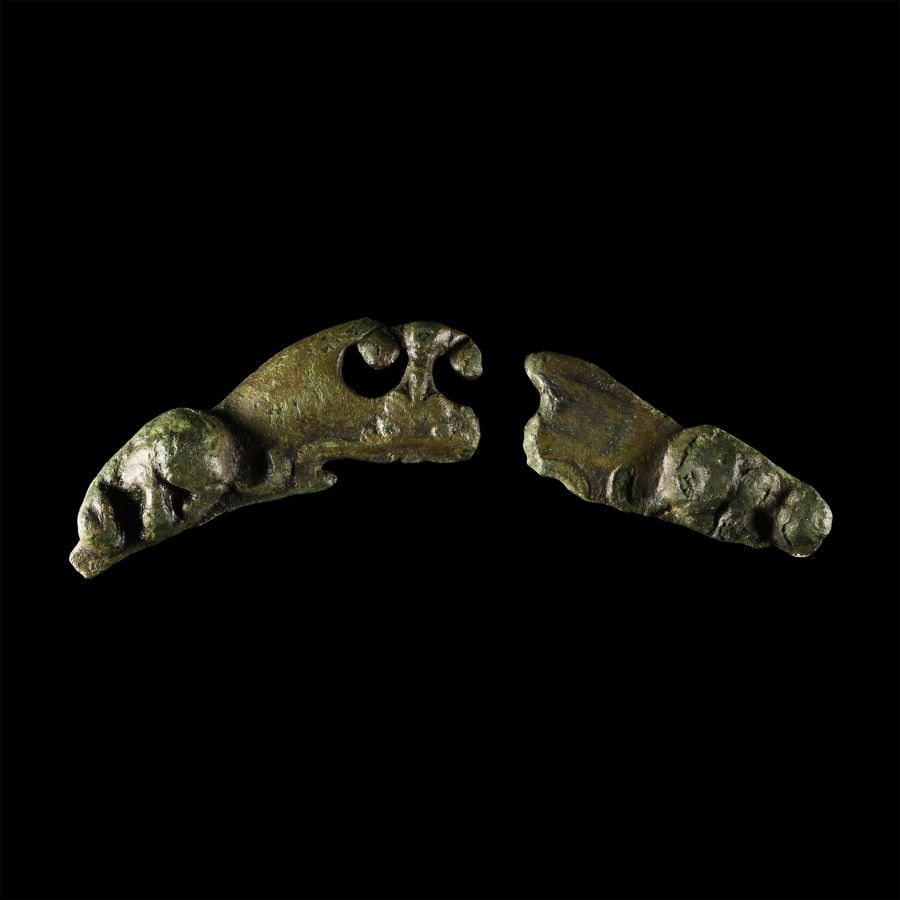
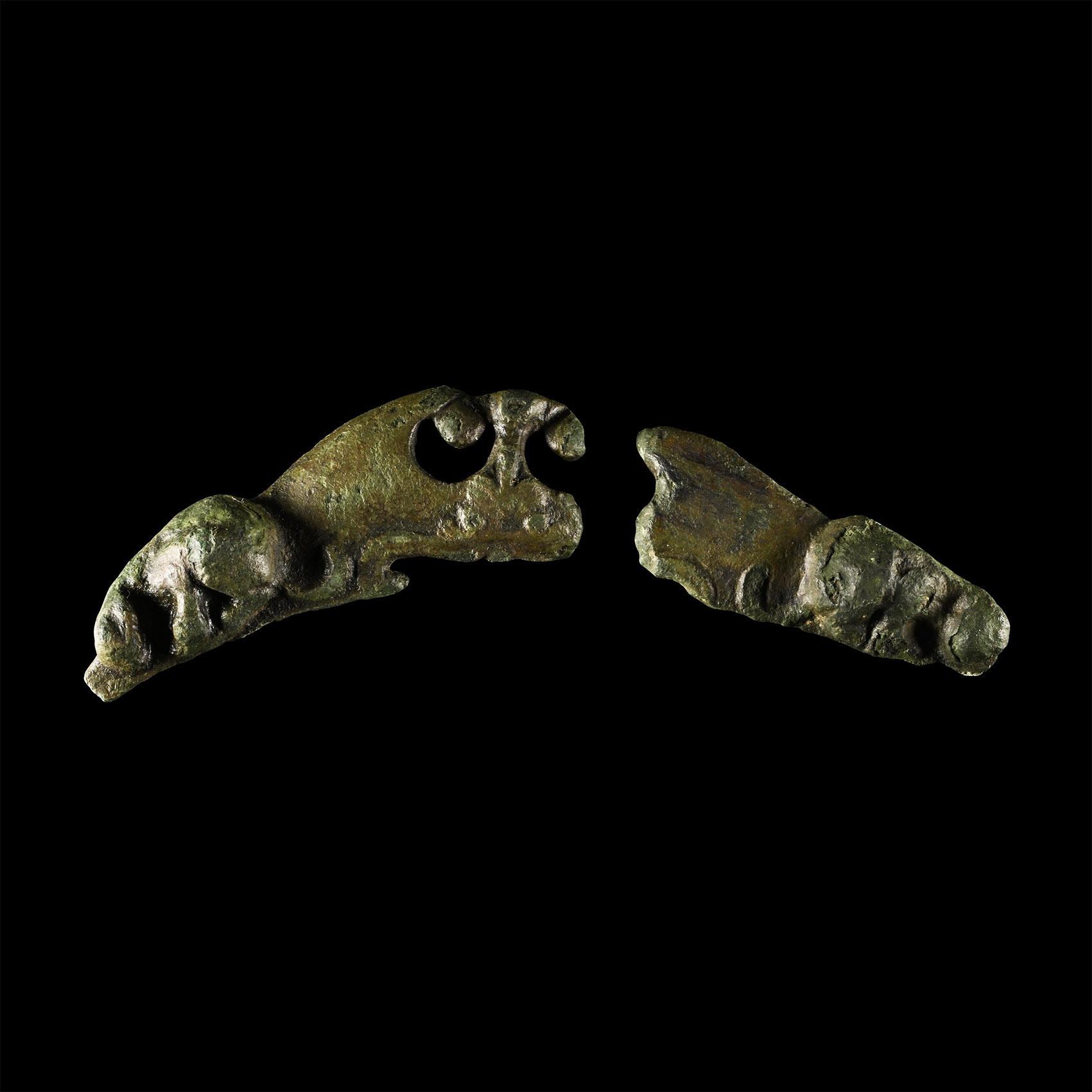
Roman Bronze Apex Mount with Felines
CIRCA 1ST CENTURY B.C.-1ST CENTURY A.D.
2 1/8 - 2 5/8 in. (78.2 grams total, 53-67 mm).
Two military mounts, each roughly triangular with a curved underside; the smaller with a feline modelled in the round at the narrow end; the larger with a similar animal amf comma-leaf detailing at the wider end. [2]
ProvenanceFound Hampshire, UK.
LiteratureSee Bishop, M.C. & Coulston, J.C.N., Roman Military Equipment From the Punic Wars to the Fall of Rome, London, 1993, for discussion.
FootnotesThe comma-leaf ornament on the larger piece is indicative of Roman military metalwork around the time of the conquest of Gaul (circa 55 B.C.), after which large numbers of local troops were recruited into the Roman army. Gallic ornaments of La Tène style influenced the equipment of the legions formed at this time.
CONDITIONTimeLine Auctions follows a vetting process to ensure the authenticity and legality of all items, reinforcing our commitment to integrity and responsible trading. Each antiquity, antique, and coin lot undergoes thorough examination by a vetting committee of at least ten external specialists, professional trade association members, scientists, and archaeologists: Our Vetting Process
AUCTIONS:
TimeLine is a leading auction house specialising in antiquities, ancient art, collectables, natural history, coins, medals, and books. Our auctions offer museums, collectors, historians, and enthusiasts the opportunity to acquire unique and historically significant pieces.
LOT 0704
Roman Bronze Apex Mount with Felines
Estimate £100 - 140€120 - 160 (for guidance only)$140 - 190 (for guidance only)
-
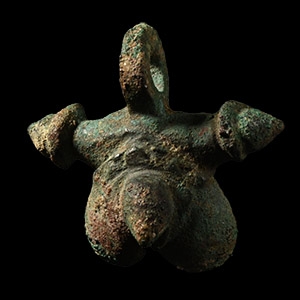
Roman Bronze Phallic Amulet
1st-3rd century A.D.Estimate: £200 - 300 (‡+bp*)
Opening Bid: £100
Comprising male genitals flanked by stubby phalloi above, pierced suspension lug. 19.1 grams, 34 mm
Acquired early 1990s. Ex private American collection; thence by descent. Private Swiss collection since 1998. -
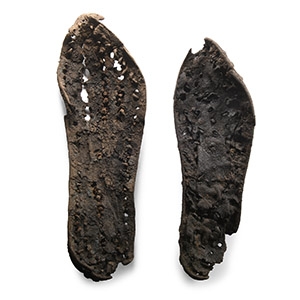
Roman 'Thames' Leather Marching Shoe Sole Group
1st-4th century A.D.Sold for (Inc. bp): £1,300
With perforations for attachment to the shoe uppers through nails; one fragmentary. 248 grams total, 22.5-24.5 cm
Found by Steve Brooker on the Thames foreshore at Embankment, London, UK, 2001. Property of a Nottinghamshire gentleman.
Waterlogged conditions on the Thames waterfront have created the oxygen-free environment needed for the survival of ancient organic artefacts. Among the studied or published Roman leatherwork from London, 89% is composed of footwear. The introduction of vegetable tanned leather and the expansion of ironworking were some of the major technological innovations of the Roman period; allowing the mass production of sturdy, hobnailed shoes. -
.jpg)
Roman Intaglio Gemstone with Wheat
Circa 2nd-3rd century A.D.Estimate: £150 - 200 (+bp*)
Opening Bid: £75
Carnelian with intaglio of three radiating stalks of wheat; supplied with a museum-quality impression. 0.2 grams, 9 mm
From the collection of a Swiss gentleman formed in Europe from 1970-1980s; thence by descent from the family in London.
