
Loading, please wait...

LOT 0888
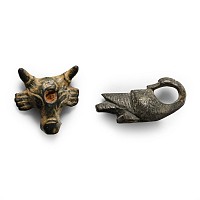
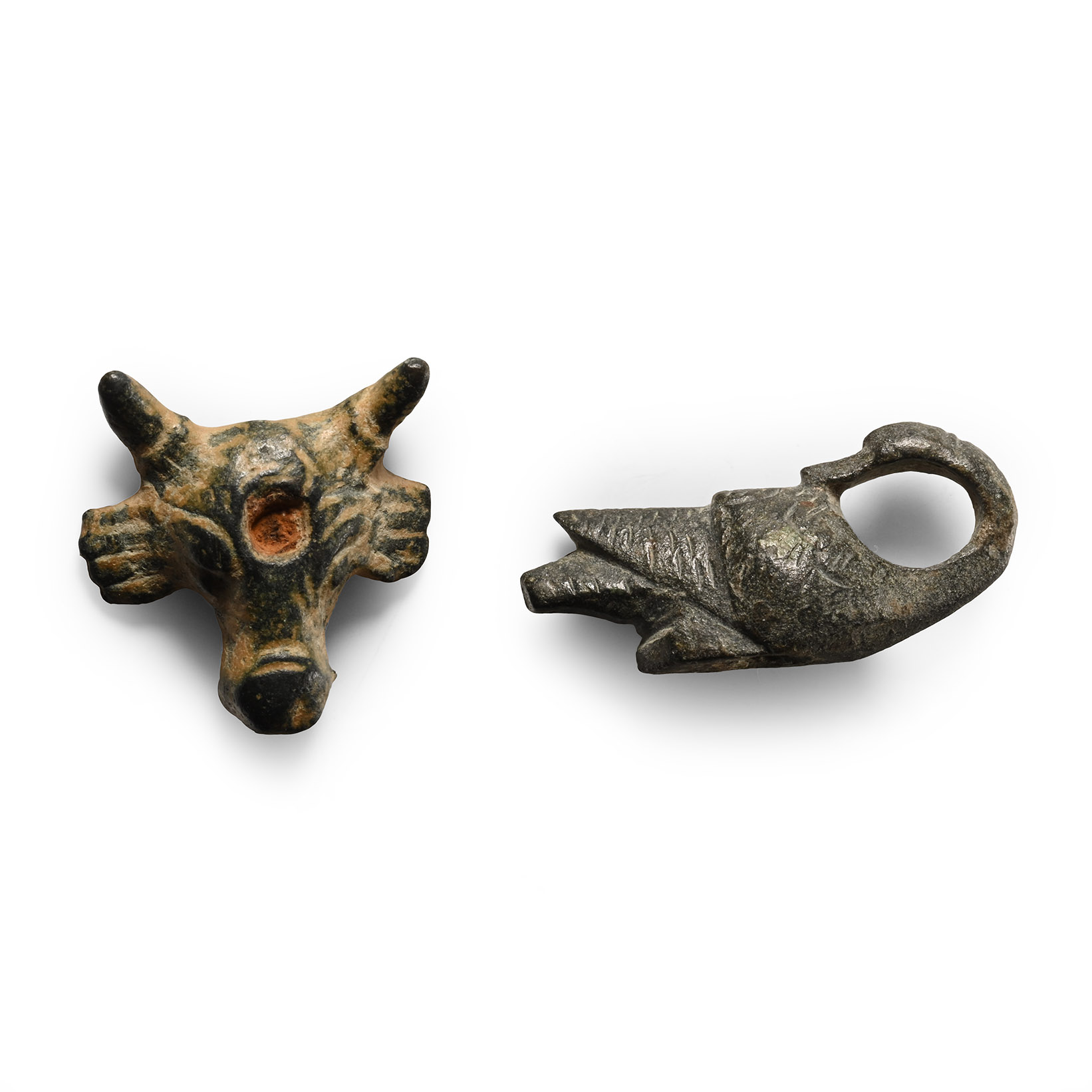
Roman Bronze Animal Weight Group
1ST-2ND CENTURY A.D.
1 - 1 3/8 in. (35.3 grams total, 25-36 mm).
Comprising: a bull-head amulet with socket to the brow to accept a cabochon; swan with head turned back to meet the wing. [2]
ProvenanceFrom the private collection of Mr K.A., acquired in the 1990s-early 2000s.
CONDITIONTimeLine Auctions follows a vetting process to ensure the authenticity and legality of all items, reinforcing our commitment to integrity and responsible trading. Each antiquity, antique, and coin lot undergoes thorough examination by a vetting committee of at least ten external specialists, professional trade association members, scientists, and archaeologists: Our Vetting Process
AUCTIONS:
TimeLine is a leading auction house specialising in antiquities, ancient art, collectables, natural history, coins, medals, and books. Our auctions offer museums, collectors, historians, and enthusiasts the opportunity to acquire unique and historically significant pieces.
LOT 0888
Roman Bronze Animal Weight Group
Estimate £200 - 300€230 - 350 (for guidance only)$270 - 410 (for guidance only)
-
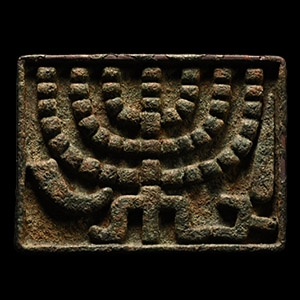
Late Roman Jewish Menorah Wine Stamp Seal
4th-6th century A.D.Sold for (Inc. bp): £4,940
With a rectangular body and loop handle, the underside with a Menorah on a tripod base, a shofar on the left, a lulav and a shovel to the right. 46.3 grams, 59 mm
From a private family collection formed since the early 19th century, thence by descent. Property of a New Zealand legal professional. Accompanied by an academic report by Dr Raffaele D’Amato. This lot has been checked against the Interpol Database of stolen works of art and is accompanied by search certificate number no.12324-223712.
According to Friedenberg and A. Reifenberg, unlike the Roman Christian counterparts, stamps such as the present example were likely used on the stoppers of wine amphorae rather than to stamp bread. They were used to seal the wine amphora to guarantee the purity of the wine as sanctioned by the Talmud. -
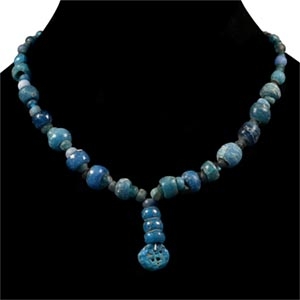
Roman Glass Bead Necklace String
1st-4th century A.D. and laterSold for (Inc. bp): £85
Composed of blue oblate and oval beads interspersed with large beads, restrung to a Y-shape with a central flower-shaped faience bead. 32.3 grams, 35 cm
Ex property of a late Japanese collector, 1970-2000s. -
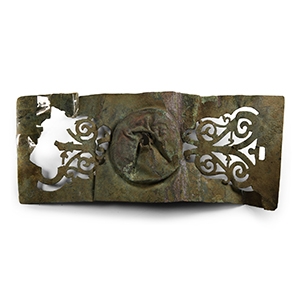
Large Roman Bronze Military Mount
2nd-3rd century A.D.Estimate: £120 - 170 (+bp*)
Opening Bid: £65
Composed of a central domed boss and openwork volutes to the sides; for a sword belt or a chariot, one corner separated. 69 grams, 14 cm wide
Good condition, very rare
Acquired 1960s-1990s. Late Alison Barker collection, a retired London barrister.
In 3rd century A.D. the sword (spatha) was mainly carried suspended from a broad baldric usually on the soldier’s left side. This sword’s shoulder belt, visible on many monuments related to the 3rd century, was composed from a leather strap, reinforced on the rims. The four specimens of Vimose provided valuable information about the shape of the baldric: one end was broad and finished in a straight edge, the other tapered to a narrow strip. They were decorated with silver disks (phalerae) of circa 6.4 cm. of diameter, with rings on the reverse for fastening. These phalerae were of different shapes, styles and decorations: we can observe a range from simple copper-alloy discs to bronze openwork pieces fitted with a plate or an openwork disc showing elaborate figures. They were usually attached at about 29-30 cm from the wider and squared top of the baldric. One of the finial parts of the baldric was in fact very wide and ended with a straight edge, upon which could be placed a hinged rectangular openwork terminal plate (like our specimen), attached to a belt terminal pendant. The lack, in our specimen, of holes for the attachment rivets could also support the thesis that the piece is not for a baldric, but a mount for cart or chariot as some examples in a similar style found in Roman North Africa.
