
Loading, please wait...
LOT 0704
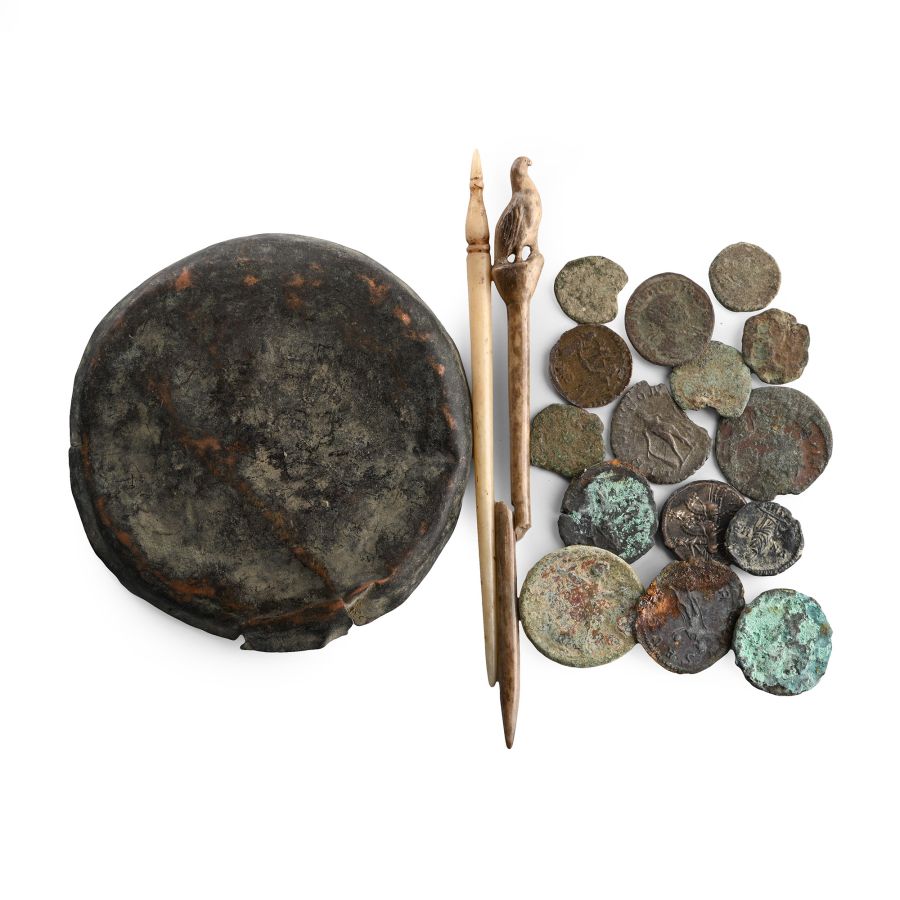
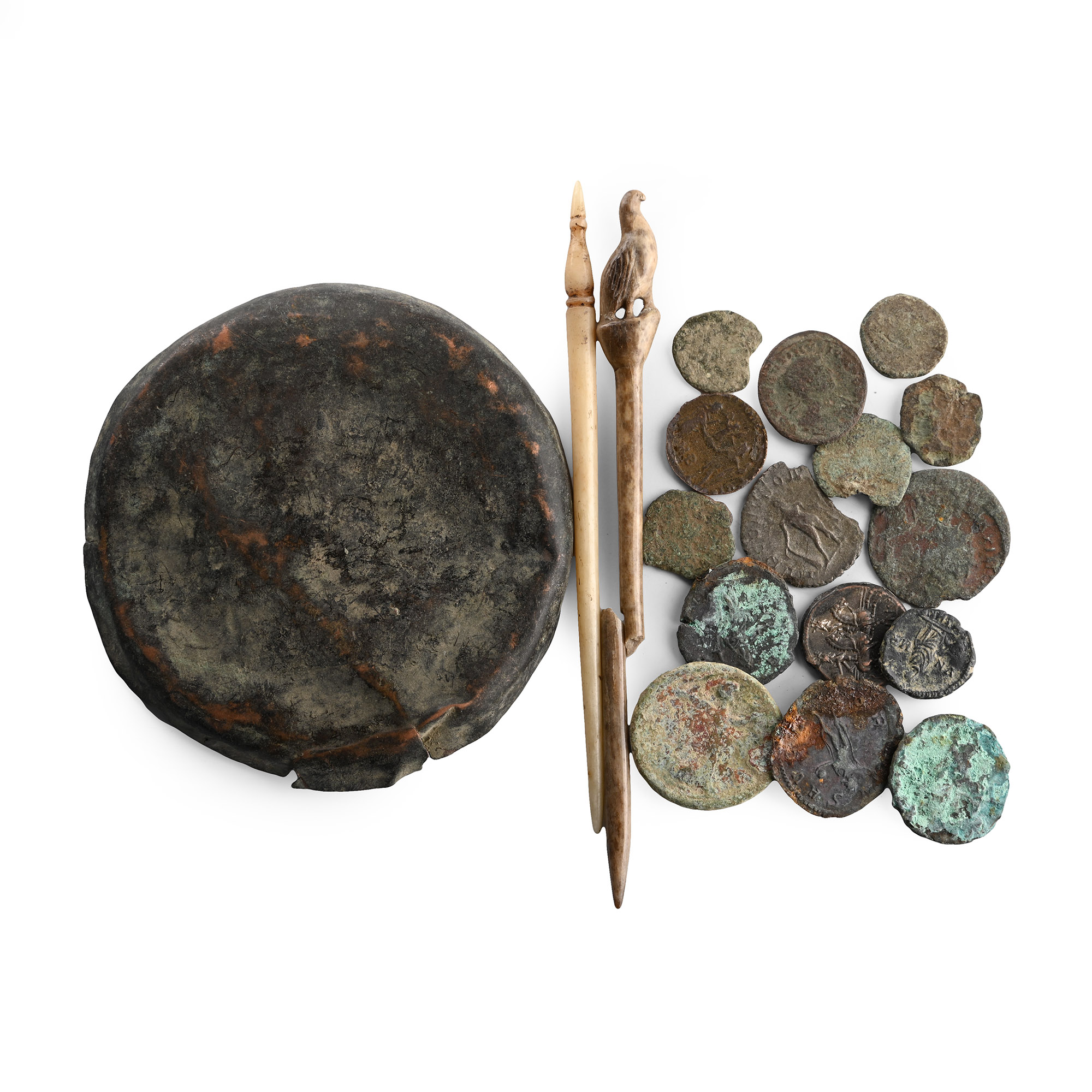
Roman Bronze and Other Artefact and Coin Group
1ST-4TH CENTURY A.D.
1/2 - 4 1/8 in. (76.7 grams total, 1.4-10.6 cm).
Comprising several bronze coins, two bone pins (one broken) and a flat discoid mount with upturned rim. [18, No Reserve]
ProvenanceUK gallery, early 2000s.
CONDITIONTimeLine Auctions follows a vetting process to ensure the authenticity and legality of all items, reinforcing our commitment to integrity and responsible trading. Each antiquity, antique, and coin lot undergoes thorough examination by a vetting committee of at least ten external specialists, professional trade association members, scientists, and archaeologists: Our Vetting Process
AUCTIONS:
TimeLine is a leading auction house specialising in antiquities, ancient art, collectables, natural history, coins, medals, and books. Our auctions offer museums, collectors, historians, and enthusiasts the opportunity to acquire unique and historically significant pieces.
-
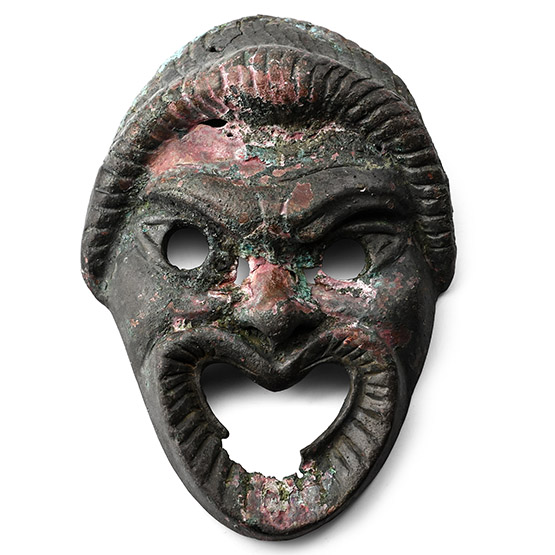
Roman Bronze Actor's Mask
1st-2nd century A.D.Sold for (Inc. bp): £234
Modelled in the half-round, with grotesque facial features and scooped crescentic mouth, segmented hair. 84 grams, 82 mm
Ex German art market, 2000s. Acquired from an EU collector living in London. From the collection of a Surrey, UK, gentleman. -
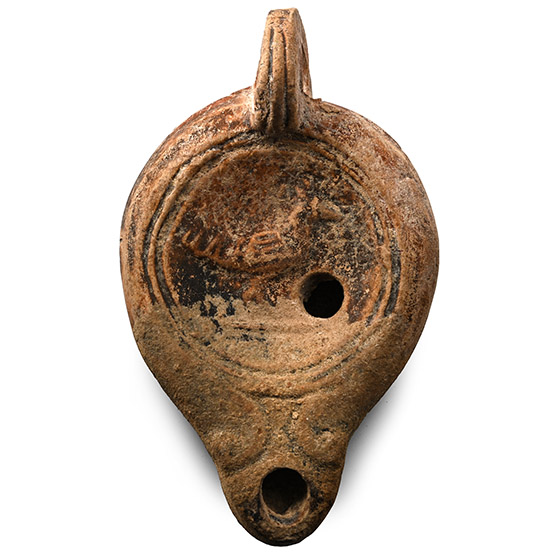
Roman Terracotta Oil Lamp with Bird Facing Right
1st-2nd century A.D.Sold for (Inc. bp): £416
Discoid in plan with D-shaped nozzle, loop handle, discus with low-relief image of tperching bird on a baseline; discus and base bordered with two circular grooves; old label '52' to base and auction tag '455 2' to handle. 64 grams, 98 mm
Ex Weschler's Auctioneers, Washington, D.C., USA, in 1982, no.455. Accompanied by a copy of a receipt dated 26th September 1982. -
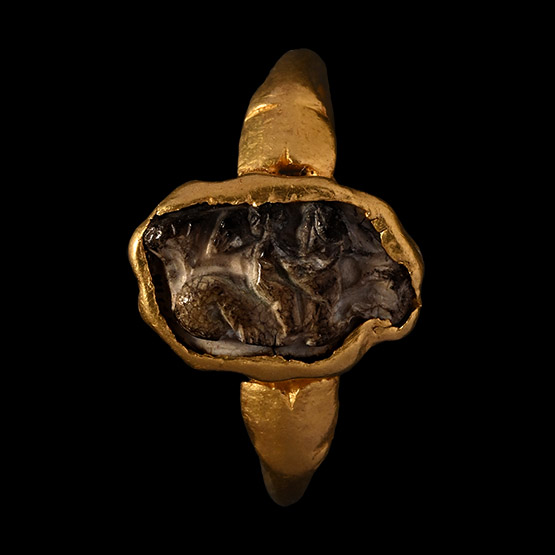
Roman Gold Ring with Burnt Agate Cameo of Eros, the Greek God of Love Riding a Hippocampus
2nd-3rd century A.D.Estimate: £1,500 - 2,000 (+bp*)
Opening Bid: £750
D-section hoop with ellipsoid cell, inset cameo with Eros on a hippocamp. 3.59 grams, 20.92 mm overall, 16.98 mm internal diameter (approximate size British M, USA 6, Europe 12.46, Japan 12)
Private collection, Europe. Acquired on the English art market.
