
Loading, please wait...


LOT 0829
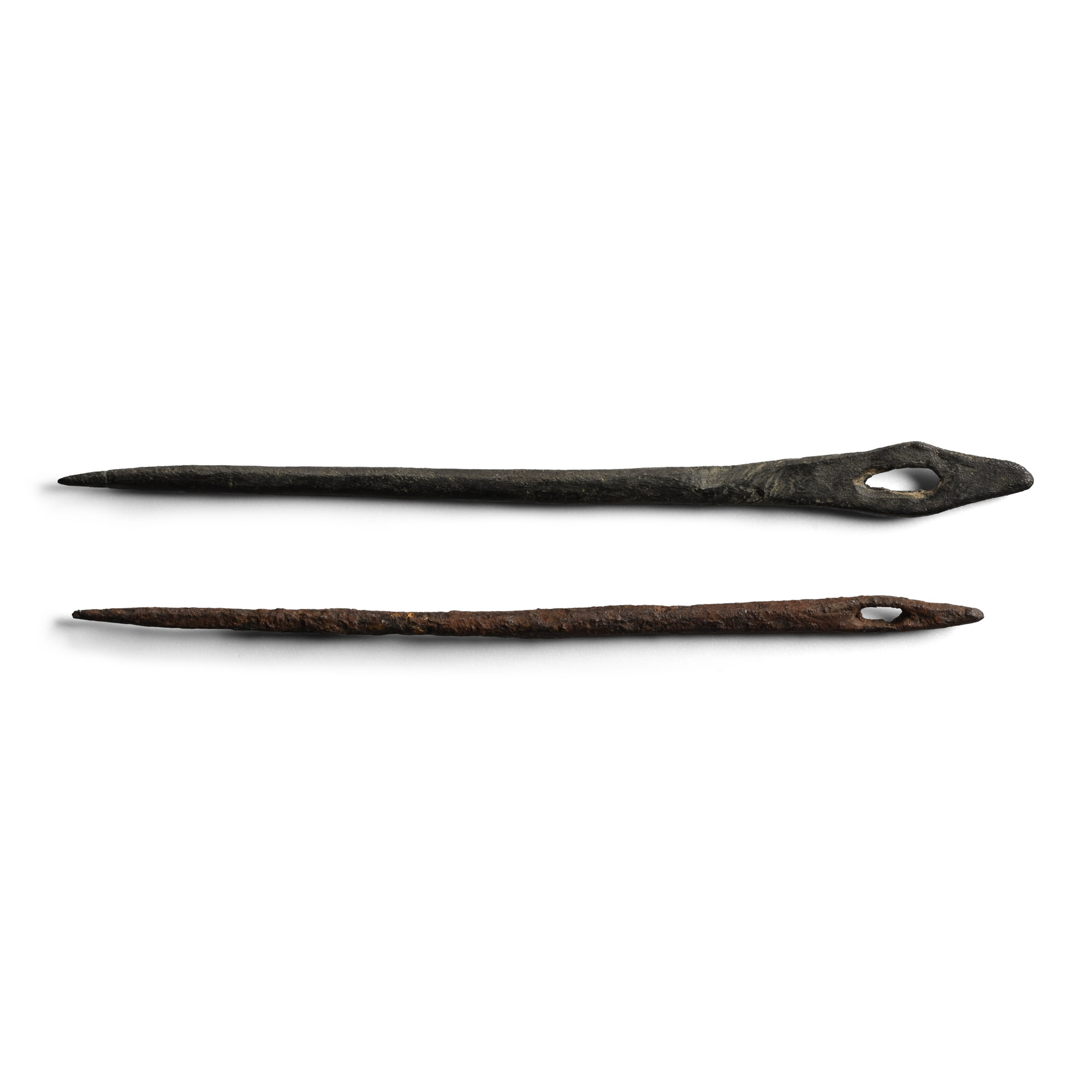
Roman Bronze and Iron Needles
1ST-4TH CENTURY A.D.
3 1/8 - 3 3/8 in. (6.7 grams total, 81-86 mm).
Bronze needle with flattened head and punched slit eye; similar in iron; with old identification label 'Roman Bronze & Iron Needles 1st-4th century AD authenticated by British Museum 30/5/2006'. [2, No Reserve]
ProvenanceAcquired from Ancient & Oriental, circa 2001.
Ian Wilkinson collection, Nottinghamshire, UK, formed since 1985.
Accompanied by a laminated identification label.
This lot is accompanied by an illustrated lot declaration signed by the Head of the Antiquities Department, Dr Raffaele D’Amato.
TimeLine Auctions follows a vetting process to ensure the authenticity and legality of all items, reinforcing our commitment to integrity and responsible trading. Each antiquity, antique, and coin lot undergoes thorough examination by a vetting committee of at least ten external specialists, professional trade association members, scientists, and archaeologists: Our Vetting Process
AUCTIONS:
TimeLine is a leading auction house specialising in antiquities, ancient art, collectables, natural history, coins, medals, and books. Our auctions offer museums, collectors, historians, and enthusiasts the opportunity to acquire unique and historically significant pieces.
-
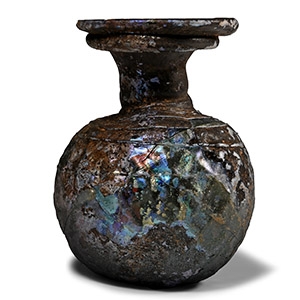
Roman Mould-Blown Glass Flask
1st-2nd century A.D.Sold for (Inc. bp): £182
With squat body and dimple base, reticulation pattern to the shoulder, partly restricted inner neck and baluster, applied gusseted rim to the mouth. 49.4 grams, 82 mm
Ex London art market 1990s. From a London, UK, collection. This lot is accompanied by an illustrated lot declaration signed by the Head of the Antiquities Department, Dr Raffaele D’Amato. -
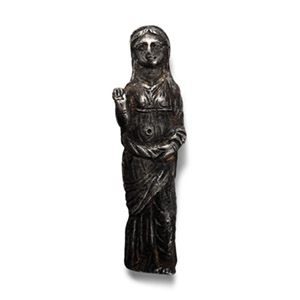
Roman Silver Priestess of Vesta Statuette
1st-3rd century A.D.Estimate: £1,500 - 2,000 (‡+bp*)
Opening Bid: £833
Solid cast standing female wearing a loosely draped robe draped over her head, the hem gathered at her waist and held in her left hand, right hand raised in greeting; probably a priestess of Vesta. 11.8 grams, 41 mm
Acquired in the mid 1980s-1990s. Private collection, Switzerland, thence by descent. Private collection, since the late 1990s. This lot has been checked against the Interpol Database of stolen works of art and is accompanied by search certificate number no.12227-222180. This lot has been cleared against the Art Loss Register database, and is accompanied by an illustrated lot declaration signed by the Head of the Antiquities Department, Dr Raffaele D’Amato. -
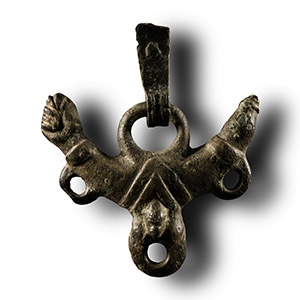
Roman Bronze Phallic Pendant
1st-2nd century A.D.Sold for (Inc. bp): £780
Amuletic fascinum formed as a crescent with phallus to the right, hand in the fica gesture to the left and male genitals below; each with a loop beneath for attachment of another pendant; large loop above and attachment strap with stud. 81.5 grams, 68 mm
Acquired in Europe in 1990s. European private collection. This lot is accompanied by an illustrated lot declaration signed by the Head of the Antiquities Department, Dr Raffaele D’Amato.
