
Loading, please wait...
LOT 0596
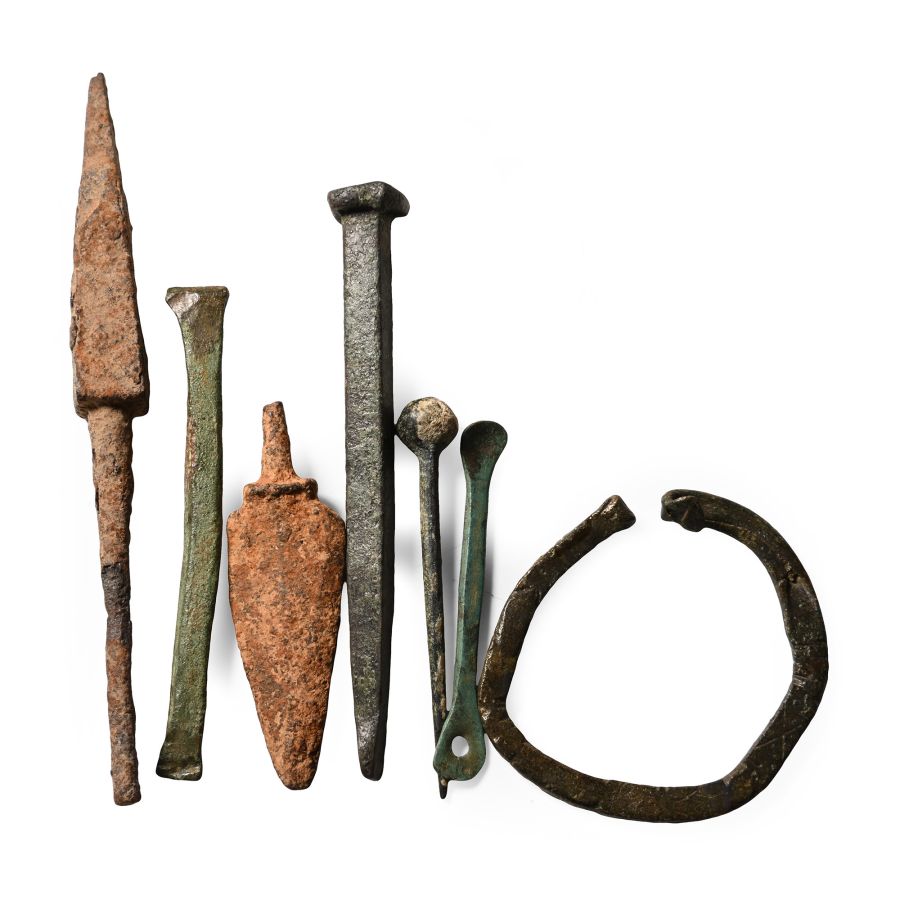
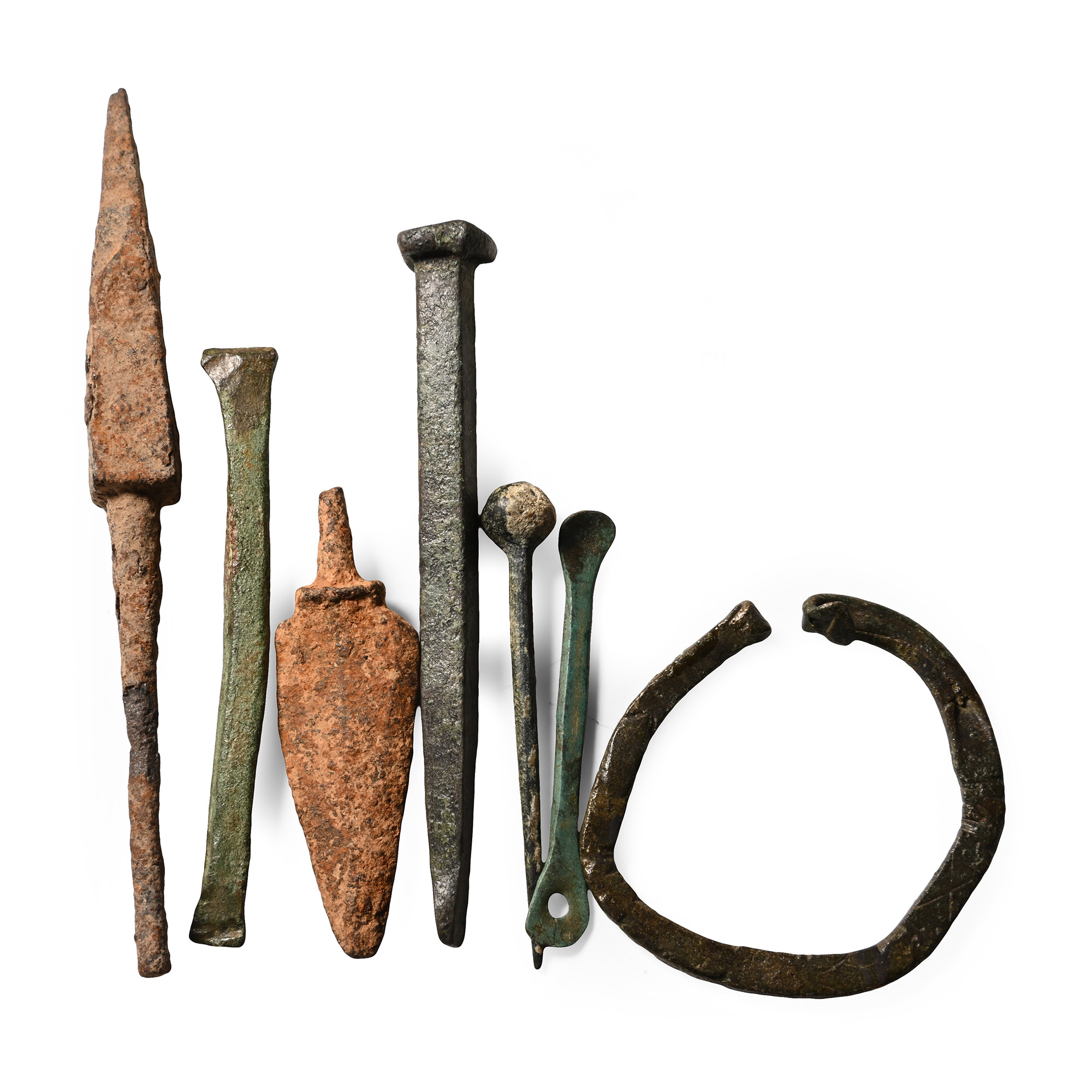
Roman Bronze and Iron Artefact Collection
CIRCA 1ST-4TH CENTURY A.D.
1 3/4 - 3 3/8 in. (50 grams total, 45-87 mm).
Comprising: ball-headed dess pin; stylus with eraser; cosmetic scoop; penannular quoit brooch with recurved ends; clout nail; leaf-shaped arrowhead; quarrel head with long tang. [No Reserve]
ProvenanceFrom the private collection of Mr Brian Edwards, New Malden, Surrey, UK, formed from the late 1970s-early 1980s; thence by descent.
Accompanied by the original collector's data sheet(s) with reference nos.A63, A64, A65, A74, A96, A97 & A107.
TimeLine Auctions follows a vetting process to ensure the authenticity and legality of all items, reinforcing our commitment to integrity and responsible trading. Each antiquity, antique, and coin lot undergoes thorough examination by a vetting committee of at least ten external specialists, professional trade association members, scientists, and archaeologists: Our Vetting Process
AUCTIONS:
TimeLine is a leading auction house specialising in antiquities, ancient art, collectables, natural history, coins, medals, and books. Our auctions offer museums, collectors, historians, and enthusiasts the opportunity to acquire unique and historically significant pieces.
-
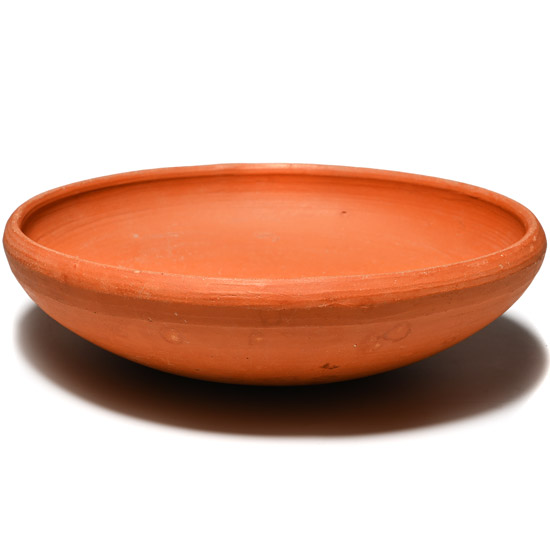
Roman Red Ware Bowl
3rd-4th century A.D.Sold for (Inc. bp): £124
Broad and squat in profile with inturned rim and external carination. 410 grams, 16.7 cm wide
From the collection of David Donlan (1947-2025), a dedicated and lifelong collector with a passion for the ancient world and the natural sciences, forming his collection from 1960s onwards, using many reputable dealers across the United Kingdom, including the well-regarded Coincraft and The Parthenon Gallery. -
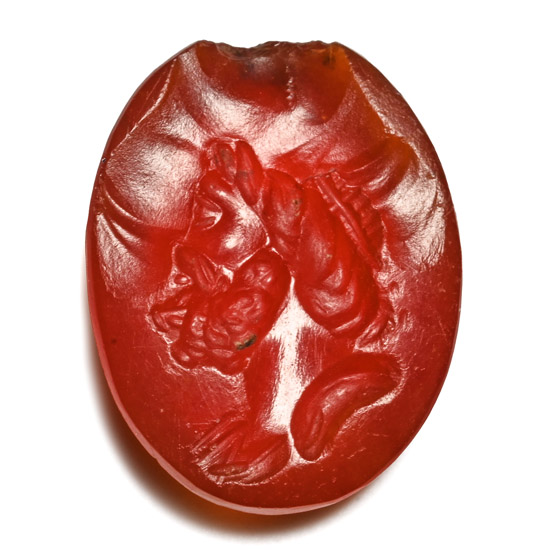
Roman Banded Gemstone with Bearded Portrait
2nd-3rd century A.D.Sold for (Inc. bp): £46
Ellipsoid type with incuse bearded portrait bust; chipped; supplied with a museum-quality impression. 0.47 grams, 12 mm
From the private collection of a European gentleman (1942-2024), formed since the 1970s. -
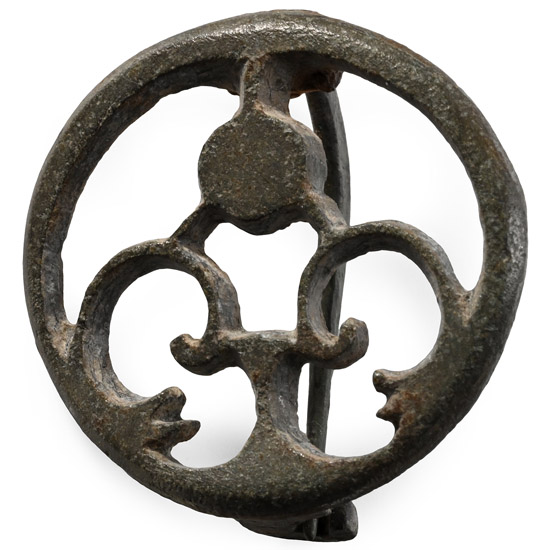
Roman Bronze Plate Brooch with Trumpets
2nd-3rd century A.D.Sold for (Inc. bp): £85
Circular frame enclosing two opposing trumpet-shaped motifs, with a pin and catch on the reverse. 11.12 grams, 34 mm
From the private coin collection of a West London, UK, gentleman, formed since the mid 1980s.
