
Loading, please wait...
LOT 1048
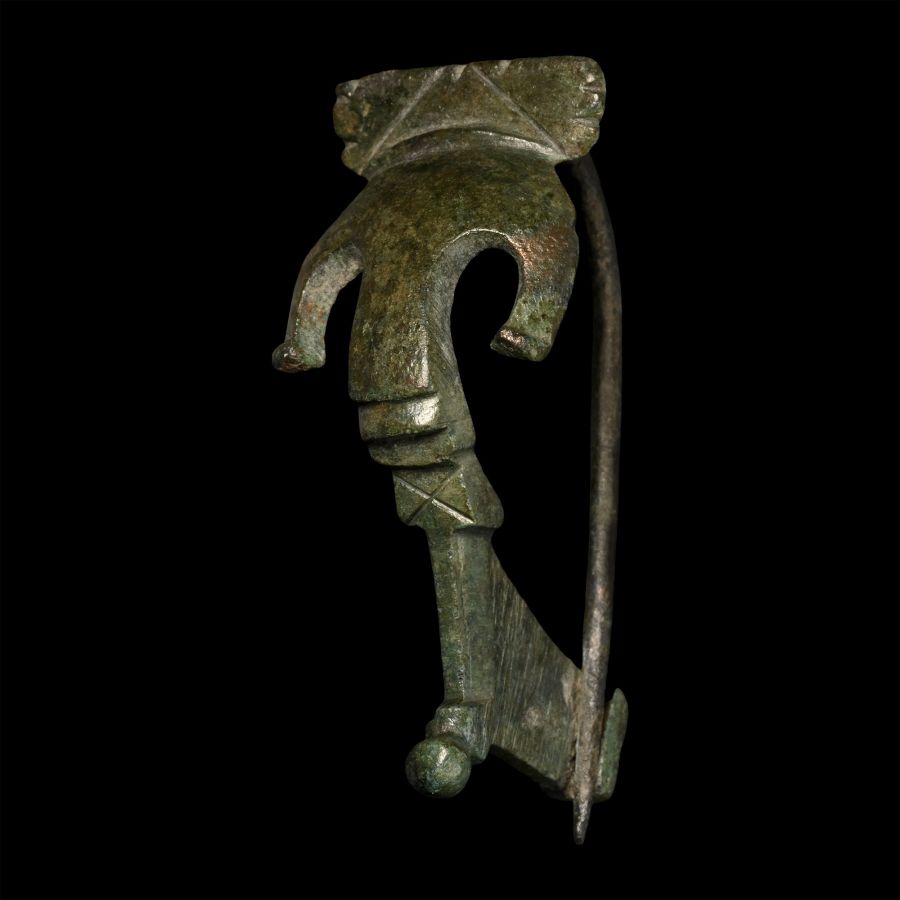
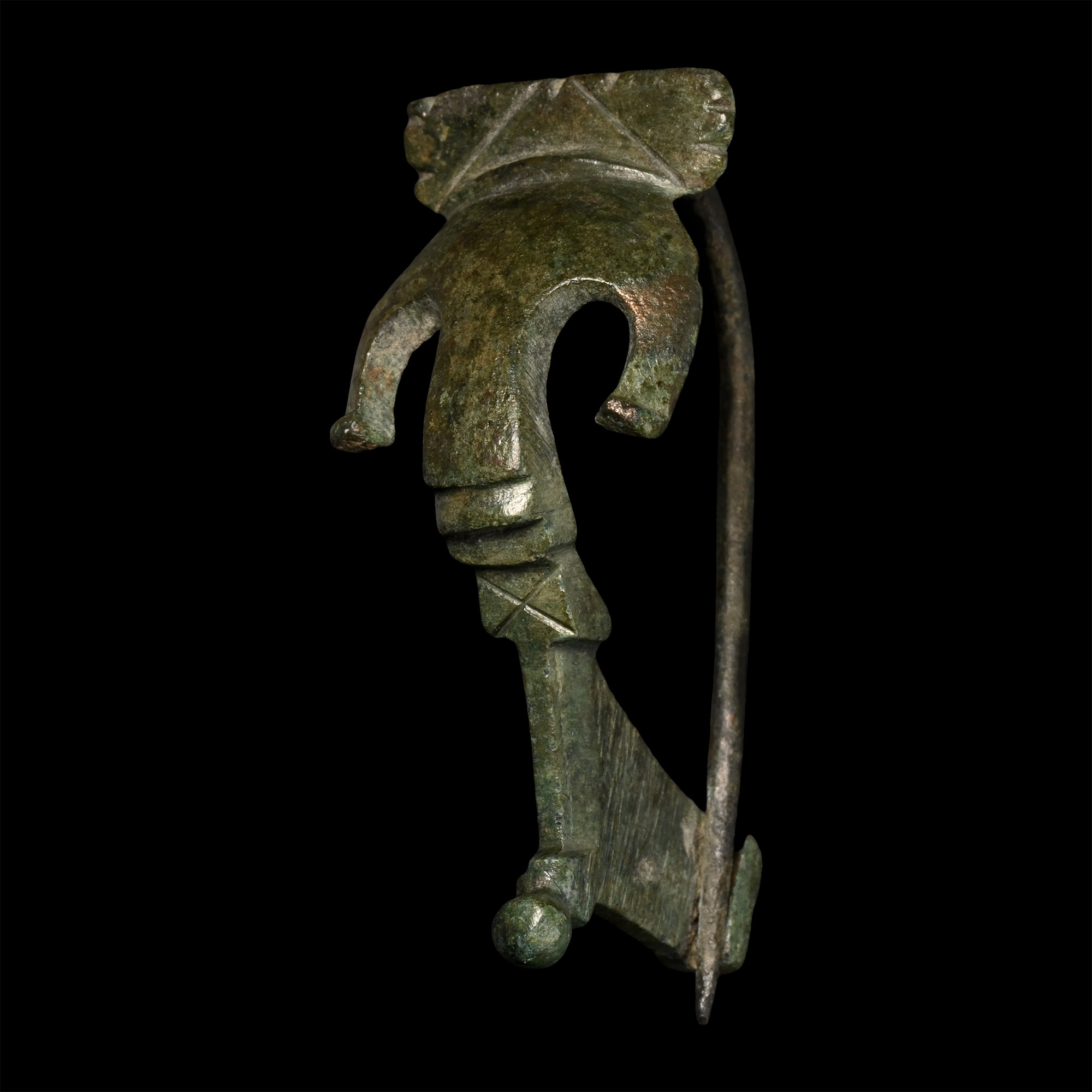
Roman Bronze Anchor Bow Brooch
CIRCA 2ND-3RD CENTURY A.D.
2 1/8 in. (21.4 grams, 54 mm).
A bow brooch of the kräftig profilierte 'anchor' type, with a wide crescent-shaped head with extended arms, broad flat footplate with catch and pin to the reverse. [No Reserve]
ProvenanceEx German art market, 2000s.
Acquired from an EU collector living in London.
From the collection of a Surrey, UK, gentleman.
TimeLine Auctions follows a vetting process to ensure the authenticity and legality of all items, reinforcing our commitment to integrity and responsible trading. Each antiquity, antique, and coin lot undergoes thorough examination by a vetting committee of at least ten external specialists, professional trade association members, scientists, and archaeologists: Our Vetting Process
AUCTIONS:
TimeLine is a leading auction house specialising in antiquities, ancient art, collectables, natural history, coins, medals, and books. Our auctions offer museums, collectors, historians, and enthusiasts the opportunity to acquire unique and historically significant pieces.
LOT 1048
Roman Bronze Anchor Bow Brooch
Estimate £40 - 60€46 - 70 (for guidance only)$54 - 81 (for guidance only)
Opening Bid
£5 (EUR 6; USD 7) +BP*
-
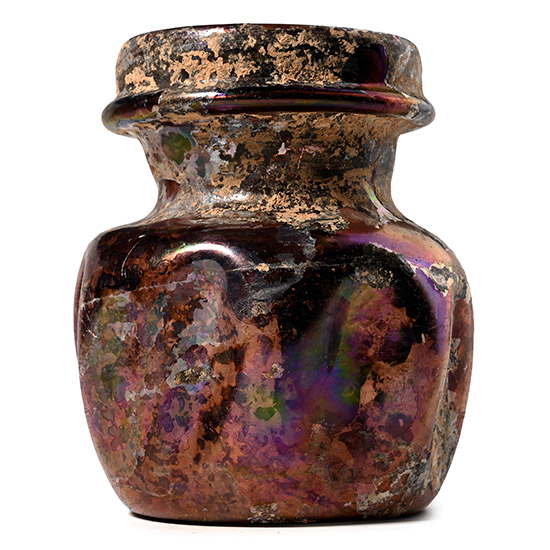
Roman Iridescent Aubergine Glass Dimpled Jar
Circa 1st-2nd century A.D.Estimate: £600 - 800 (+bp*)
Opening Bid: £300
Of squat profile with dimples to the equator, short neck, broad mouth and dimple to the underside; remains of iridescence. 74 grams, 96 mm high
Acquired Jerusalem, Israel, June 1974. From the private collection of Dr Stanley I. Batkin (1914-2015), Scarsdale, New York, USA. From a private USA collection, acquired from the estate of the above. Ex Ancient Glass from the Dr Stanley Batkin (2014-2015) collection, Bonhams, London, 6 July 2017, no.177 (part). -
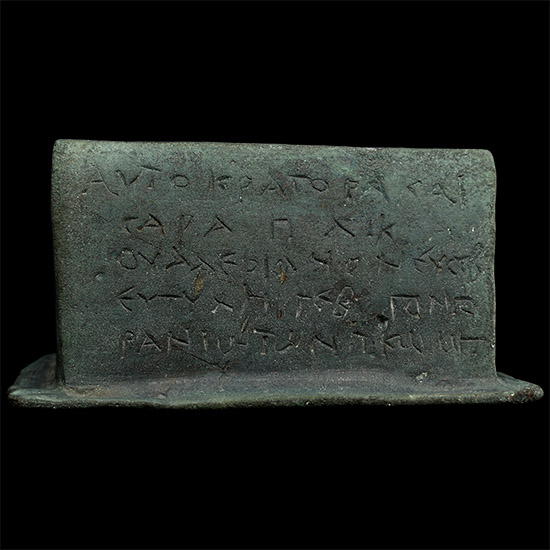
Roman Bronze Statue Plinth with Inscription for Emperor Valerian
253-260 A.D.Estimate: £2,000 - 3,000 (‡+bp*)
Opening Bid: £1,175
Hollow rectangular plinth with everted basal rim; hastily incised, five-line Greek inscription on one side: 'Αυτοκρατορα Και/σαρα Π Λικ/Ουαλεριανον ευσεβ/ευτυχη Σεβ 50-Ν-50 (?)/ρανιωτων η κωμ(ι)τ' (translated as 'To the Imperator Caesar P(ublius) Licinius Valerianus, pious and good-fortuned Augustus ... the village of the Raniotes'. 1.04 kg, 12.8 cm
with Hirsch Auction 246, 19-20 September 2006, no.838. This lot has been checked against the Interpol Database of stolen works of art and is accompanied by search certificate no.13547-263147.
Probably the base of a statuette of the Roman Emperor Publius Licinius Valerianus (r. 253–260 A.D.), presumably used by devotees of the imperial cult. Marks made by the standing statuette are still visible on top of the plinth. An important document from the time of Valerian, who is also known for having persecuted the Christians. Similar inscriptions set up, for instance by cities, municipalities and other local communities indicating their loyalty, must be seen in this context. -
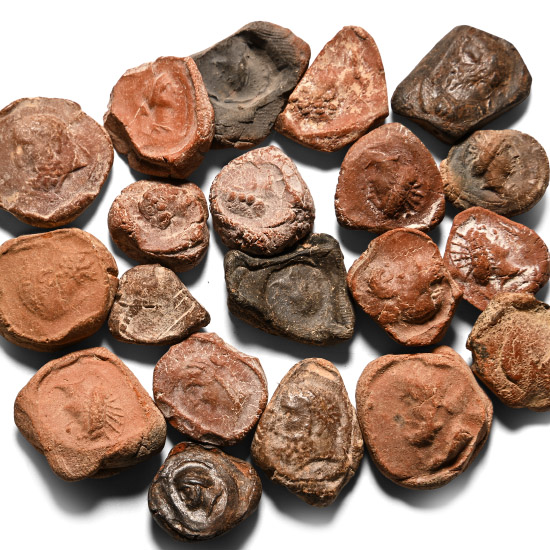
Roman Terracotta Bullae, Tesserae or Token Group
3rd century B.C.-1st century A.D.Estimate: £100 - 140 (+bp*)
Opening Bid: £5
A mixed group of ceramic bullae, tesserae or theatre tokens bearing low-relief motifs, mainly consisting of profile busts of deities. 28.9 grams total, 13-20 mm
From the private collection of a European gentleman (1942-2024), formed since the 1970s.
The term 'tessera' was used in Roman times to convey the Greek term σύμβολον (token). Small tiles are known as tokens, often shaped like coins, made of metal (copper, lead, iron), clay, bone, wood, or glass, stamped as well as engraved. The tokens, however, are not exclusively coin-shaped, as the Latin term 'tessera' suggests by etymologically referring to a square or at least a four-sided shape and confirmed in several cases by material remains of the past. Tokens and tesserae seem to have been used both in Athens and Rome for the distribution of goods. According to written sources, the term token is identified with credentials of the official authorities. They have also been interpreted as tokens of identity, as entrance tickets to theatre performances, tribunals or assemblies of citizens, archival material of seal engraving, as pawns in games, Charon’s obols and even as amulets.
