
Loading, please wait...
LOT 0621
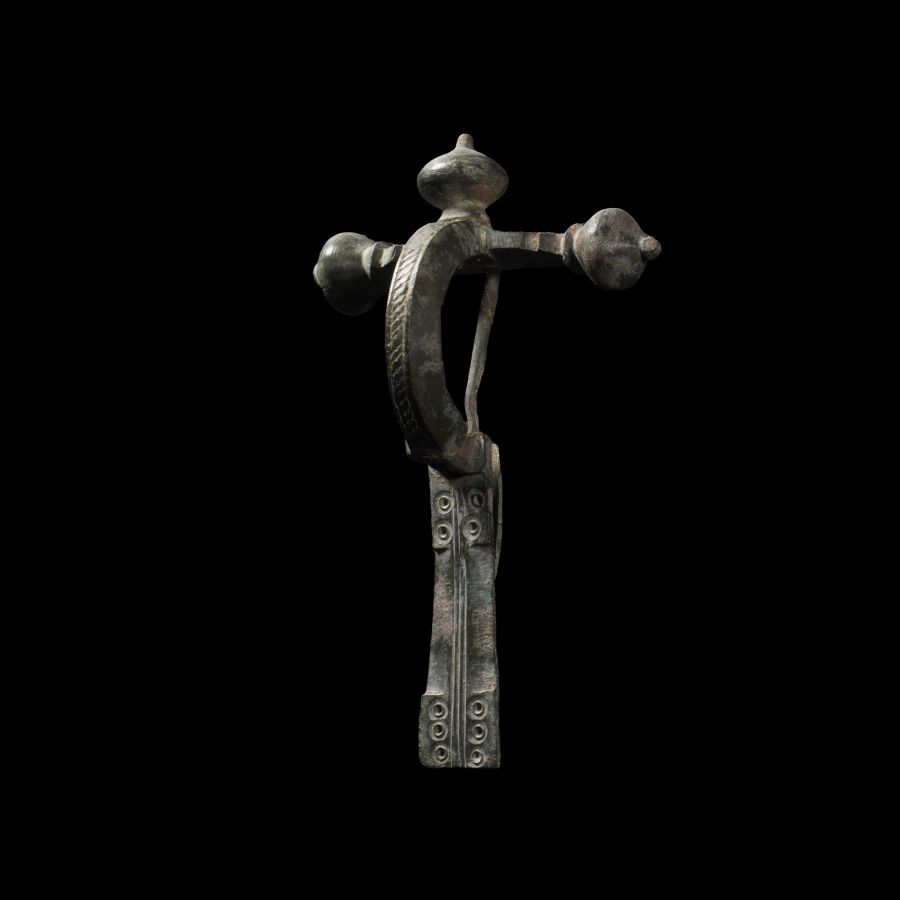
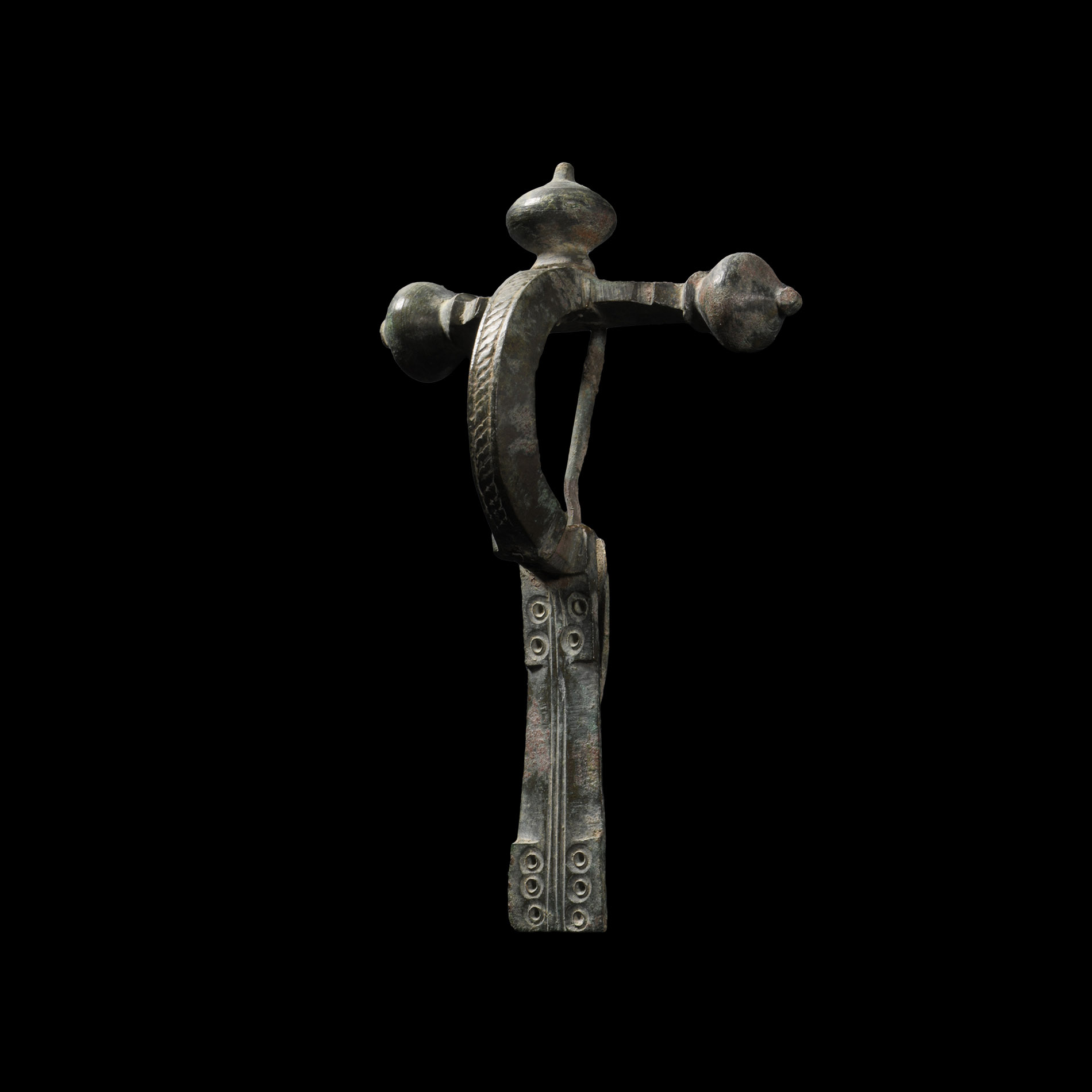
Roman 'British' Decorated Bronze Crossbow Brooch
4TH-5TH CENTURY A.D.
3 1/2 in. (55 grams, 89 mm).
With onion-knop terminals, carinated bow with a band of diagonal line decoration; the footplate with ring-and-dot decoration to each end, flanking a central linear decoration; pin and catch-plate to reverse. [No Reserve]
ProvenanceFound UK.
Acquired from Alan Cherry at the Birmingham Coin Fair, 2003.
Property of a Nottinghamshire gentleman.
Accompanied by an identification card.
TimeLine Auctions follows a vetting process to ensure the authenticity and legality of all items, reinforcing our commitment to integrity and responsible trading. Each antiquity, antique, and coin lot undergoes thorough examination by a vetting committee of at least ten external specialists, professional trade association members, scientists, and archaeologists: Our Vetting Process
AUCTIONS:
TimeLine is a leading auction house specialising in antiquities, ancient art, collectables, natural history, coins, medals, and books. Our auctions offer museums, collectors, historians, and enthusiasts the opportunity to acquire unique and historically significant pieces.
-
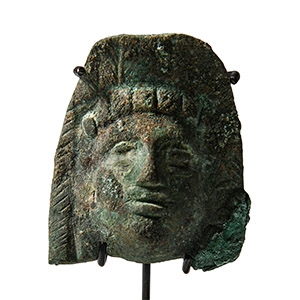
Roman Bronze Actor's Mask Appliqué
Circa 1st-2nd century A.D.Sold for (Inc. bp): £195
With D-shaped flange surrounding the face in place of braided hair, small female face with fleshy features, eyes recessed to accept silver insert; mounted on a custom-made stand. 280 grams total, 88 mm high including stand
Ex P.A., Hertfordshire, UK, specialist collection of Greek art, 1980-1990s. -
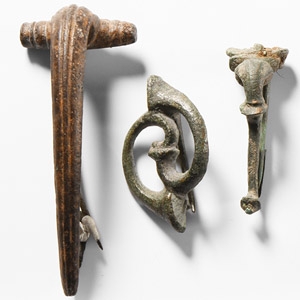
Roman Bronze Brooch Collection
Circa 1st-2nd century A.D.Sold for (Inc. bp): £124
Group of three brooches comprising: trumpet brooch with spring and pin; dolphin-type bow brooch with hinged pin; kräftig profilierte bow brooch. 53 grams total, 40-72 mm
Found East Anglia, UK. Acquired early 2000s. Property of a Stowmarket, UK, gentleman. Accompanied by three old handwritten cataloguing slips. -
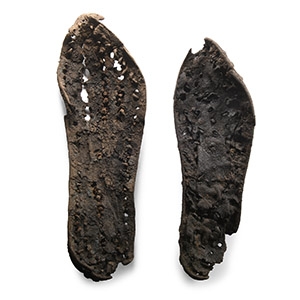
Roman 'Thames' Leather Marching Shoe Sole Group
1st-4th century A.D.Sold for (Inc. bp): £1,300
With perforations for attachment to the shoe uppers through nails; one fragmentary. 248 grams total, 22.5-24.5 cm
Found by Steve Brooker on the Thames foreshore at Embankment, London, UK, 2001. Property of a Nottinghamshire gentleman.
Waterlogged conditions on the Thames waterfront have created the oxygen-free environment needed for the survival of ancient organic artefacts. Among the studied or published Roman leatherwork from London, 89% is composed of footwear. The introduction of vegetable tanned leather and the expansion of ironworking were some of the major technological innovations of the Roman period; allowing the mass production of sturdy, hobnailed shoes.
