
Loading, please wait...
LOT 0650
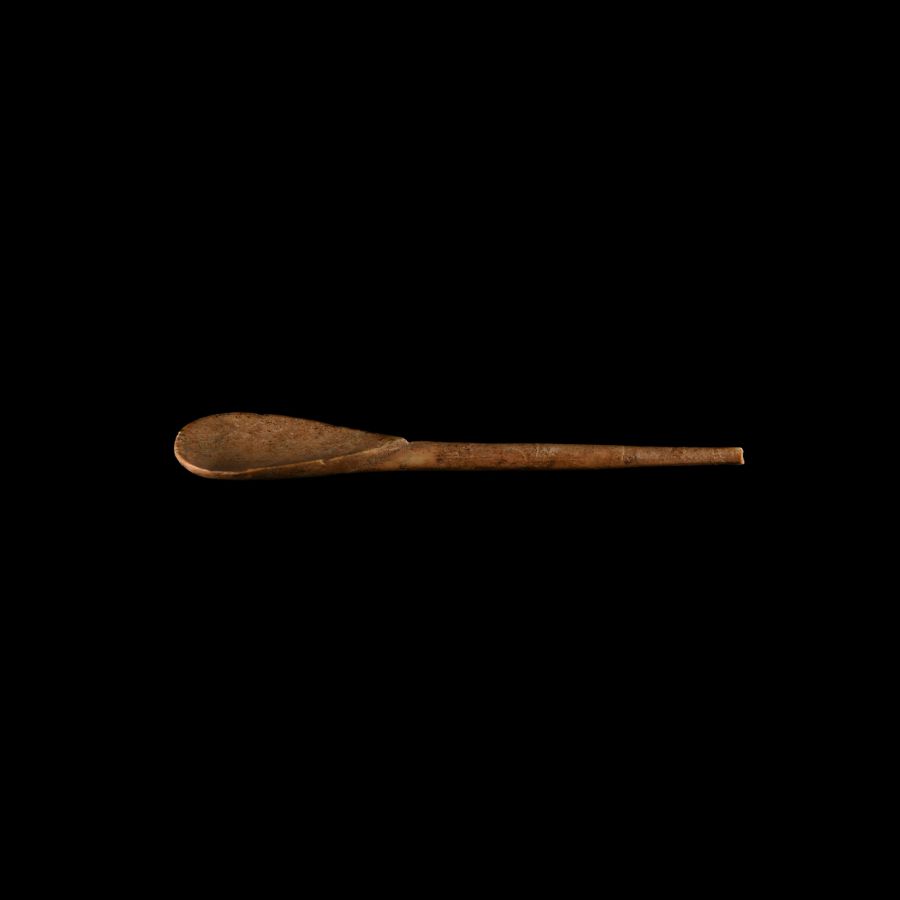
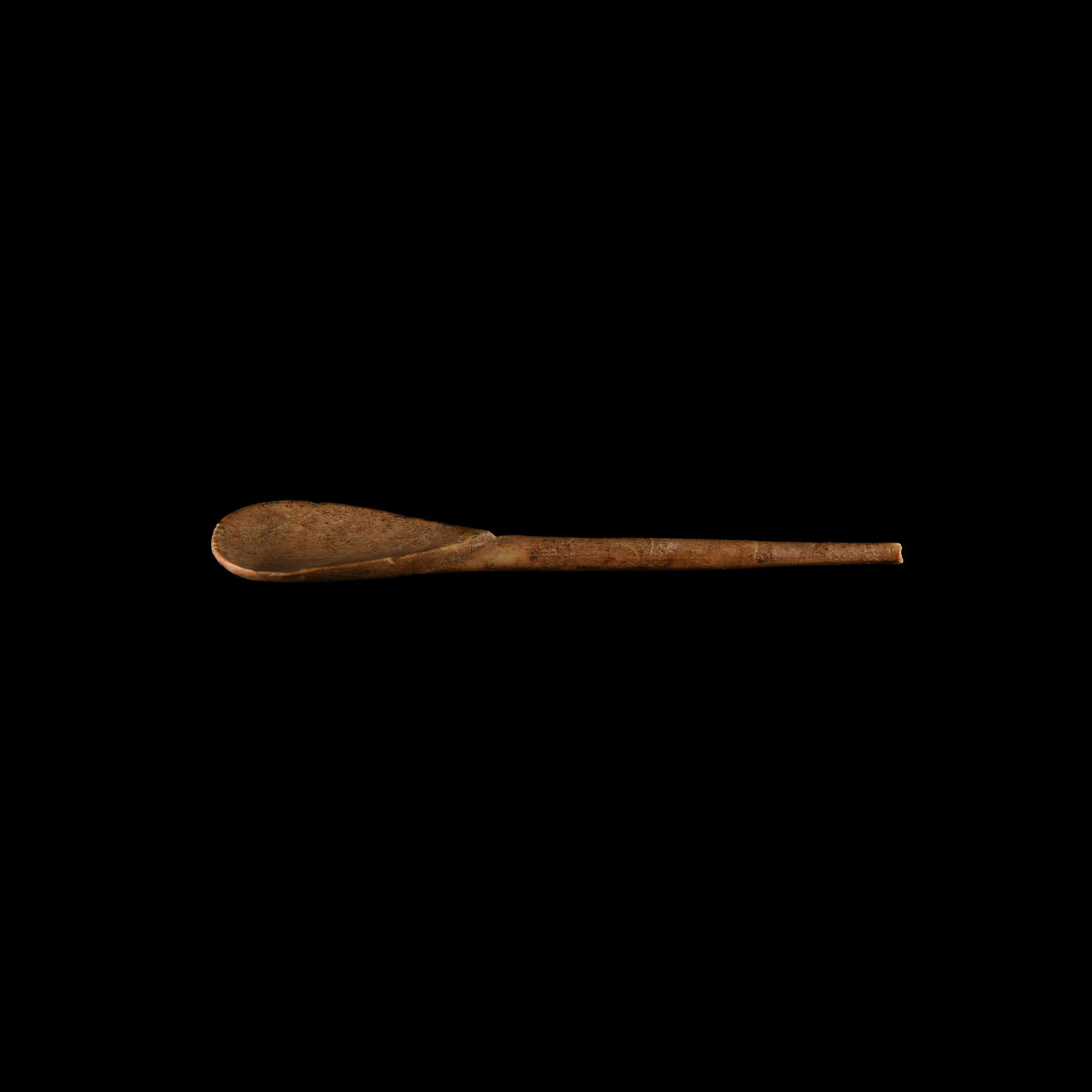
Roman Bone Spoon
1ST-2ND CENTURY A.D.
4 1/8 in. (5.96 grams, 10.6 cm).
A bone spoon with a shallow piriform bowl and tapering round-section stem, two concentric V-shaped channels to the bowl reverse; tip of stem lost in antiquity. [No Reserve]
ProvenanceAcquired 1969-1999.
London collection of the late Mr S.M., thence by descent.
TimeLine Auctions follows a vetting process to ensure the authenticity and legality of all items, reinforcing our commitment to integrity and responsible trading. Each antiquity, antique, and coin lot undergoes thorough examination by a vetting committee of at least ten external specialists, professional trade association members, scientists, and archaeologists: Our Vetting Process
AUCTIONS:
TimeLine is a leading auction house specialising in antiquities, ancient art, collectables, natural history, coins, medals, and books. Our auctions offer museums, collectors, historians, and enthusiasts the opportunity to acquire unique and historically significant pieces.
-
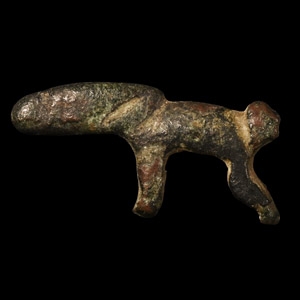
Roman Phallic Pendant
1st-4th century A.D.Sold for (Inc. bp): £72
A bronze pendant or other item, formed as a four-legged animal with a phallic head. 2.29 grams, 22.3 mm
Acquired in the 1990s. UK private collection. Property of a Sussex, UK, teacher. -
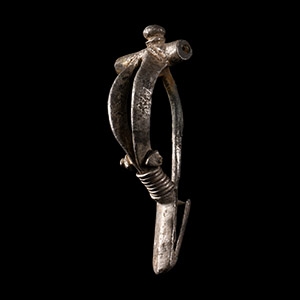
Late Roman Silver Double-Bow Brooch
3th-4th century A.D.Sold for (Inc. bp): £117
A silver sprung-prin or proto-crossbow brooch, the two separate bows joining at the top of the foot and above the spring case. 9.33 grams, 48 mm
Acquired before 2000. From the collection of a European gentleman living in the UK.
These fibulae were the prototypes from which the crossbow brooch developed. Like crossbow brooch, the structure copmprises two essential parts: the upper part an arched bow and the lower part comprising a fairly long foot with a long and narrow catch-plate. -
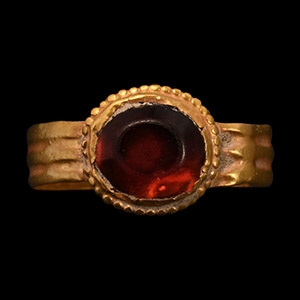
Roman Gold Ring with Garnet Gemstone
1st century B.C.-1st century A.D.Sold for (Inc. bp): £650
A gold ring composed of a flat-section hoop with decorative channelling, oval bezel with granulated border, set with a flat-top polished garnet gemstone. 0.99 grams, 16.41 mm overall, 14.20 mm internal diameter (approximate size British F 1/2, USA 3, Europe 4.3, Japan 4)
Acquired 1970-2000s. Ex Abelita family collection.
