
Loading, please wait...
LOT 0693
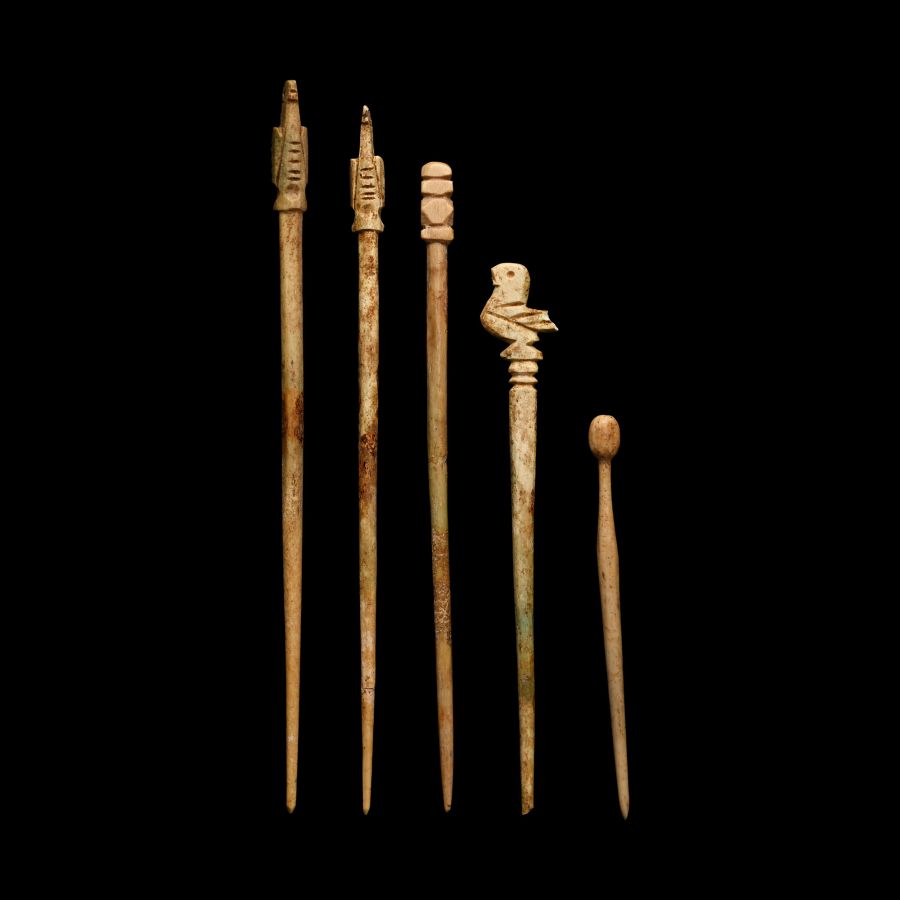
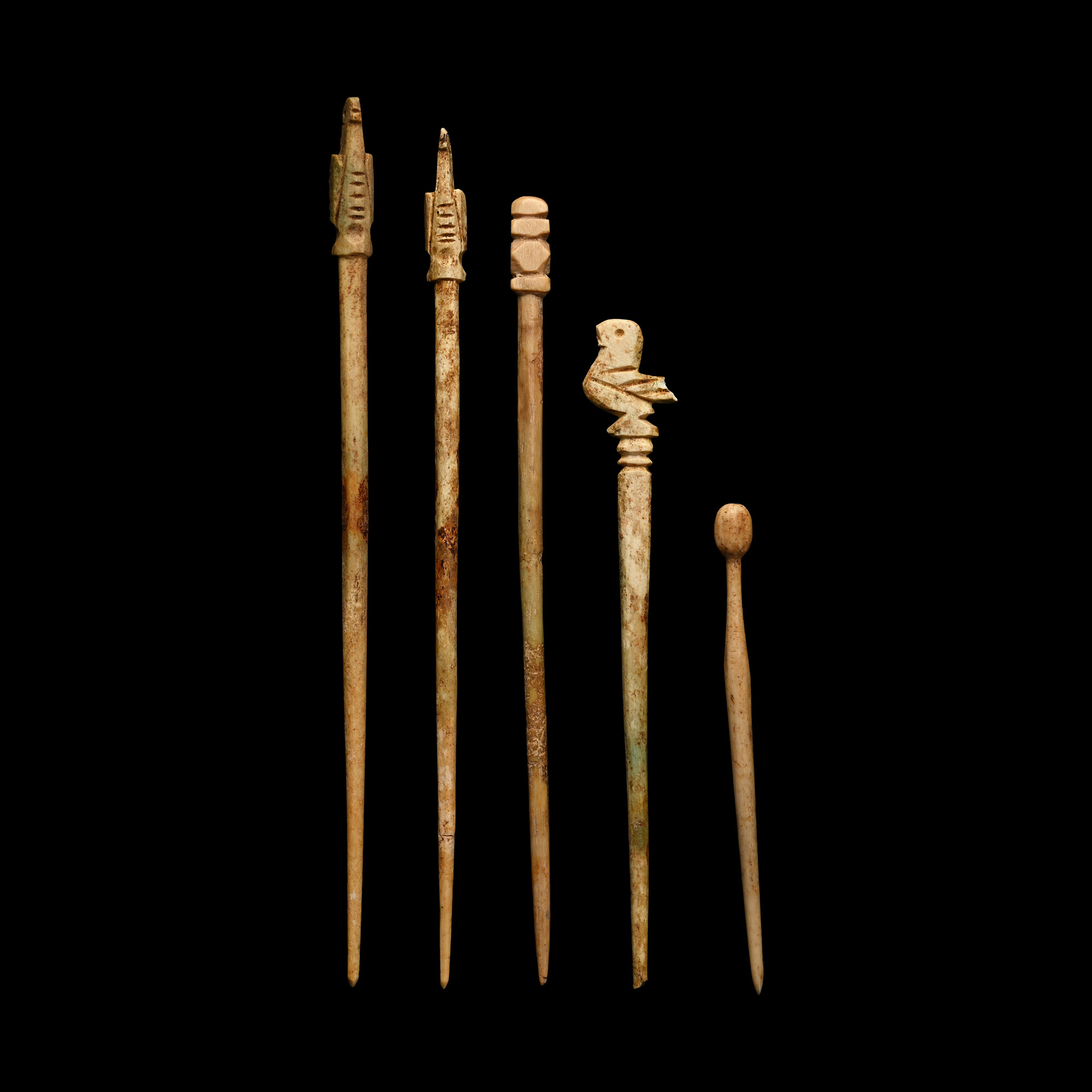
Roman Bone Pin Implement Group
3RD-4TH CENTURY A.D.
3 1/2 - 6 1/2 in. (19.6 grams total, 9-16.6 cm).
Each with hipped and tapering shank; balustered, aviform and other finials. [5]
ProvenancePrivate collection of Mr K.A., acquired in the 1990s-early 2000s.
This lot is accompanied by an illustrated lot declaration signed by the Head of the Antiquities Department, Dr Raffaele D'Amato.
Cf. Crummy, N., Greep, S., Hassall, M., Henig, M., Major, H., Webster, G., Wild, J.P., Colchester Archaeological Report 2: the Roman small finds from excavations in Colchester 1971-1979, Colchester, 1983, pp.19ff., for similar pins.
CONDITIONTimeLine Auctions follows a vetting process to ensure the authenticity and legality of all items, reinforcing our commitment to integrity and responsible trading. Each antiquity, antique, and coin lot undergoes thorough examination by a vetting committee of at least ten external specialists, professional trade association members, scientists, and archaeologists: Our Vetting Process
AUCTIONS:
TimeLine is a leading auction house specialising in antiquities, ancient art, collectables, natural history, coins, medals, and books. Our auctions offer museums, collectors, historians, and enthusiasts the opportunity to acquire unique and historically significant pieces.
-

Roman Carnelian Gemstone with Figures
2nd-3rd century A.D.Sold for (Inc. bp): £351
Ellipsoid in plan with two incuse standing figures flanking two facing busts above a bar with 'XΛIΛ' and a perching bird. 0.59 grams, 13 mm
From the Fadel family collection, London, UK, 1970s. This lot is accompanied by an illustrated lot declaration signed by the Head of the Antiquities Department, Dr Raffaele D'Amato. -
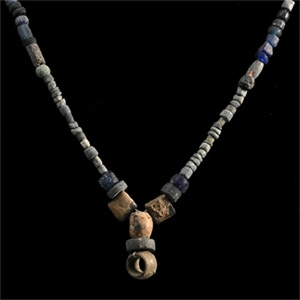
Roman Blue Glass and Stone Bead Necklace String
1st-4th century A.D. and laterSold for (Inc. bp): £39
Composed of variously shaped beads, central feature composed of tabular, annular, and ellipsoid beads; restrung. 21 grams, 41 cm
From the London, UK, art market in the 1990s. This lot is accompanied by an illustrated lot declaration signed by the Head of the Antiquities Department, Dr Raffaele D'Amato.
Such necklaces testify to the popularity of glass ornaments across the Roman Empire. Roman jewellery at first followed trends set by the Etruscans, using gold and glass beads, but with the extension of the Empire and the adoption of different styles from Greece, Egypt and North Africa, jewellery designs became increasingly various and elaborate. Each bead of this beautiful necklace is unique in shape, lustre and speckling, creating a mosaic-like impression. Blue glass beads can be grouped into opaque mid-blue and deep translucent cobalt blue types. -
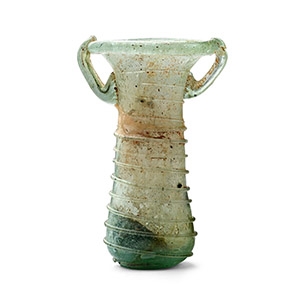
Roman Two-Handled Cylindrical Glass Flask with Trailing
1st-4th century A.D.Sold for (Inc. bp): £208
Miniature cosmetic flask with trumpet-shaped mouth, applied trails to body and rim and applied handles. 21.6 grams, 66 mm
Ex London, UK, gentleman 1980-1990s. This lot is accompanied by an illustrated lot declaration signed by the Head of the Antiquities Department, Dr Raffaele D'Amato.
