
Loading, please wait...
LOT 0764
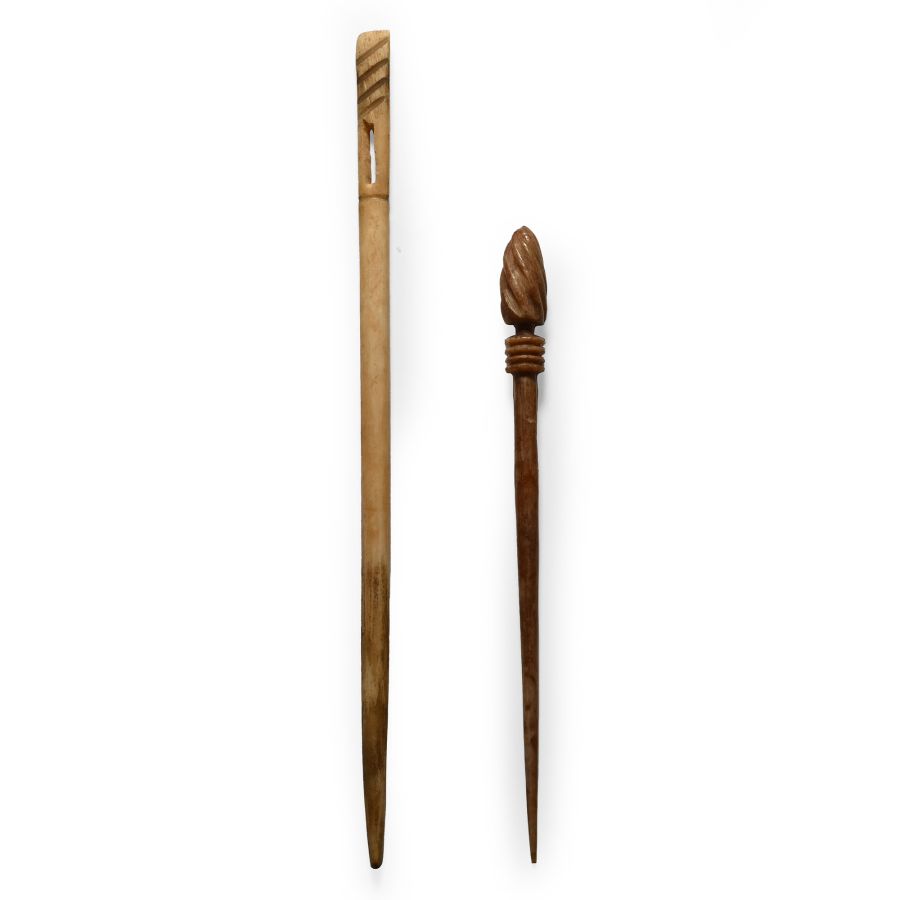
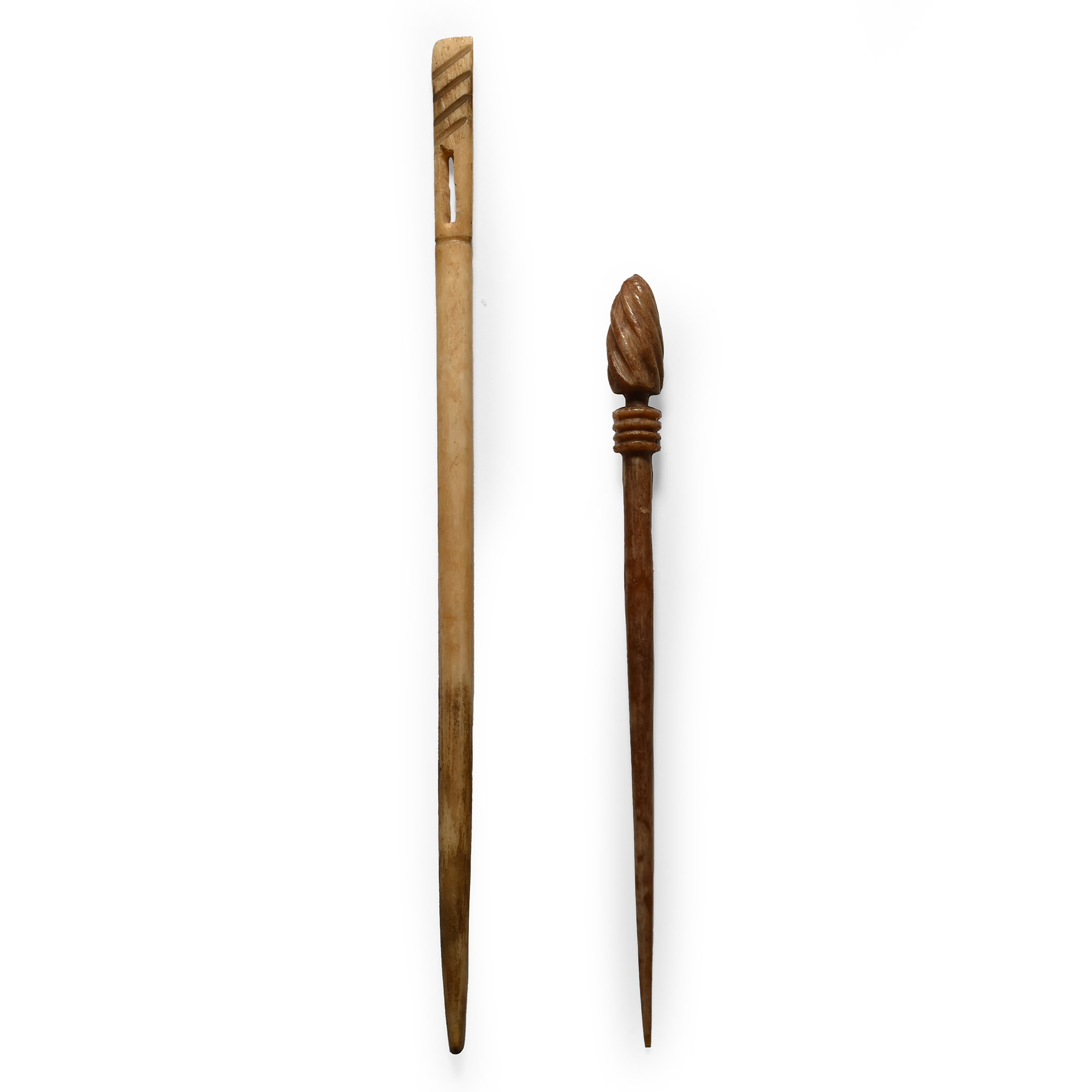
Roman Bone Pin Group
1ST-4TH CENTURY A.D.
4 1/4 - 5 5/8 in. (7.46 grams total, 10.8-14.4 cm).
One with ribbed collar and writhen finial; the other with rectangular eye (possibly a needle). [2, No Reserve]
ProvenanceEx German art market, 2000s.
Acquired from an EU collector living in London.
From the collection of Surrey, UK, gentleman.
This lot is accompanied by an illustrated lot declaration signed by the Head of the Antiquities Department, Dr Raffaele D’Amato.
TimeLine Auctions follows a vetting process to ensure the authenticity and legality of all items, reinforcing our commitment to integrity and responsible trading. Each antiquity, antique, and coin lot undergoes thorough examination by a vetting committee of at least ten external specialists, professional trade association members, scientists, and archaeologists: Our Vetting Process
AUCTIONS:
TimeLine is a leading auction house specialising in antiquities, ancient art, collectables, natural history, coins, medals, and books. Our auctions offer museums, collectors, historians, and enthusiasts the opportunity to acquire unique and historically significant pieces.
-
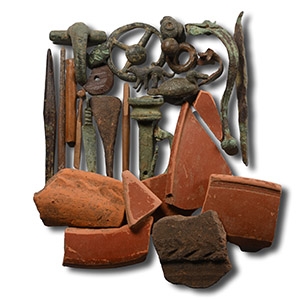
Bronze Age to Roman Bronze Artefact Group
1st millennium B.C.-4th century A.D.Sold for (Inc. bp): £65
Comprising: terracotta bowl fragments; bow brooch fragments; a looped fastener; two awls; a small duck mount; bone pin fragments; a looped nail cleaner; and others. 166 grams total, 12-74 mm
Found on various UK sites since 1974. Property of an Essex collector. This lot is accompanied by an illustrated lot declaration signed by the Head of the Antiquities Department, Dr Raffaele D’Amato. -
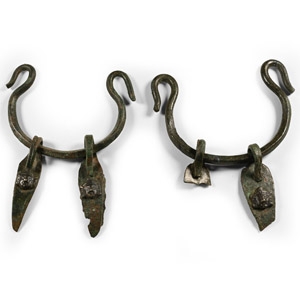
Romano-British 'Silchester' Bronze Figural Vessel Handle Pair
1st-2nd century A.D.Sold for (Inc. bp): £130
Matched pair of drop-handles for a situla or other large vessel, each an arched rod with curved and returned ends attached to a looped bar and leaf-shaped panel with an applied mask or gorgoneion below (one absent). 180 grams total, 9.5-10.3 cm wide
Found North Hampshire near the Roman town of Calleva (Silchester), the Iron Age Celtic capital of the Attrabates tribe. Recorded with Reading Museum, in the 1970s. From an old Hampshire, UK, collection. Ex Ancient & Gothic, UK. Accompanied by copies of two typed and hand illustrated previous information sheets including provenance. This lot is accompanied by an illustrated lot declaration signed by the Head of the Antiquities Department, Dr Raffaele D’Amato. -
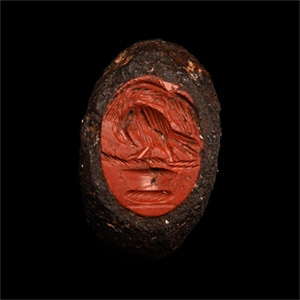
Roman Iron Ring with Eagle Gemstone
1st-2nd century A.D.Estimate: £800 - 1,000 (+bp*)
Opening Bid: £400
Ellipsoid jasper cloison with intaglio perching eagle with wings spread on top of a column; set in a ferrous finger ring; supplied with a museum-quality impression. 11.40 grams, 27.14 mm overall, 18.35 mm internal diameter (approximate size British J, USA 4 3/4, Europe 8.69, Japan 8)
Acquired on the UK art market. Private collection, London, UK. This lot is accompanied by an illustrated lot declaration signed by the Head of the Antiquities Department, Dr Raffaele D’Amato.
