
Loading, please wait...


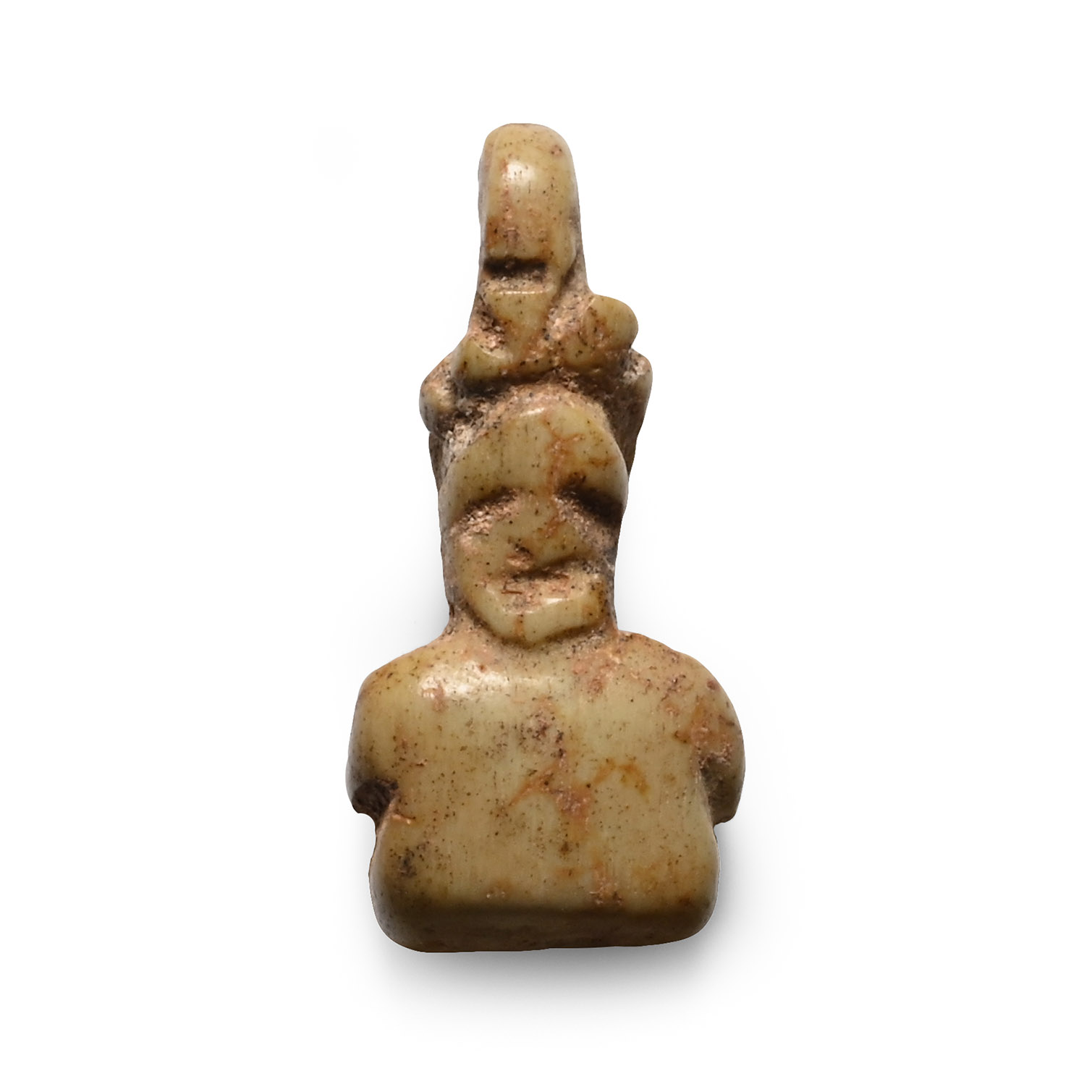
LOT 0720
Roman Bone Pendant of a Nude Man
1ST-4TH CENTURY A.D.
7/8 in. (1.2 grams, 22 mm).
Carved bust with pierced suspension lug above. [No Reserve]
ProvenanceFrom the collection of a gentleman, acquired on the London art market in the 1990s.
CONDITIONTimeLine Auctions follows a vetting process to ensure the authenticity and legality of all items, reinforcing our commitment to integrity and responsible trading. Each antiquity, antique, and coin lot undergoes thorough examination by a vetting committee of at least ten external specialists, professional trade association members, scientists, and archaeologists: Our Vetting Process
AUCTIONS:
TimeLine is a leading auction house specialising in antiquities, ancient art, collectables, natural history, coins, medals, and books. Our auctions offer museums, collectors, historians, and enthusiasts the opportunity to acquire unique and historically significant pieces.
-
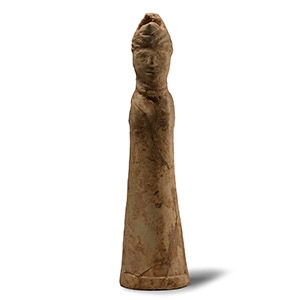
Roman Bone Female Idol
Eastern Empire, 3rd century B.C.-2nd century A.D.Estimate: £300 - 400 (+bp*)
Opening Bid: £120
Female figure with tiered hairstyle, carved face with carinated nose and slit mouth, stepped collar, conical garment wrapped around her lower body; attachment points for separate arms (absent). 36 grams, 14 cm
with a London, UK gallery, 1971-early 2000s. -
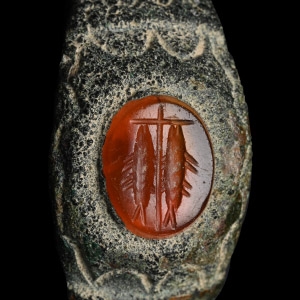
Late Roman Ring with Cross and Fish Gemstone
4th-5th century A.D.Sold for (Inc. bp): £1,430
With flared shoulders and arcading, inset carnelian cloison with intaglio cross with pair of fish. 1.85 grams, 20.46 mm overall, 17.28 mm internal diameter (approximate size British I, USA 4 1/4, Europe 7.44, Japan 7)
Ex private London, UK, collection, 1970-1990. From the collection of a London antiquarian. -
.jpg)
Roman Gold Ring with Carnelian Intaglio Depicting Castor
1st-3rd century A.D.Estimate: £1,800 - 2,400 (+bp*)
Opening Bid: £1,000
Hollow-formed ring with inset intaglio, profile bust of Castor, son of Zeus, with star above his brow; supplied with a museum-quality impression. 6.24 grams, 27.39 mm overall, 18.70 mm internal diameter (approximate size British K, USA 5 1/4, Europe 9.95, Japan 9)
Acquired on the German art market, 1989-1995. with The Museum Gallery, 19 Bury Place, London, WC1, UK, 1998-2003. Property of a London based academic, 2003-present. This lot has been checked against the Interpol Database of stolen works of art and is accompanied by a search certificate number no.12391-226043.
