
Loading, please wait...
LOT 1282
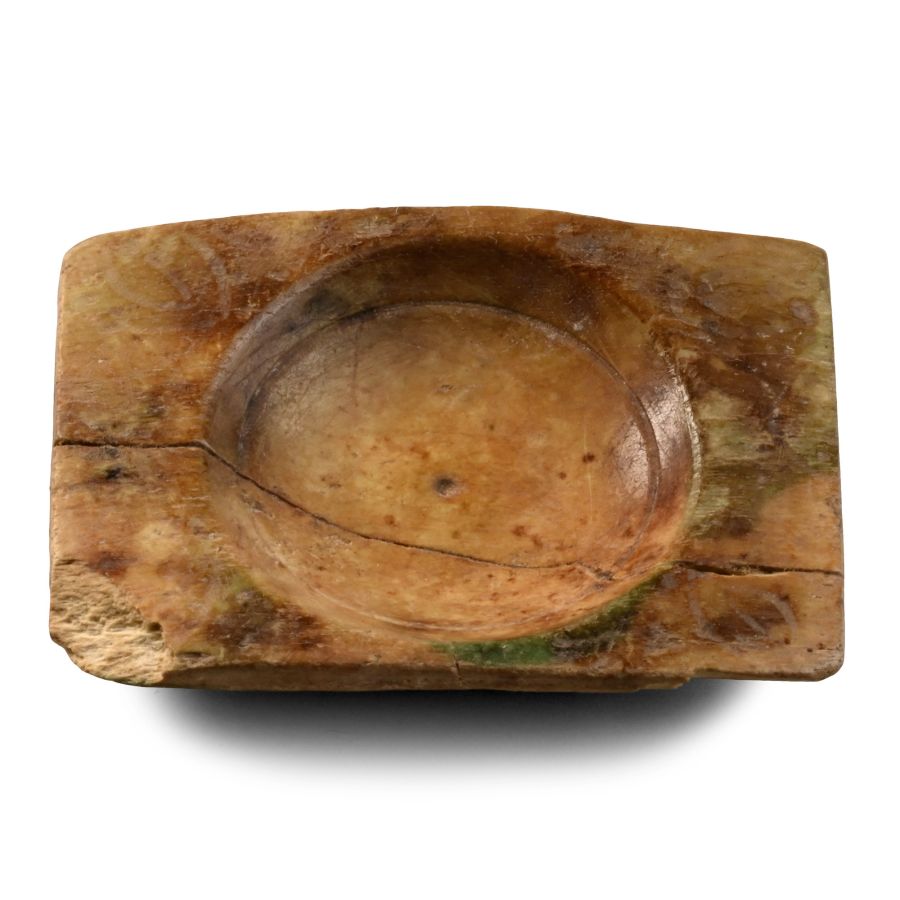
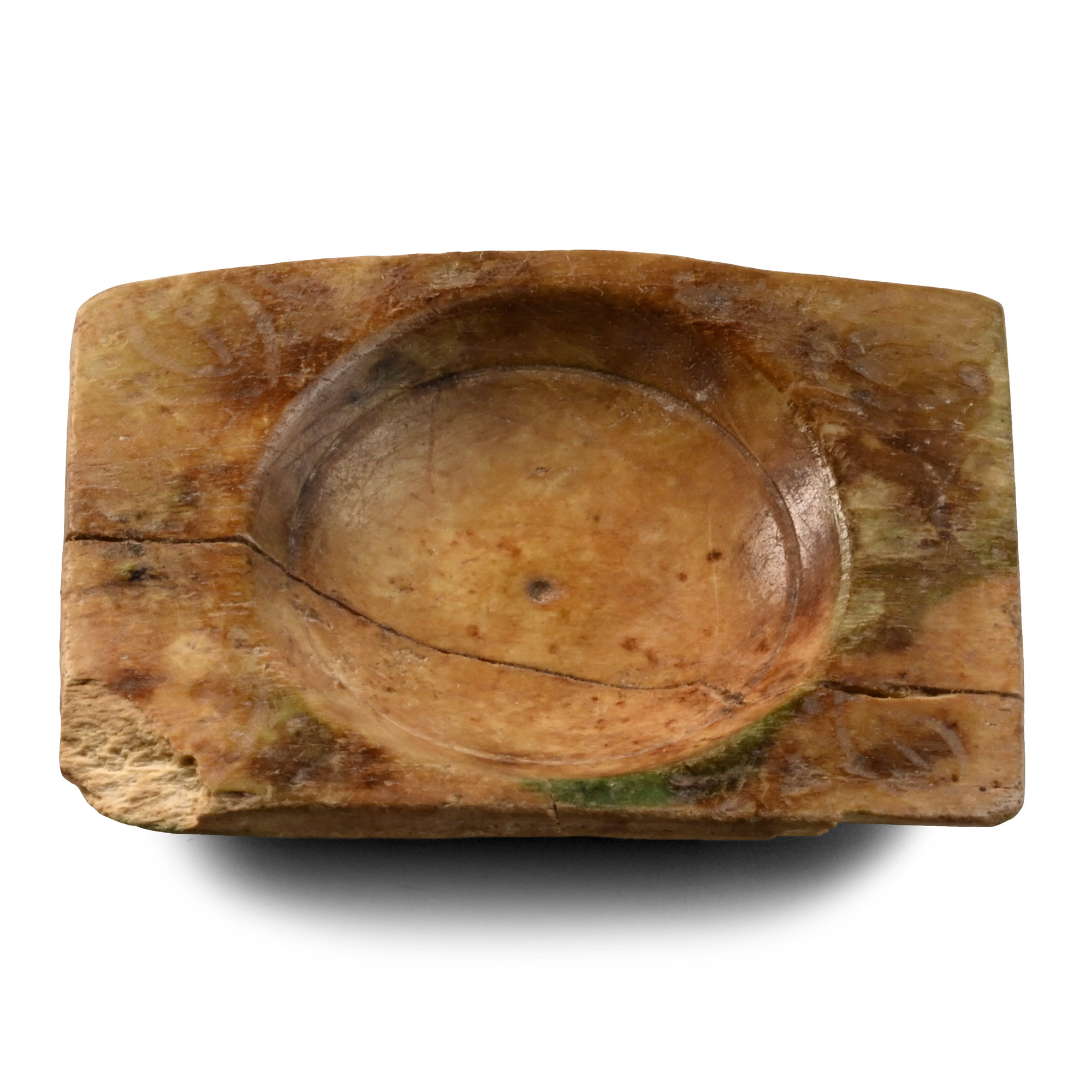
Roman Bone Gaming Dish with Decoration
CIRCA 1ST-4TH CENTURY A.D.
1 3/4 in. (8.59 grams, 43 mm).
Rectangular in plan with shallow dish to the centre forming a patera; incised foliage ornament to each straight end.
ProvenanceFrom the collection of the late Mr S.M., London, UK, 1970s, by descent.
CONDITIONTimeLine Auctions follows a vetting process to ensure the authenticity and legality of all items, reinforcing our commitment to integrity and responsible trading. Each antiquity, antique, and coin lot undergoes thorough examination by a vetting committee of at least ten external specialists, professional trade association members, scientists, and archaeologists: Our Vetting Process
AUCTIONS:
TimeLine is a leading auction house specialising in antiquities, ancient art, collectables, natural history, coins, medals, and books. Our auctions offer museums, collectors, historians, and enthusiasts the opportunity to acquire unique and historically significant pieces.
LOT 1282
Roman Bone Gaming Dish with Decoration
Estimate £100 - 140€120 - 160 (for guidance only)$140 - 190 (for guidance only)
Opening Bid
£50 (EUR 58; USD 68) +BP*
-
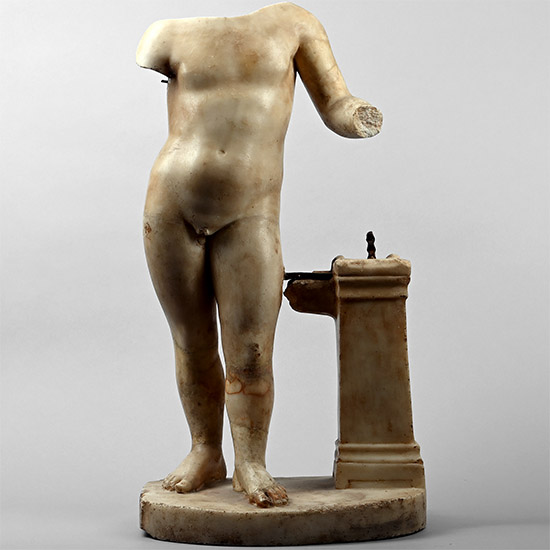
Roman Marble Torso of Young Boy
1st century A.D.Estimate: £50,000 - 70,000 (‡+bp*)
Opening Bid: £25,000
Statue of a young naked boy, in Parian or Carrara marble, shown in a contrapposto stance, with his right hip raised and his left leg extended slightly forward; chest and upper abdomen with subtle muscular definition, narrow torso and slim arms, rounded belly and chubby thighs; professionally repaired. 34.7 kg, 66 cm
European private collection, 19th century (based on restoration techniques). Ex Sotheby's, London, 8 December 1986, no.287. Ex private collection, Melbourne, Australia, prior to 2001. Private collection, Europe. Accompanied by a printed copy of the Spanish cultural export licence no.1775-3178156. This lot has been checked against the Interpol Database of stolen works of art and is accompanied by search certificate no.13456-260917.
During the Roman imperial period, children were widely represented in the art of both the public and private spheres. Images of both mortal and divine children appeared in the artworks and furnishings of the home, on the tomb monuments and burial containers associated with the funerary realm, and on imperial state art. This statue of a nude young boy, which is made of Parian or Carrara marble, exemplifies the Roman interest in the subject of children. This shift in movement is echoed in the tilt of the boy’s head downward and to his right, suggesting that he has fixed his gaze on something in this direction. -
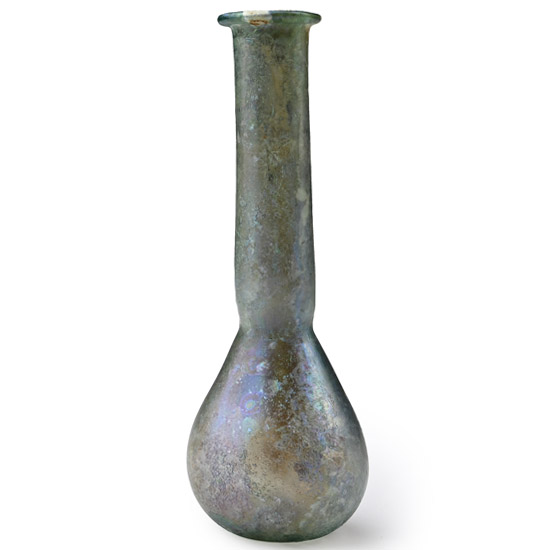
Roman Iridescent Glass Miniature Bottle
Circa 3rd century A.D.Estimate: £60 - 80 (+bp*)
Opening Bid: £5
Piriform body with a long tubular neck and a flattened rim. 15.2 grams, 11.2 cm
From the private collection of Peter Clayton, FCILIP, Dip, Arch, FSA, FRNS, Hemel Hempstead, Hertfordshire, UK; formed since the late 1950s. -
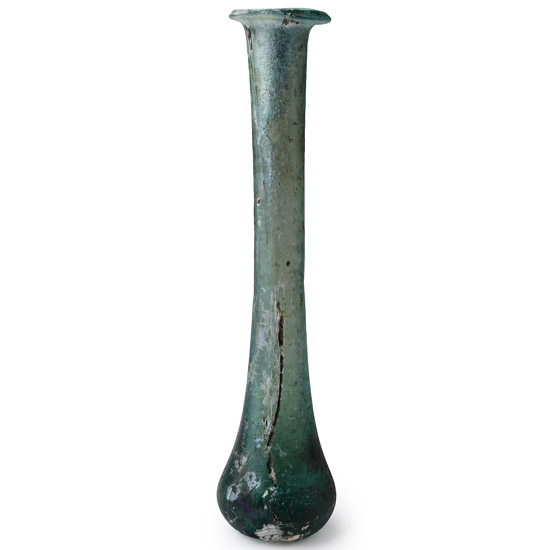
Roman Iridescent Turquoise Glass Unguentarium
Circa 1st century A.D.Estimate: £100 - 140 (+bp*)
Opening Bid: £50
Formed of thick glass with a flattened base and a long, tubular neck with an everted rim; repaired. 44.2 grams, 12.5 cm
Roman glass from an important London collection, acquired from the early 1980s.
