
Loading, please wait...
LOT 0841
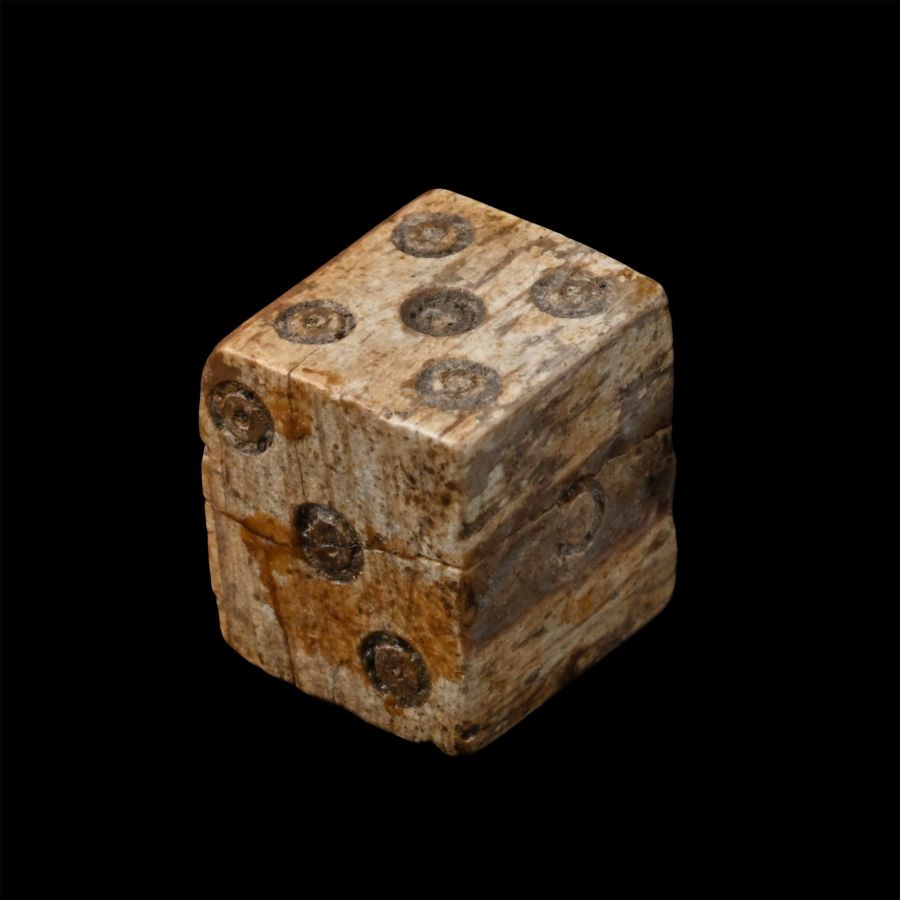
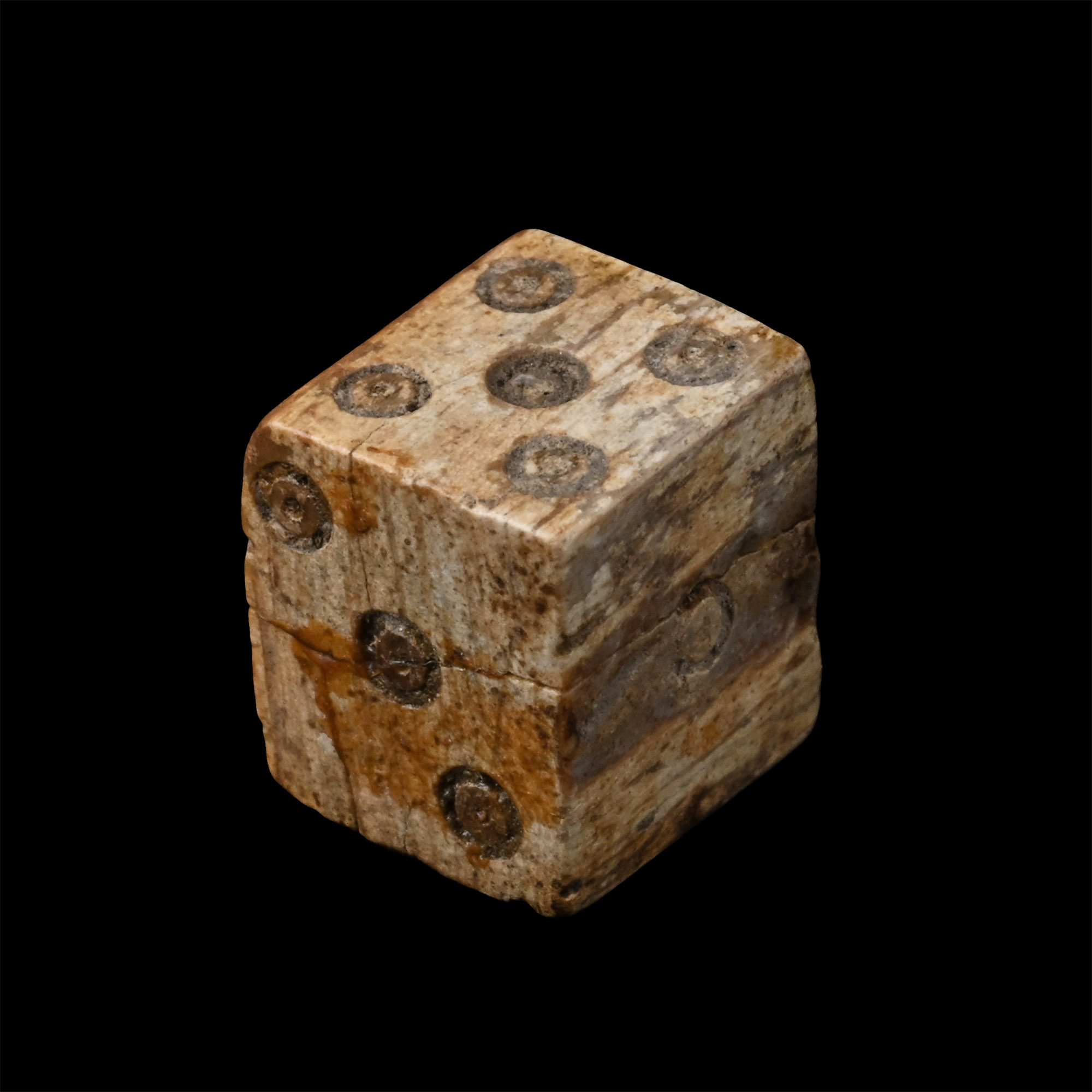
Roman Bone Gaming Die
CIRCA 1ST-4TH CENTURY A.D.
3/8 in. (1.02 grams, 8 mm).
Cuboid dice with ring-and-dot markings disposed 1:6,2:5, 3:4. [No Reserve]
ProvenanceEx gentleman collector of antique and antiquity games from Berkshire, UK, having collected for over 20 years.
CONDITIONTimeLine Auctions follows a vetting process to ensure the authenticity and legality of all items, reinforcing our commitment to integrity and responsible trading. Each antiquity, antique, and coin lot undergoes thorough examination by a vetting committee of at least ten external specialists, professional trade association members, scientists, and archaeologists: Our Vetting Process
AUCTIONS:
TimeLine is a leading auction house specialising in antiquities, ancient art, collectables, natural history, coins, medals, and books. Our auctions offer museums, collectors, historians, and enthusiasts the opportunity to acquire unique and historically significant pieces.
-
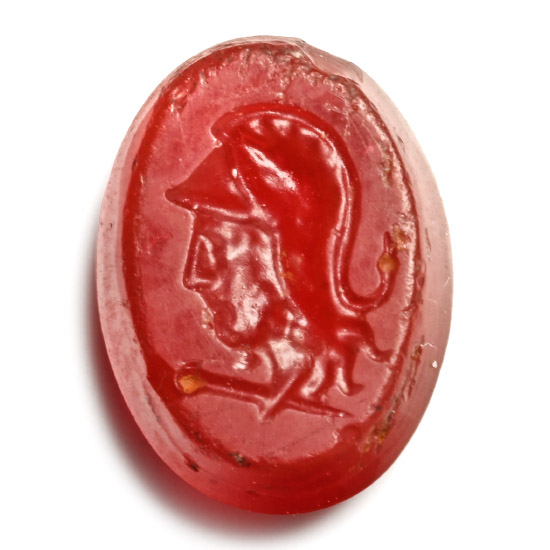
Roman Carnelian Gemstone with Bust of Minerva
2nd-3rd century A.D.Sold for (Inc. bp): £124
Scaraboid type with incuse design of a profile bust of Minerva wearing a Corinthian-style crested helmet; supplied with a museum-quality impression. 0.46 grams, 10 mm
From the private collection of a European gentleman (1942-2024), formed since the 1970s. -
.jpg)
Roman Bronze Figure of Hercules with Lion-Skin Headdress
2nd century B.C.Sold for (Inc. bp): £780
Depicting Hercules in heroic nudity, standing with his legs slightly apart, the right leg set back and the left, slightly bent, advanced outward; his right arm raised, the forearm bent at a right angle, while the clenched hand originally held a club, now lost; the left arm extending forward and supporting the lion skin; the left hand, also clenched, probably held a further attribute; the stylised lion skin draped over the hero's head, terminating in two pointed flaps at either side, and fastened across the chest with the so-called 'Heracles knot', beneath which the forepaws of the lion are rendered with deeply incised claw; accompanied by a display stand. 443 grams total, 14 cm including stand
The surface retains a thick, undisturbed green patina. Minor losses are present and may plausibly be interpreted as the result of ritual damage in antiquity.
Acquired in Germany before 2000s. English private collection. Bertolami Fine Art, London, Auction 85, 14 December 2020, no.11. This lot has been checked against the Carabinieri Database of stolen works of art.
The sculpture reproduces the iconographic type of the charging Hercules, a motif widely attested in ancient Italy, particularly in the Umbro-Sabellian region, and ultimately derived from the Magna Graecia artistic tradition. The widespread adoption of this iconographic scheme, repeated with only minor variations, reflects the development of local cults dedicated to the hero, who was at times assimilated to indigenous deities. It has also been suggested that this type ultimately derives from a bronze original identified as the Herakles Alexikakos, attributed to the Argive sculptor Hageladas, active between the late 6th and early 5th century B.C. -
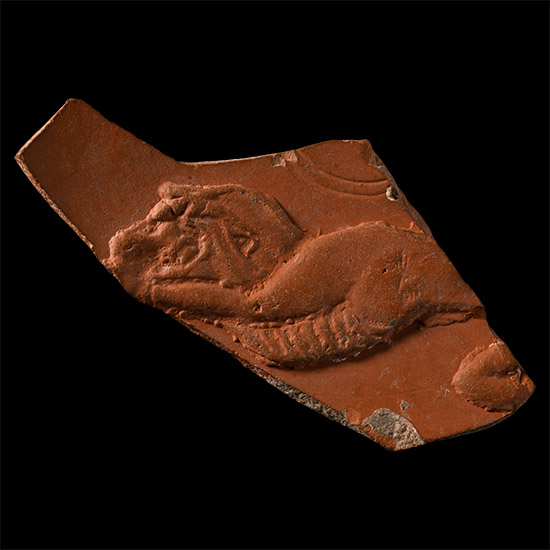
Roman Redware Pot Sherd with Torso of Venus
Circa 4th century A.D.Sold for (Inc. bp): £26
Irregular ceramic fragment with low-relief image of a female toso and legs with draped fabric panel to left leg, part of elbow at upper edge, incised arc to left edge. 26.5 grams, 95 mm
From the private collection of Mr Brian Edwards, New Malden, Surrey, UK, formed from the late 1970s-early 1980s; thence by descent. Accompanied by the original collector's data sheet(s) with reference no.A35.
Probably Venus Anadyomene arriving at the seashore having emerged fully-formed from the waves.
