
Loading, please wait...
LOT 0778
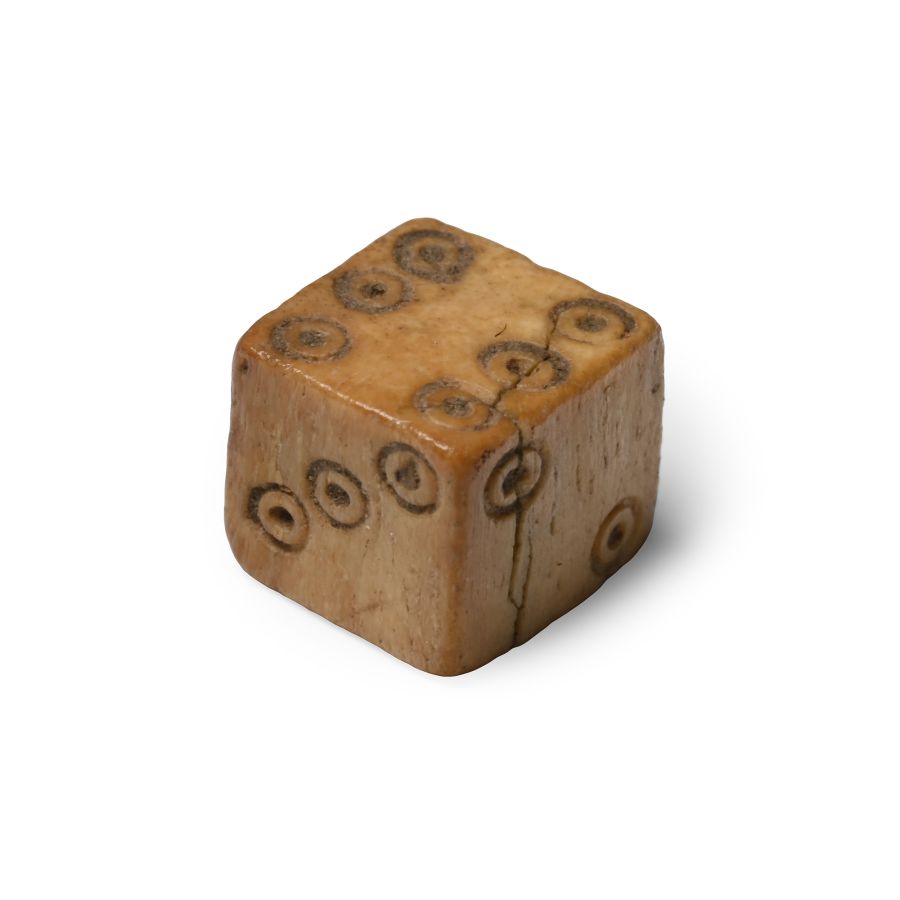
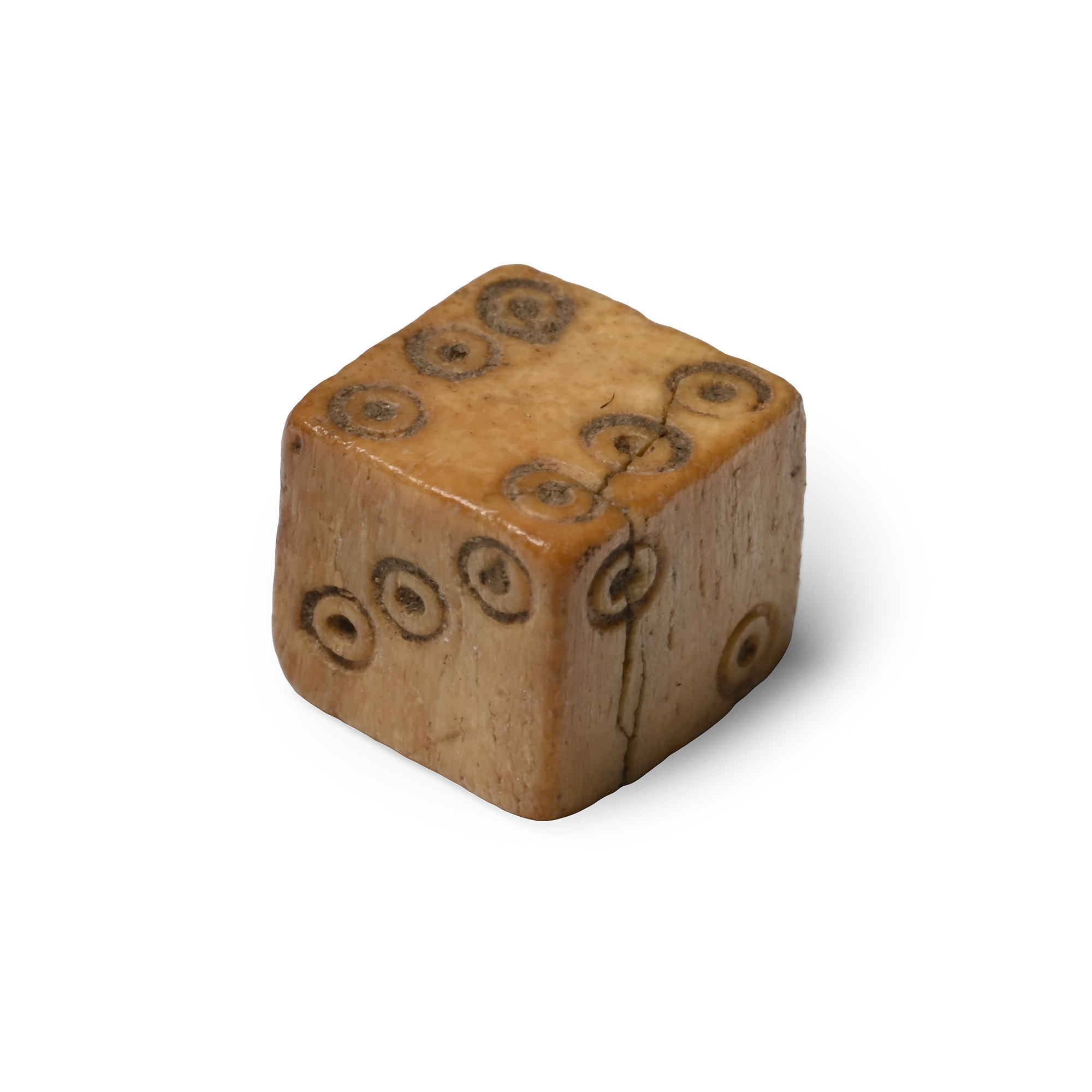
Roman Bone Gaming Die
CIRCA 1ST-4TH CENTURY A.D.
1/4 in. (0.47 grams, 6.95 mm).
Cuboid with ring-and-dot markings arranged 1:2, 3:4, 5:6. [No Reserve]
ProvenanceFrom the Colin Narbeth collection, 1990s.
CONDITIONTimeLine Auctions follows a vetting process to ensure the authenticity and legality of all items, reinforcing our commitment to integrity and responsible trading. Each antiquity, antique, and coin lot undergoes thorough examination by a vetting committee of at least ten external specialists, professional trade association members, scientists, and archaeologists: Our Vetting Process
AUCTIONS:
TimeLine is a leading auction house specialising in antiquities, ancient art, collectables, natural history, coins, medals, and books. Our auctions offer museums, collectors, historians, and enthusiasts the opportunity to acquire unique and historically significant pieces.
-
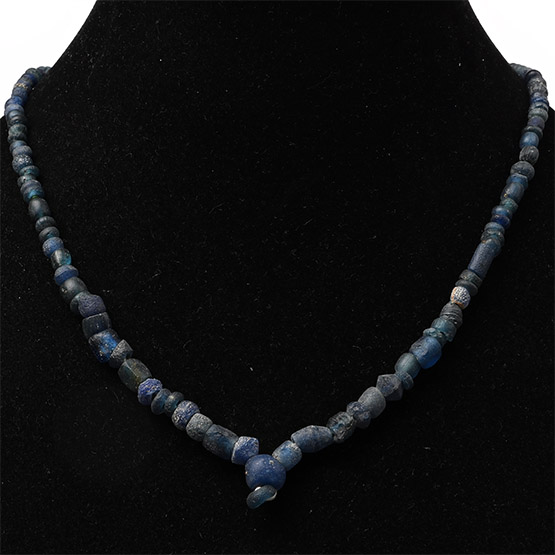
Roman Blue Glass Bead Necklace String
1st-4th century A.D. and laterSold for (Inc. bp): £39
Composed of graduated oblate and other beads with a larger oblate bead at the centre; restrung. 16.26 grams, 41.5 cm
Ex London, UK, collection, 1990s. -
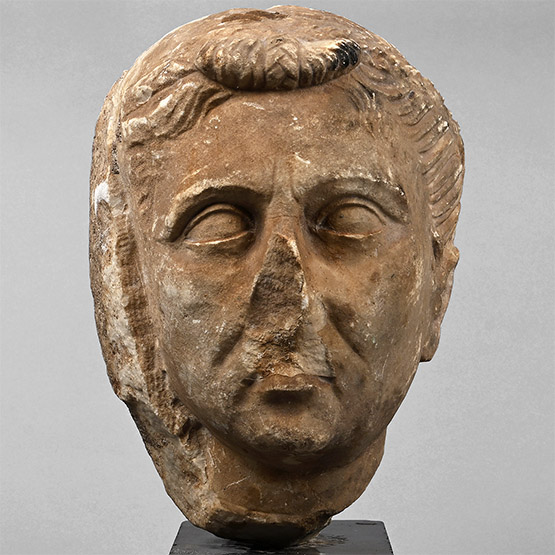
Roman Marble Head of a Wealthy Lady
1st century A.D.Estimate: £10,000 - 14,000 (‡+bp*)
Opening Bid: £5,000
Carved in the round with dressed hair and braided band with fanned closure above the brow; finely modelled facial detailing; mounted on a custom-made stand. 24.5 kg total, 41 cm including stand
From the collection of L.V. (1950-1960), Paris, France. Collection of Monsieur X. (1931-2017), dispersed for the benefit of the Monaco Red Cross. Private collection, Europe. Accompanied by a copy of French passport no.229089.
The portrait is of an idealised feminine head, probably modelled on an Aphrodite type, with the hair in a bun on the nape, adorned with circles and with a tuft knotted at the top of the forehead, re-used as a portrait of a Roman lady. Many statue types were used both for portraits of women of the imperial family and for the portraits of other women, some of them based on images of goddesses. -
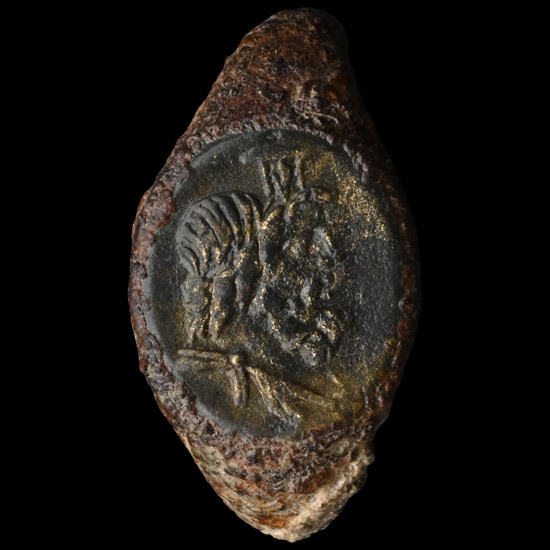
Roman Iron Ring with Bronze Plate with Serapis
Circa 2nd century A.D.Estimate: £250 - 350 (+bp*)
Opening Bid: £125
Slender hoop with expanding shoulders, bezel set with a bronze intaglio with a gilt low-relief profile bust of Serapis wearing modius. 4.81 grams, 22.93 mm overall, 18.00 x 13.48 mm internal diameter (approximate size British I, USA 4 1/4, Europe 7.44, Japan 7)
Ex German art market, 2000s. Acquired from an EU collector living in London. From the collection of a Surrey, UK, gentleman.
