
Loading, please wait...
LOT 0632
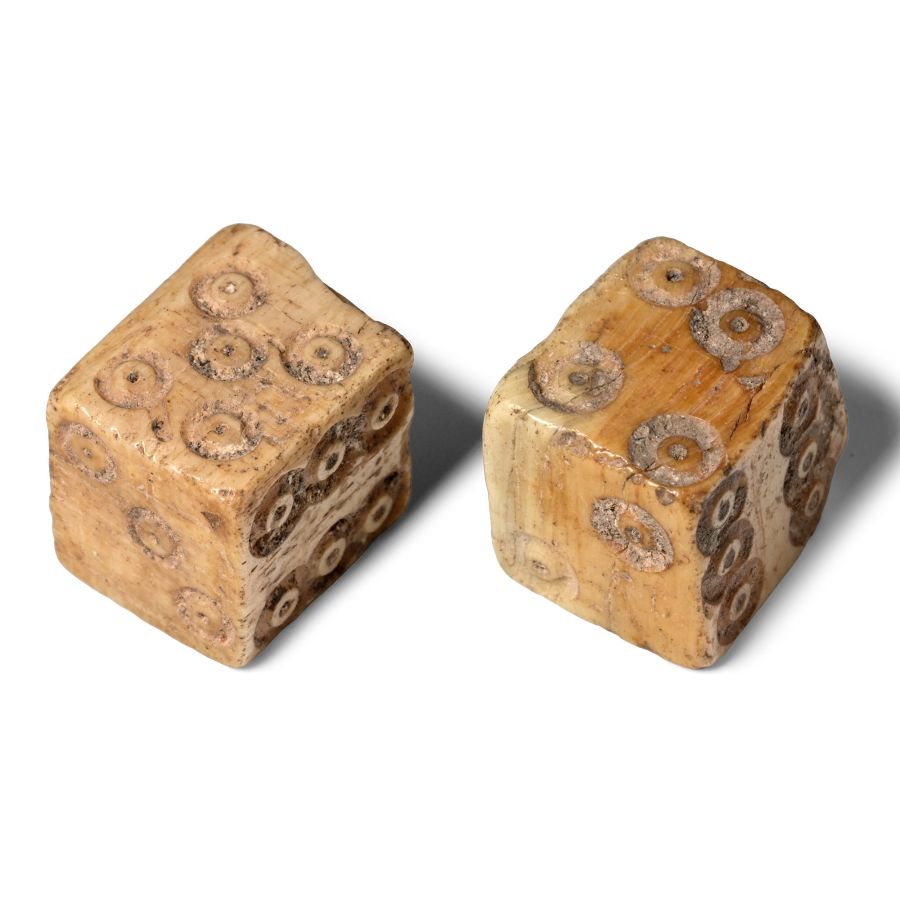
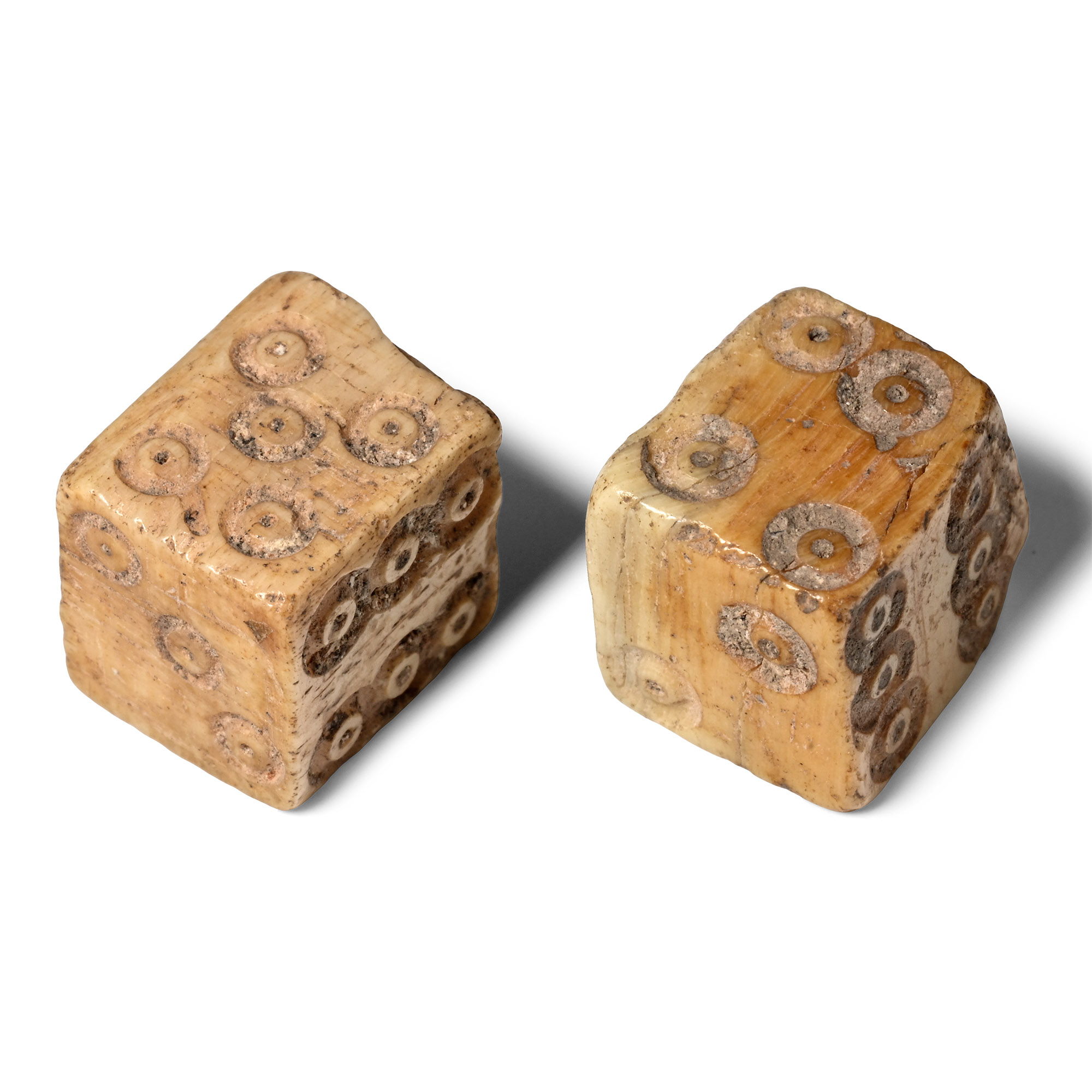
Roman Bone Gaming Dice Pair
CIRCA 1ST-4TH CENTURY A.D.
3/8 in. (4 grams total, 11 mm each).
Pair of cuboid dice with ring-and-dot markings disposed 1:6, 2:5, 3:4. [2]
ProvenanceEx Cambridgeshire, UK, collection, 1990s.
CONDITIONTimeLine Auctions follows a vetting process to ensure the authenticity and legality of all items, reinforcing our commitment to integrity and responsible trading. Each antiquity, antique, and coin lot undergoes thorough examination by a vetting committee of at least ten external specialists, professional trade association members, scientists, and archaeologists: Our Vetting Process
AUCTIONS:
TimeLine is a leading auction house specialising in antiquities, ancient art, collectables, natural history, coins, medals, and books. Our auctions offer museums, collectors, historians, and enthusiasts the opportunity to acquire unique and historically significant pieces.
-
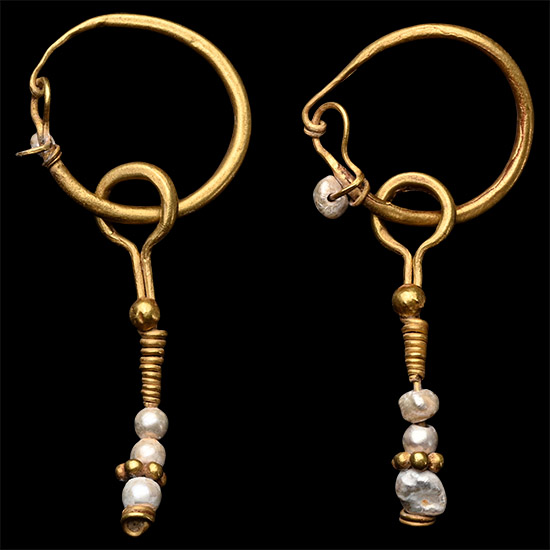
Roman Gold Earrings with Pearls
2nd-3rd century A.D.Sold for (Inc. bp): £1,300
Matched pair, each comprising a tubular shank with hook-and-eye closure, free-running dangle with pearl bead and granule cluster below. 3.94 grams total, 50 mm each
Private collection, 1990s-early 2000s. with Gorny and Mosch, Munich, 14 December 2010, no.160. Accompanied by copies of the Gorny and Mosch catalogue pages. -
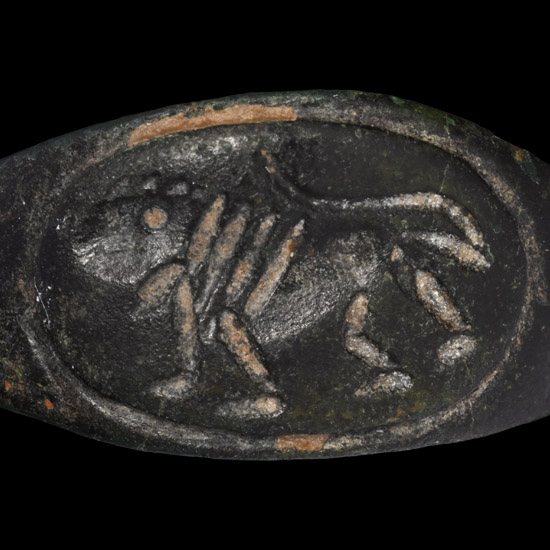
Roman Bronze Ring with Gladitorial Lion
Circa 1st-4th century A.D.Sold for (Inc. bp): £91
The hoop expanding towards the shoulders, with an oval bezel with an incuse image of a lion. 4.20 grams, 23.11 mm overall, 20.35 x 15.45 mm internal diameter (approximate size British M, USA 6, Europe 12.46, Japan 12)
Acquired on the UK art market. Private collection, Suffolk, UK. -
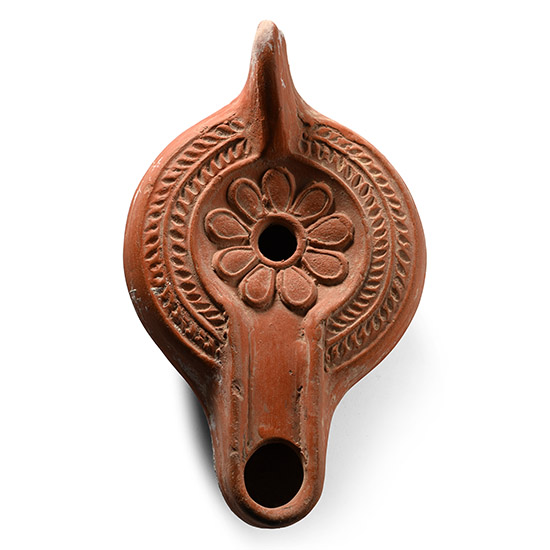
Late Roman Terracotta Oil Lamp with Nine-Petalled Flower
5th-6th century A.D.Sold for (Inc. bp): £247
Comprising a shallow discus with a wreath on the shoulder, a central nine-petalled flower surrounding the filler hole, a long nozzle with raised sides, a lug handle to the rear, and a raised basal ring. 158 grams, 13.4 cm
By descent to the son of a late Hertfordshire gentleman collector, whose collection was formed from the 1960s.
