
Loading, please wait...
LOT 0978
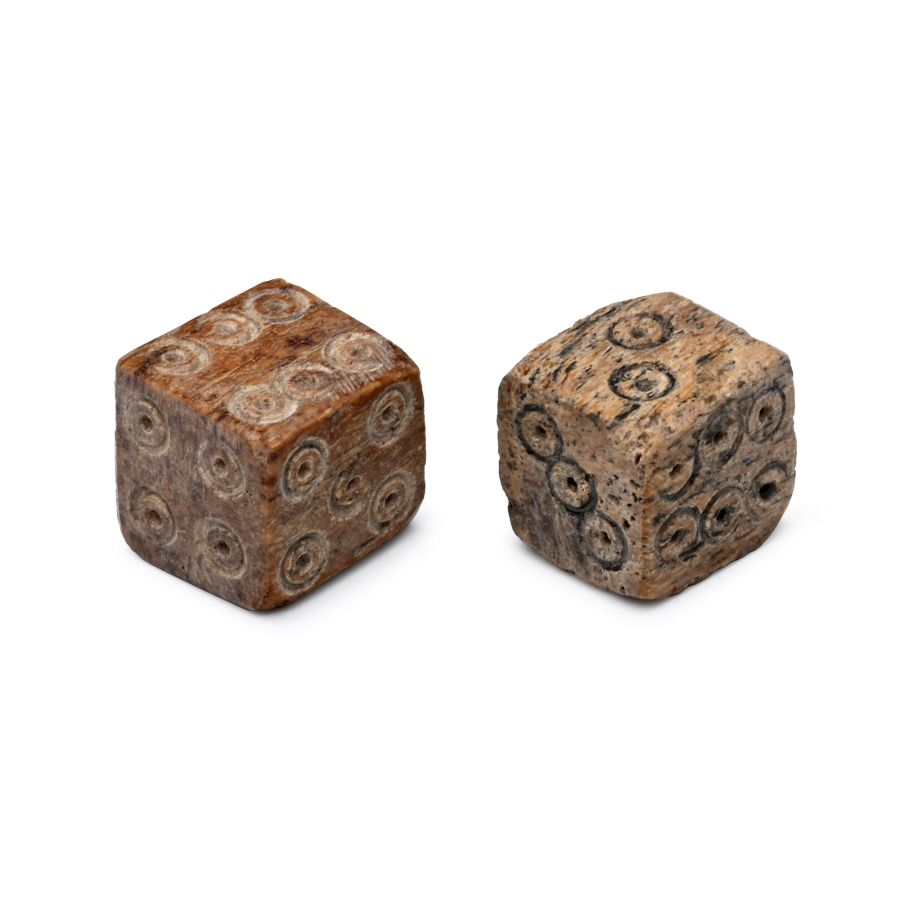
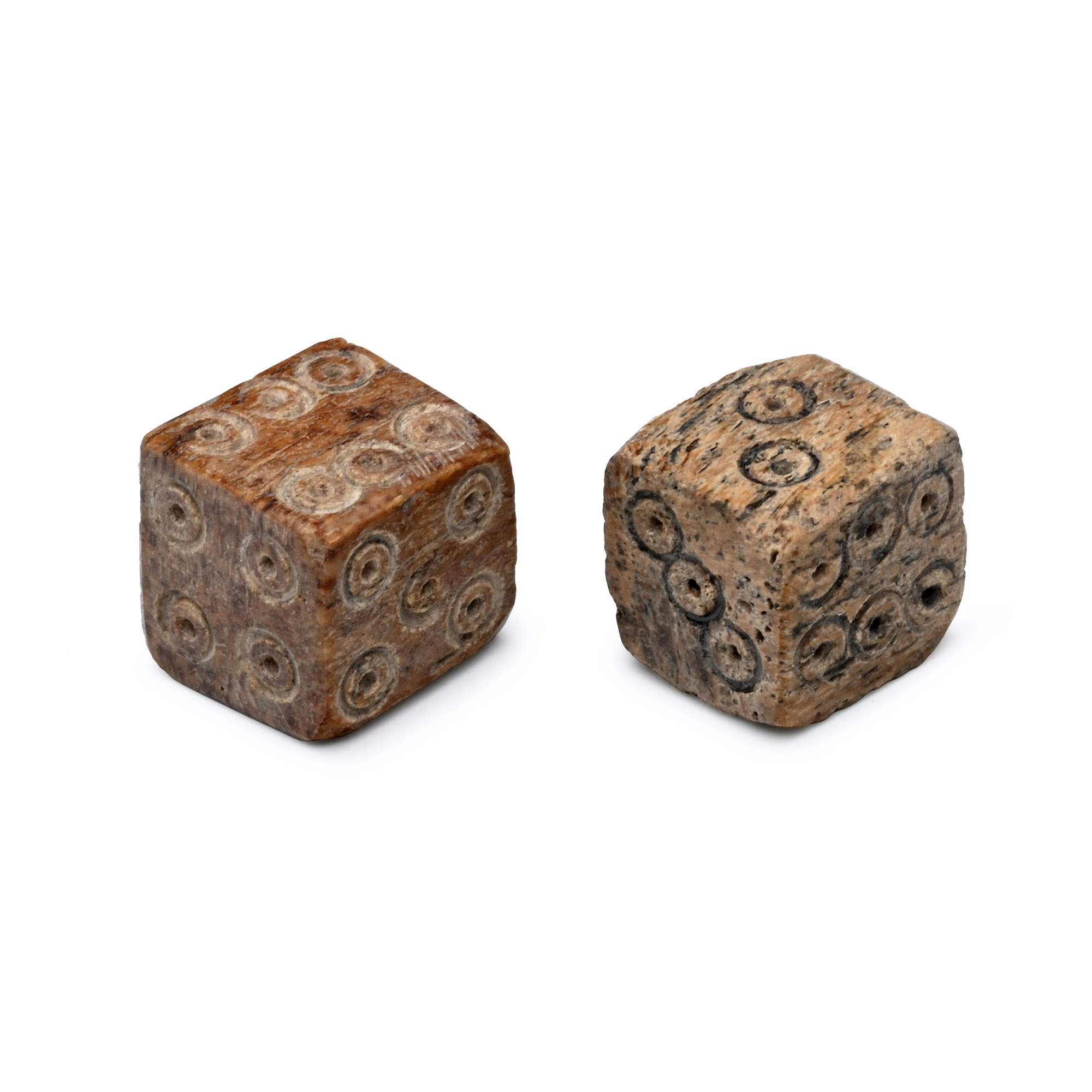
Roman Bone Gaming Dice Pair
1ST-4TH CENTURY A.D.
3/8 in. (2.9 grams total, 9-10 mm).
Pair of cuboid gaming dice with ring-and-dot markings disposed 1:6, 2:5, 3:4. [2, No Reserve]
ProvenanceEx German art market, 2000s.
Acquired from an EU collector living in London.
From the collection of a Surrey, UK, gentleman.
TimeLine Auctions follows a vetting process to ensure the authenticity and legality of all items, reinforcing our commitment to integrity and responsible trading. Each antiquity, antique, and coin lot undergoes thorough examination by a vetting committee of at least ten external specialists, professional trade association members, scientists, and archaeologists: Our Vetting Process
AUCTIONS:
TimeLine is a leading auction house specialising in antiquities, ancient art, collectables, natural history, coins, medals, and books. Our auctions offer museums, collectors, historians, and enthusiasts the opportunity to acquire unique and historically significant pieces.
-
.jpg)
Roman Bronze Diploma Fragment
228 A.D.Sold for (Inc. bp): £910
Rectangular fragment with irregular clipped edges; Side A - trilinear concentric border to the corner; Side B - inscription in serifed capitals '[.]NAS IN MATRI[MONIO / [D]VXERINT PRIO[---] / [.]TOLLANT AC SI [---] / [CIVI]BVS RO[M]ANIS [---] / [ID]VS IANQATICI / [M.] MAECIO PRO[BO COS] / [.]A SEVERIANA'. 28.4 grams, 56 mm
Ex German art market, 2000s. Acquired from an EU collector living in London. From the collection of a Surrey, UK, gentleman. -
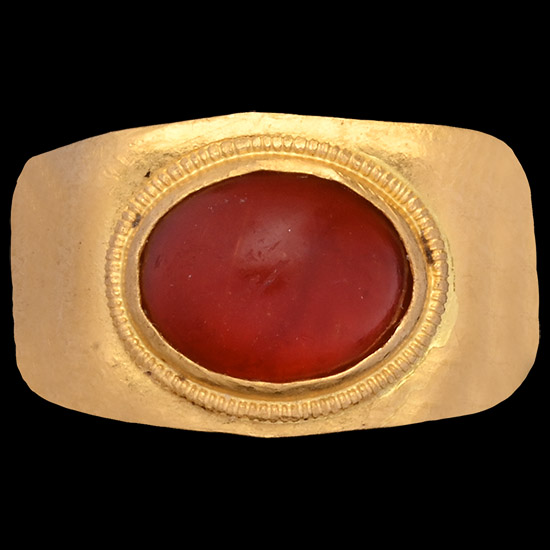
Roman Gold Ring with Carnelian Cabochon
2nd-4th century A.D. or laterEstimate: £500 - 700 (+bp*)
Opening Bid: £250
Flat-section shank flaring at the shoulders, filigree border around the bezel set with a replaced carnelian cabochon. 3.87 grams, 21.70 mm overall, 17.49 x 16.43 mm internal diameter (approximate size British L, USA 5 3/4, Europe 11.24, Japan 10)
Private collection, Suffolk, UK. -
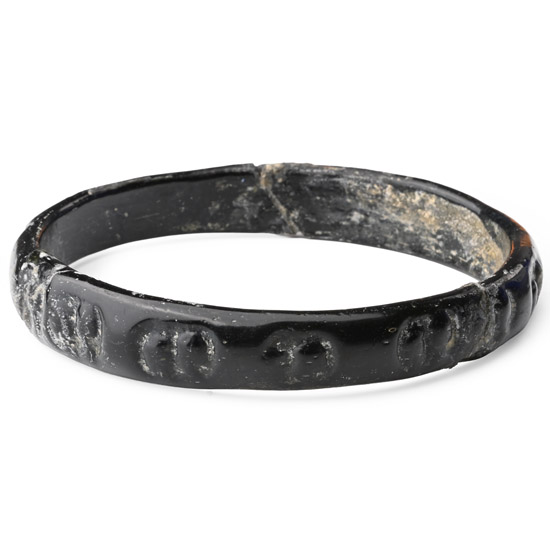
Large Roman Glass Bangle
1st-4th century A.D.Sold for (Inc. bp): £65
Plano-convex in section with a series of impressed images, mainly a single bust in profile and two profile busts opposed, the placement eccentric but regular; repaired. 33.3 grams, 84 mm
From the private collection of Mr Brian Edwards, New Malden, Surrey, UK, formed from the late 1970s-early 1980s; thence by descent. Accompanied by the original collector's data sheet(s) with reference no.A81; and original C.J. Martin invoice dated 4th November 1989.
