
Loading, please wait...
LOT 0867
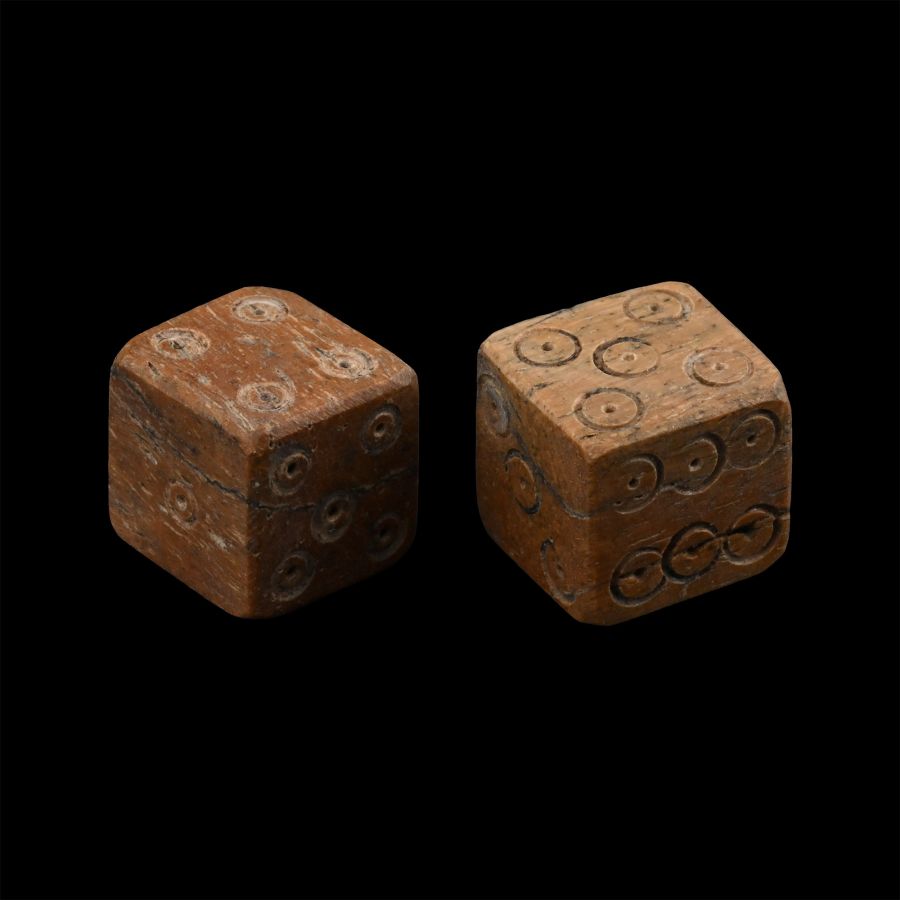
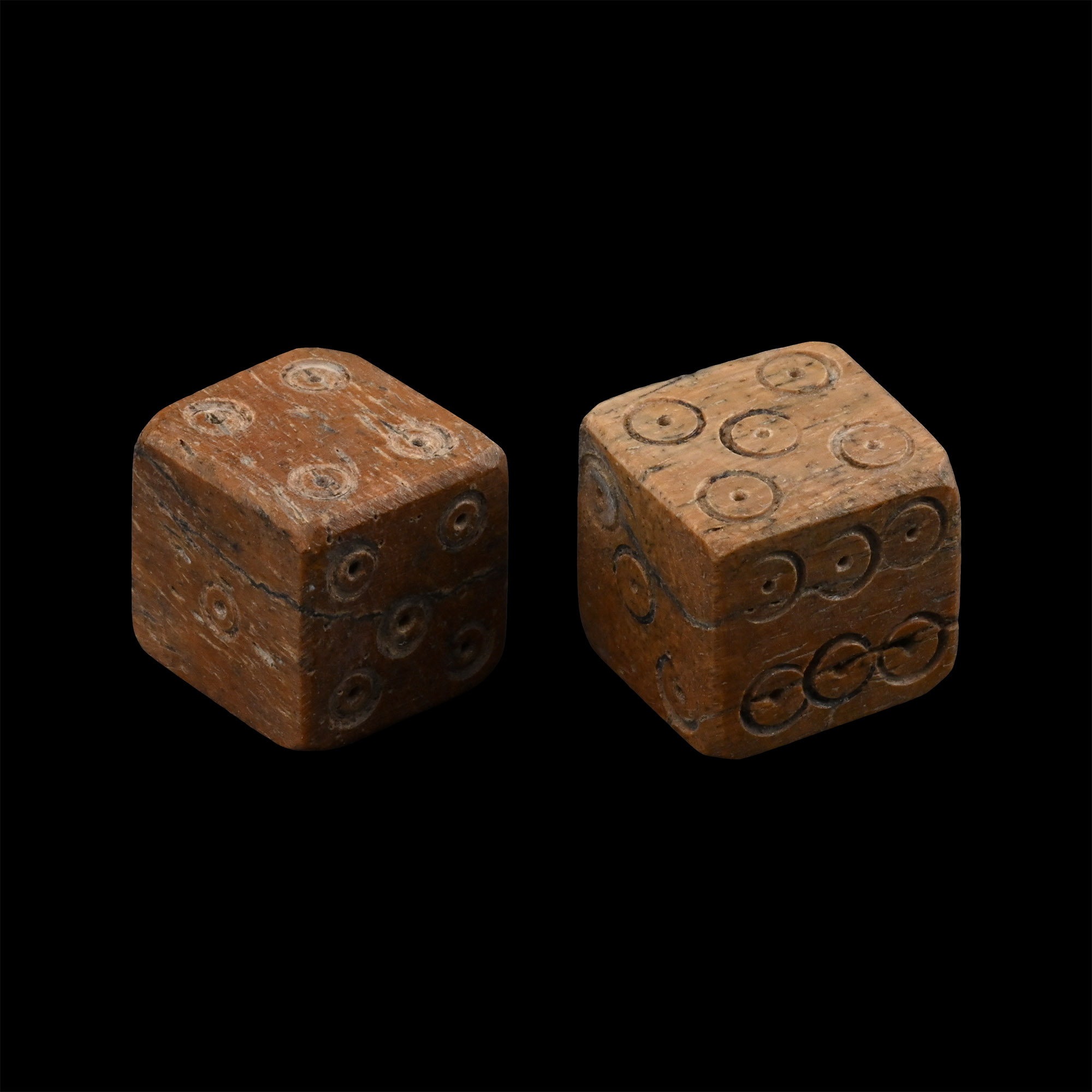
Roman Bone Gaming Dice Pair
3RD-4TH CENTURY A.D.
1/2 in. (8.42 grams total, 13 mm each).
Cuboid type, each with ring-and-dot markings disposed 1:6, 2:5, 3:4. [2]
ProvenanceFrom a Cambridgeshire, UK, collection, 1990s.
LiteratureCf. Beutler, F. et al., Der Adler Roms. Carnuntum und der Armee der Cäsaren, Bad-Deutsch Altenberg, 2017, item 724, for type.
CONDITIONTimeLine Auctions follows a vetting process to ensure the authenticity and legality of all items, reinforcing our commitment to integrity and responsible trading. Each antiquity, antique, and coin lot undergoes thorough examination by a vetting committee of at least ten external specialists, professional trade association members, scientists, and archaeologists: Our Vetting Process
AUCTIONS:
TimeLine is a leading auction house specialising in antiquities, ancient art, collectables, natural history, coins, medals, and books. Our auctions offer museums, collectors, historians, and enthusiasts the opportunity to acquire unique and historically significant pieces.
-
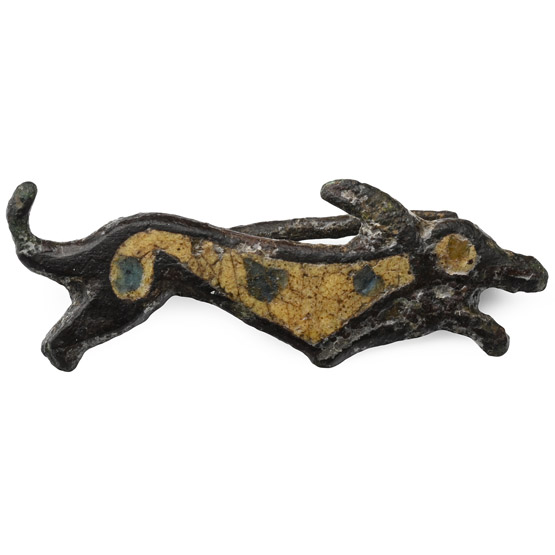
Roman Enamelled Dog Brooch
1st-3th century A.D.Sold for (Inc. bp): £390
Formed as a hound running right with panels to the eye, ear and flank to accept enamel; pin and catchplate to reverse. 4.23 grasms, 37 mm
Acquired on the UK art market. Private collection, England. -
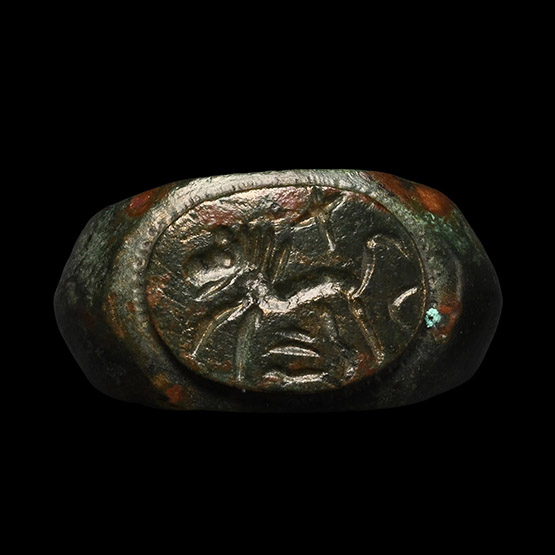
Roman Bronze Ring with Leaping Lion
2nd-3rd century A.D.Sold for (Inc. bp): £111
Keeled hoop expanding at the shoulders, raised oval bezel with incuse stylised lion leaping left, star above. 11.25 grams, 25.66 mm overall, 19.35 mm internal diameter (approximate size British M 1/2, USA 6 1/4, Europe 13.09, Japan 12)
Acquired on the UK and EU art market before 2000. From the private collection of a Surrey, UK, gentleman.
The shape of the ring belongs to the typologies of the Severian Age. Under Caracalla, the theme of the lion was popular on civilian and soldiers' rings, the lion being the emperor's favourite animal. Stars and lions were, from the age of Caracalla, symbols of the Praetorian Guard. -
.jpg)
Roman Silver Ring with Gemstone of Cupid Riding a Dolphin
2nd-3rd century A.D.Sold for (Inc. bp): £715
With an inset onyx gemstone, intaglio of a boy riding on the back of a dolphin and wielding a whip; supplied with a museum-quality impression. 9.29 grams, 27.65 mm overall, 20.67 mm internal diameter (approximate size British O, USA 7, Europe 14.98, Japan14
Private collection, before 1975. Private collection, England.
