
Loading, please wait...
LOT 0733
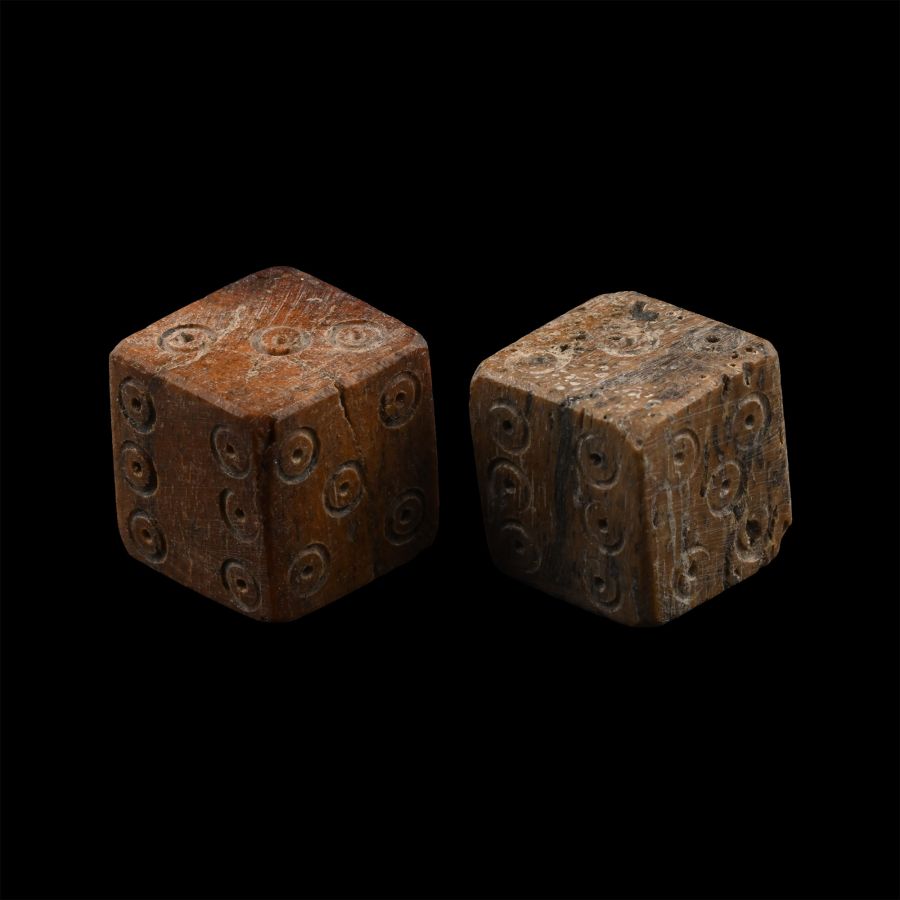
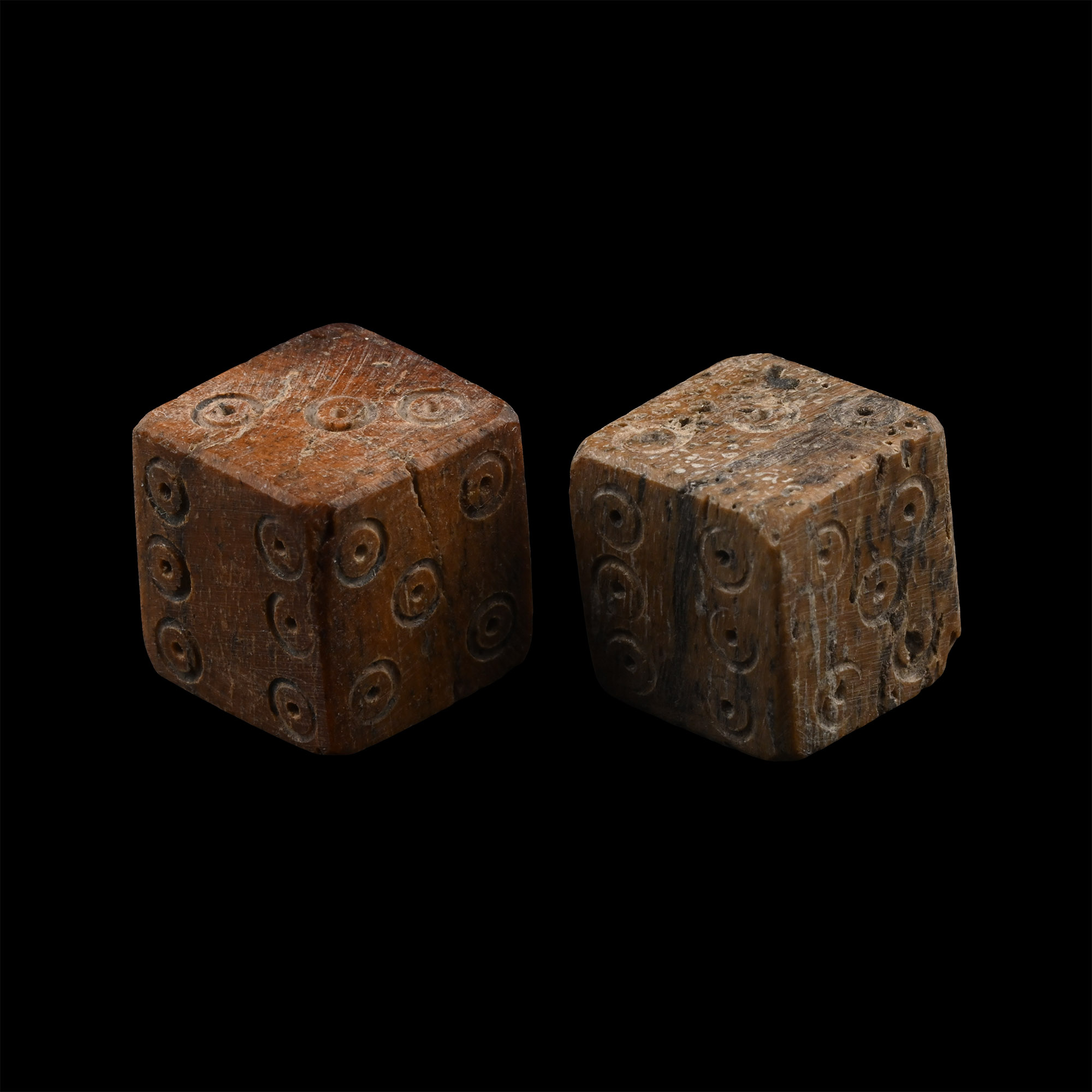
Roman Bone Gaming Dice Pair
1ST-4TH CENTURY A.D.
1/2 in. (6.14 grams total, 12 mm each).
Cuboid type each with ring-and-dot markings disposed 1:6, 2:5, 3:4. [2, No Reserve]
ProvenanceEx German art market, 2000s.
Acquired from an EU collector living in London.
From the collection of a Surrey, UK, gentleman.
Cf. Beutler, F. et al., Der Adler Roms. Carnuntum und der Armee der Cäsaren, Bad-Deutsch Altenberg, 2017, item 724, for type.
CONDITIONTimeLine Auctions follows a vetting process to ensure the authenticity and legality of all items, reinforcing our commitment to integrity and responsible trading. Each antiquity, antique, and coin lot undergoes thorough examination by a vetting committee of at least ten external specialists, professional trade association members, scientists, and archaeologists: Our Vetting Process
AUCTIONS:
TimeLine is a leading auction house specialising in antiquities, ancient art, collectables, natural history, coins, medals, and books. Our auctions offer museums, collectors, historians, and enthusiasts the opportunity to acquire unique and historically significant pieces.
-
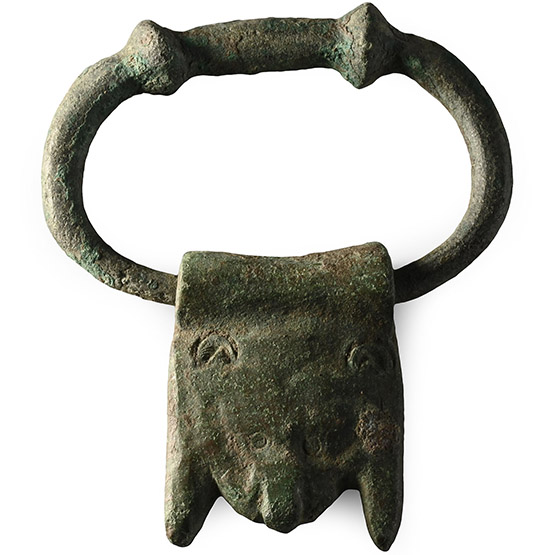
Roman Bronze Vessel Handle
1st century B.C.-5th century A.D.Sold for (Inc. bp): £117
Round-section ellipsoid loop handle with biconvex bulbs to guide the attachment strap; pendant lionskin panel with mask and lateral trailing paws. 101 grams, 66 mm
Acquired by a Swiss family in the mid-1980s to late 1990s, thence by descent. Private collection, Switzerland, since the late 1990s. -
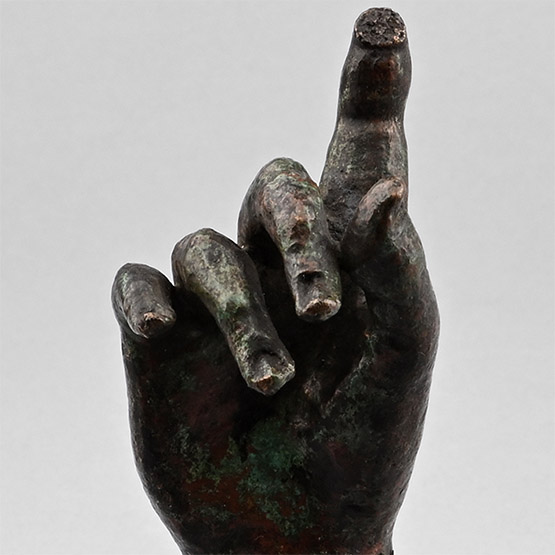
Roman Bronze Statue Hand
2nd century A.D.Sold for (Inc. bp): £2,860
The slender right hand from a large statue with index finger extended and the others curled as if gripping a thin wand, flower-stem or similar item; cracked at the wrist; mounted on a custom-made display stand. 457 grams total, 16.9 cm including stand
Private collection, Europe. Acquired on the English art market. This lot has been checked against the Interpol Database of stolen works of art and is accompanied by search certificate number no.13127-248405. -
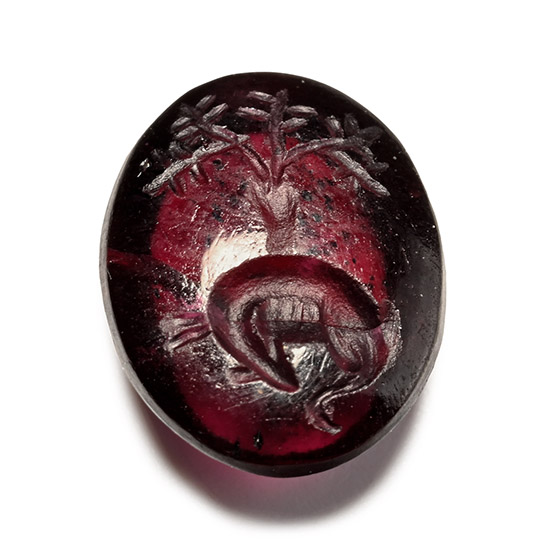
Roman Garnet Gemstone of a Sleeping Dog Under a Tree
2nd-3rd century A.D.Sold for (Inc. bp): £468
Convex obverse with incuse image of a tree with spreading branches and foliage, sleeping dog curled up at the base of the trunk; supplied with a museum-quality impression. 0.54 grams, 9 mm
Private English collection, formed between the late 1970s and early 1990s. Private collection, London, UK.
