
Loading, please wait...
LOT 0791
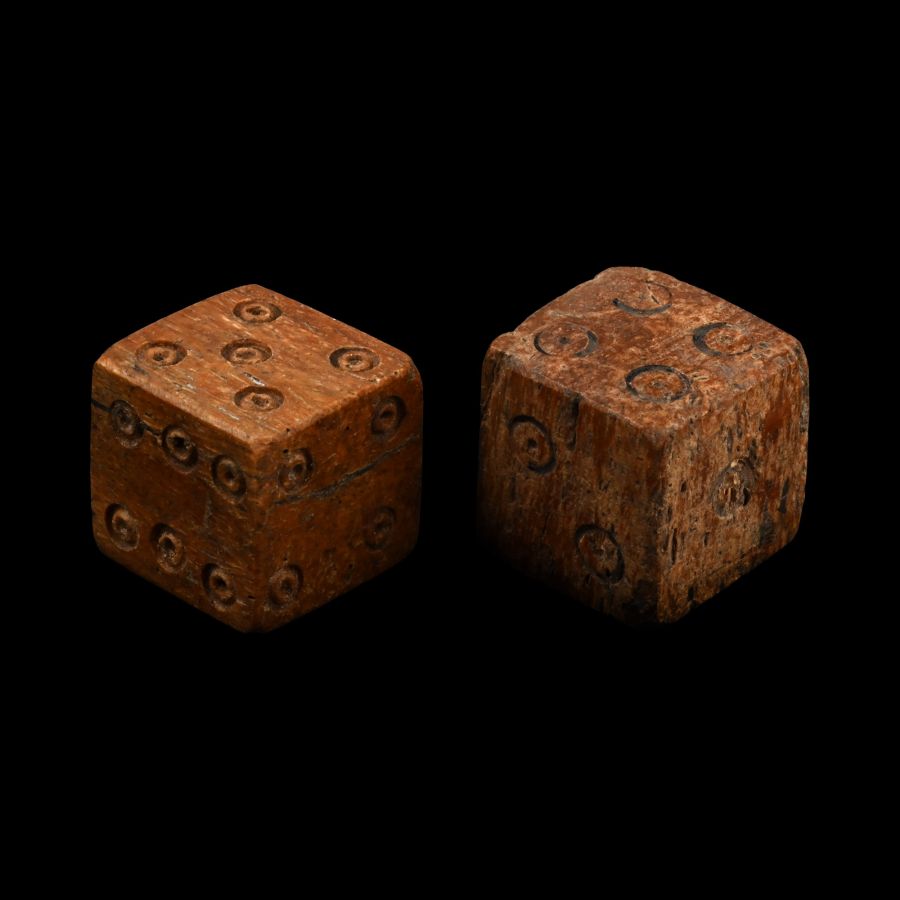
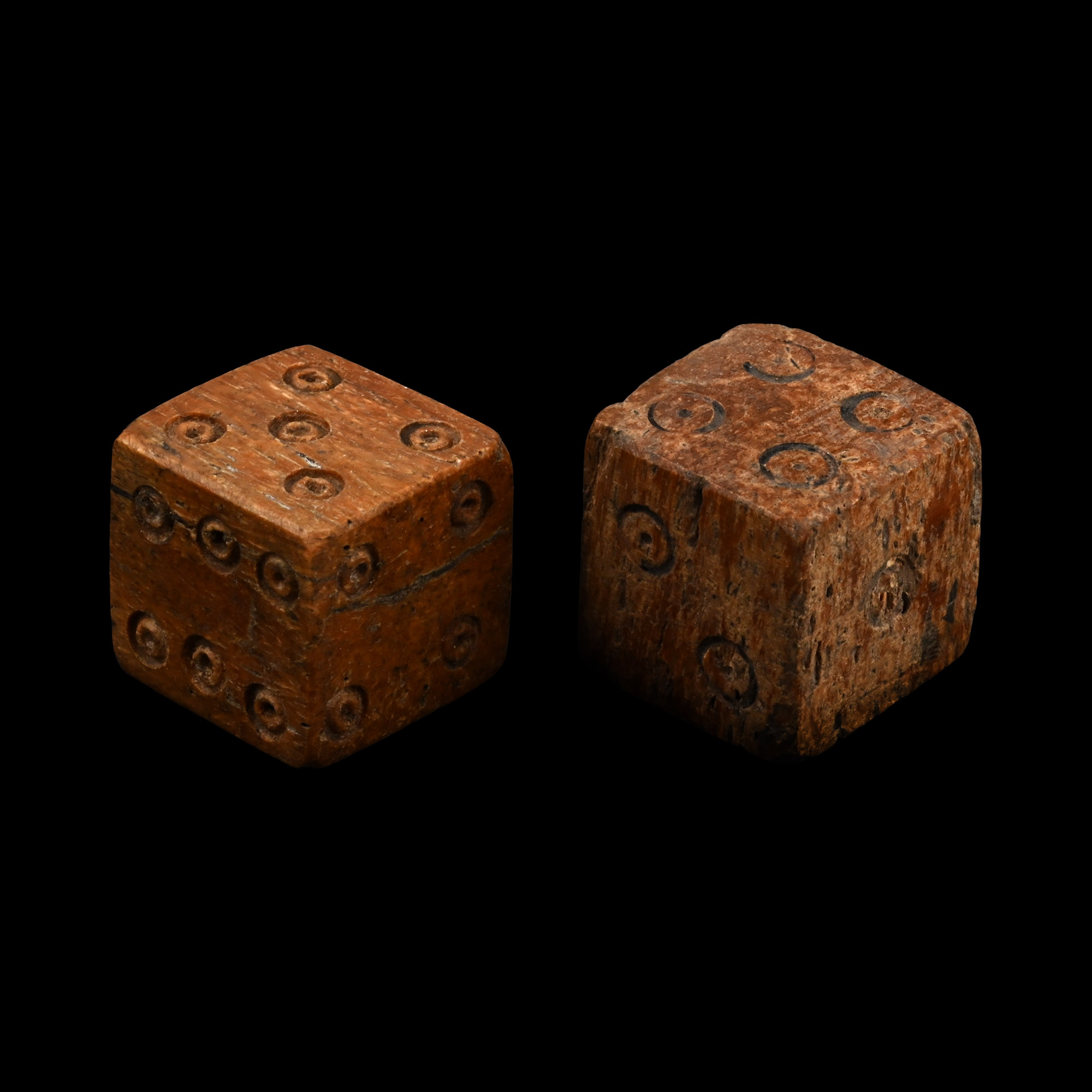
Roman Bone Gaming Dice Pair
1ST-4TH CENTURY A.D.
1/2 in. (9.43 grams total, 14 mm each).
Each cuboid with ring-and-dot markings disposed 1:6, 2:5, 3:4. [2, No Reserve]
ProvenanceAcquired on the UK art market before 2000.
Property of an Essex, UK, gentleman.
This lot is accompanied by an illustrated lot declaration signed by the Head of the Antiquities Department, Dr Raffaele D'Amato.
TimeLine Auctions follows a vetting process to ensure the authenticity and legality of all items, reinforcing our commitment to integrity and responsible trading. Each antiquity, antique, and coin lot undergoes thorough examination by a vetting committee of at least ten external specialists, professional trade association members, scientists, and archaeologists: Our Vetting Process
AUCTIONS:
TimeLine is a leading auction house specialising in antiquities, ancient art, collectables, natural history, coins, medals, and books. Our auctions offer museums, collectors, historians, and enthusiasts the opportunity to acquire unique and historically significant pieces.
-
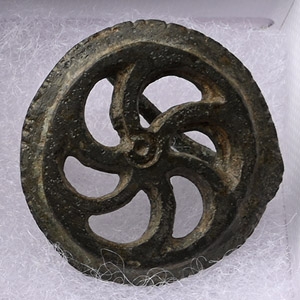
Romano-British Bronze Sun Wheel Plate Brooch
2nd century A.D.Sold for (Inc. bp): £85
With stepped rim, openwork radiating cured arms from a central hub; pin, pin-lugs, and catch to the reverse. 13.1 grams, 30 mm
Found Thames foreshore, London, UK. Acquired from Coincraft, London, UK. From the private collection of Kenneth Machin (1936-2020), Buckinghamshire, UK; his collection of antiquities and natural history was formed since 1948; thence by descent. Accompanied by a Coincraft certificate of authenticity. This lot is accompanied by an illustrated lot declaration signed by the Head of the Antiquities Department, Dr Raffaele D'Amato. -
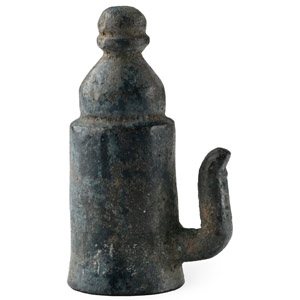
Roman Bronze Chariot Fitting with Thumb
1st-4th century A.D.Sold for (Inc. bp): £156
Bell-shaped cap fitting with acorn finial, thumb-shaped spur. 64 grams, 62 mm
Acquired in the late 1980s. Private collection, 2001. This lot is accompanied by an illustrated lot declaration signed by the Head of the Antiquities Department, Dr Raffaele D'Amato. -
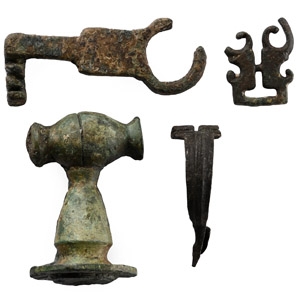
Roman Bronze Artefact Group
1st-4th century A.D.Sold for (Inc. bp): £20
Comprising of a bow fibula fragment, openwork mount, key with lateral lobe with teeth, a conical handle(?) with discoid base. 154 grams total, 28-65 mm
Private collection of a North London lady before 2000. Property of a London, UK, gentleman. This lot is accompanied by an illustrated lot declaration signed by the Head of the Antiquities Department, Dr Raffaele D'Amato.
