
Loading, please wait...
LOT 0781
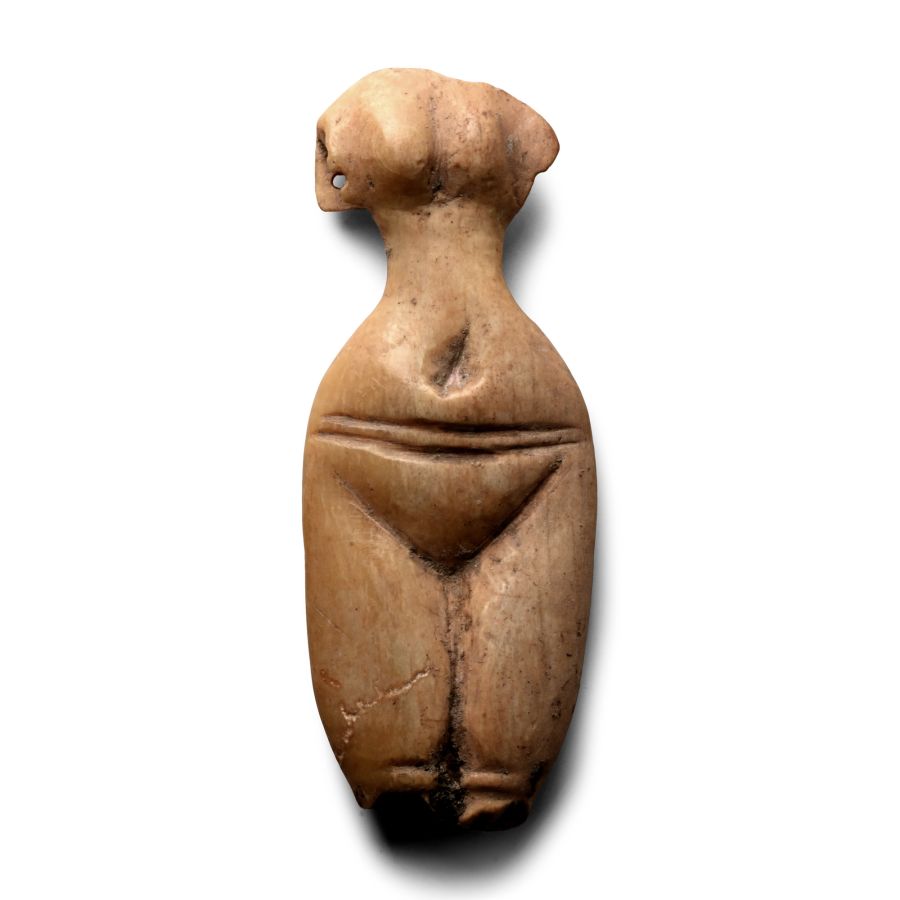
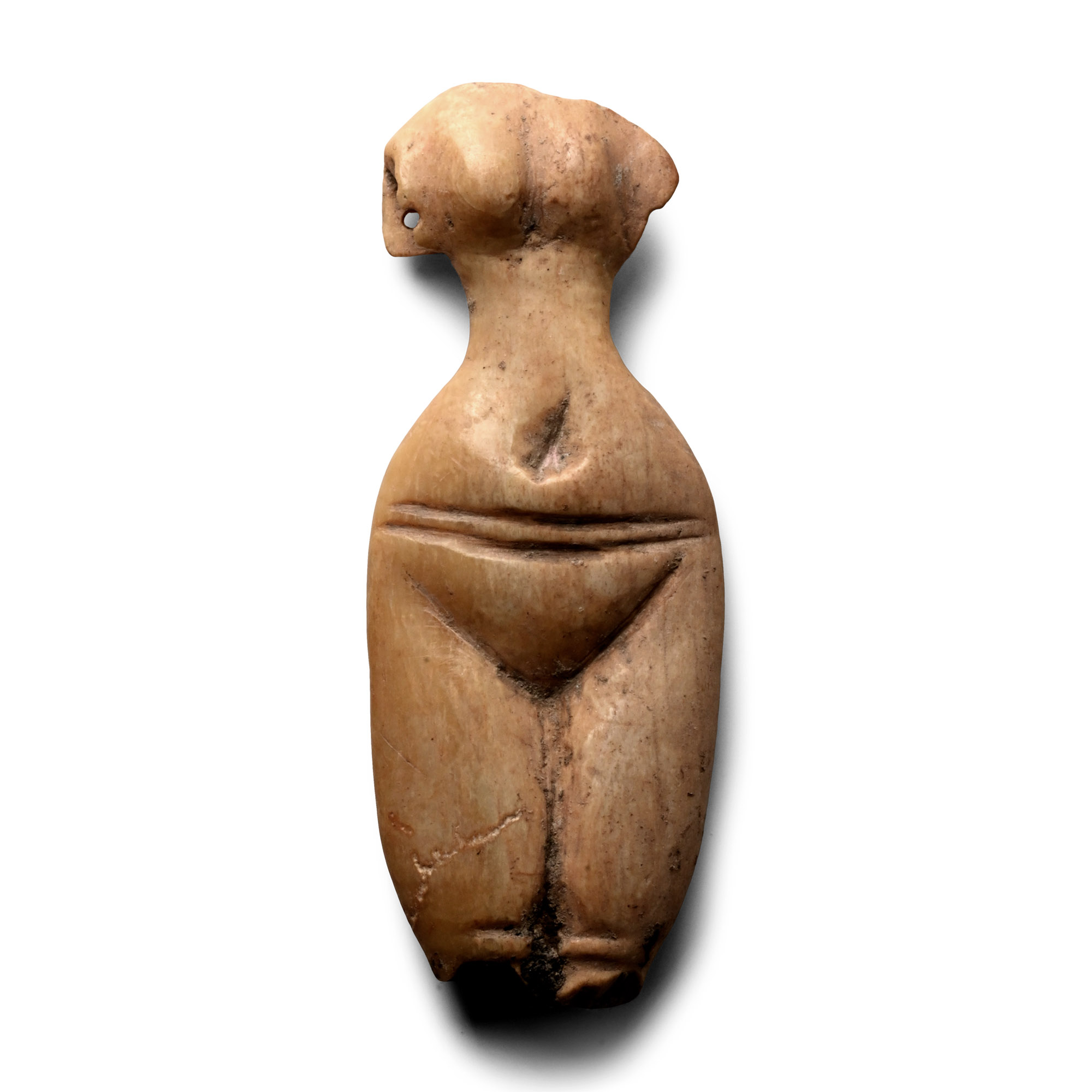
Roman Bone Figurine of a Lady
1ST CENTURY B.C.-1ST CENTURY A.D.
2 5/8 in. (14.7 grams, 68 mm).
Carved in the round female torso with incised transverse lines at the hips and knees; domed breasts and incuse navel; slots and suspension hole at the shoulders to accept posable arms; usage wear.
ProvenancePrivate collection, 1990s.
Private collection, Switzerland, acquired in 2000.
This lot is accompanied by an illustrated lot declaration signed by the Head of the Antiquities Department, Dr Raffaele D'Amato.
TimeLine Auctions follows a vetting process to ensure the authenticity and legality of all items, reinforcing our commitment to integrity and responsible trading. Each antiquity, antique, and coin lot undergoes thorough examination by a vetting committee of at least ten external specialists, professional trade association members, scientists, and archaeologists: Our Vetting Process
AUCTIONS:
TimeLine is a leading auction house specialising in antiquities, ancient art, collectables, natural history, coins, medals, and books. Our auctions offer museums, collectors, historians, and enthusiasts the opportunity to acquire unique and historically significant pieces.
LOT 0781
Roman Bone Figurine of a Lady
Estimate £500 - 700€580 - 810 (for guidance only)$680 - 950 (for guidance only)
-
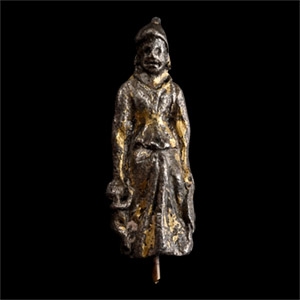
Roman Silver-Gilt Statuette of Athena
1st-2nd century A.D.Sold for (Inc. bp): £433
Modelled in the round, standing erect with crested helmet, shield in her left hand, small shield at her right knee. 4.62 grams, 24 mm
Acquired in the late 1980s-early 1990s. Private collection, London. This lot is accompanied by an illustrated lot declaration signed by the Head of the Antiquities Department, Dr Raffaele D'Amato.
In Greek myths, Athena had no child; nor did Minerva in Roman myths. Figures such as Venus and Isis, who did have children, famously were not warriors and were not depicted with weapons or armour. -
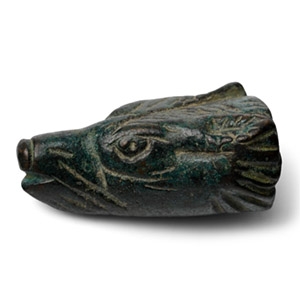
Roman Bronze Wolf's Head Terminal
1st-2nd century A.D.Sold for (Inc. bp): £98
A terminal depicting a wolf's head with fierce expression, fur detailing to the neck and snout, possibly a knife pommel. 17.4 grams, 27 mm
Fine condition.
Property of a North West London gallery; formerly in a 1980s collection. From the private collection of John Meredith, acquired since the 1990s; thence by descent. This lot is accompanied by an illustrated lot declaration signed by the Head of the Antiquities Department, Dr Raffaele D'Amato. -
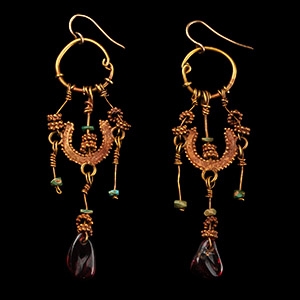
Roman Gold Earring Pair with Gemstone Drops
2nd-3rd century A.D.Estimate: £2,000 - 3,000 (‡+bp*)
Opening Bid: £1,000
Matched pair, each a hoop and suspension hook; a crescent plaque supported by filigree wires with granulated collars, lateral dangles with turquoise seed beads and median longer dangle with granulated collars and gemstone finial. 9.32 grams total, 60-62 mm
Acquired in 1995. Private collection, thence by descent. Private collection, since the late 1990s. This lot has been checked against the Interpol Database of stolen works of art and is accompanied by a search certificate number no.12863-241727. This lot has been cleared against the Art Loss Register database, and is accompanied by an illustrated lot declaration signed by the Head of the Antiquities Department, Dr Raffaele D'Amato.
