
Loading, please wait...

LOT 0883
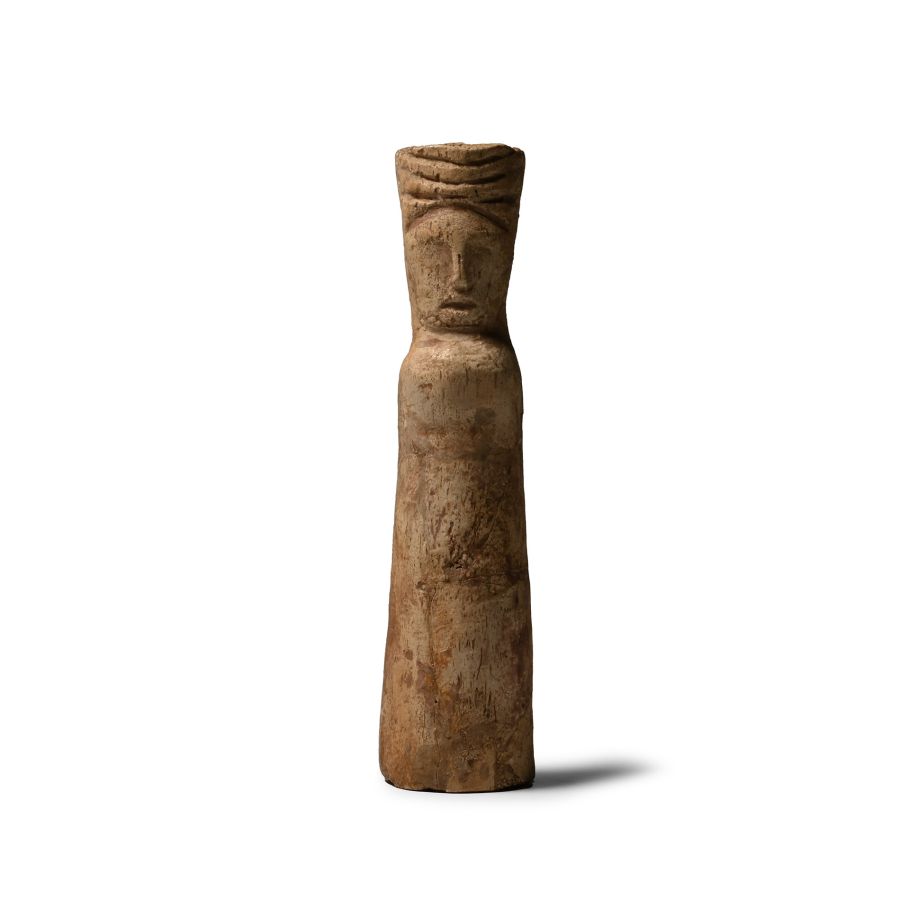
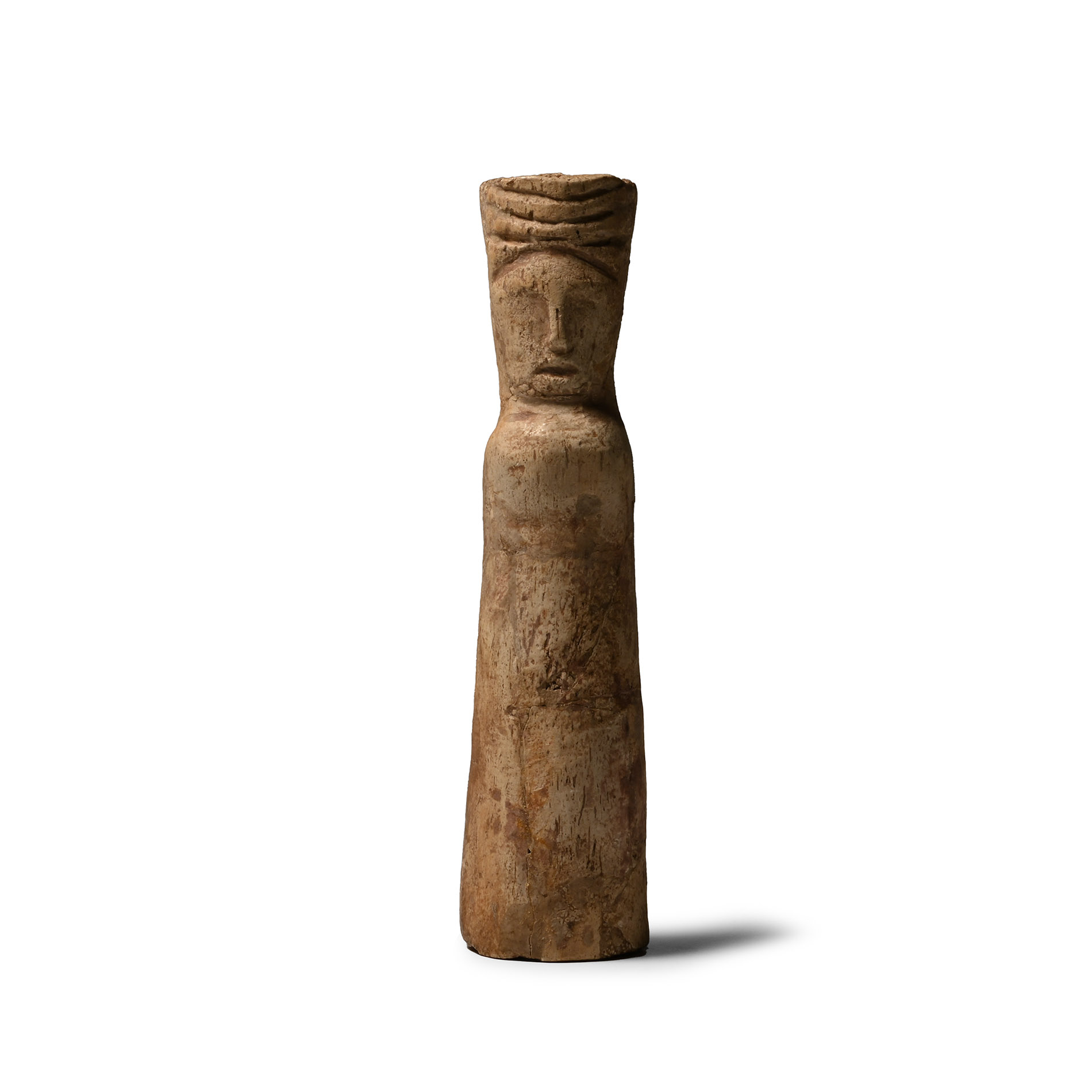
Roman Bone Female Pin Head
EASTERN ROMAN, 3RD CENTURY B.C.-2ND CENTURY A.D.
3 1/2 in. (14.1 grams, 90 mm).
With carved detailing to obverse, D-shaped face and chignon hairstyle, rounded bosom; old collector's label to reverse 'IV / 00 28'.
Provenancewith a London, UK gallery, 1971-early 2000s.
CONDITIONTimeLine Auctions follows a vetting process to ensure the authenticity and legality of all items, reinforcing our commitment to integrity and responsible trading. Each antiquity, antique, and coin lot undergoes thorough examination by a vetting committee of at least ten external specialists, professional trade association members, scientists, and archaeologists: Our Vetting Process
AUCTIONS:
TimeLine is a leading auction house specialising in antiquities, ancient art, collectables, natural history, coins, medals, and books. Our auctions offer museums, collectors, historians, and enthusiasts the opportunity to acquire unique and historically significant pieces.
LOT 0883
Roman Bone Female Pin Head
Estimate £200 - 300€230 - 350 (for guidance only)$270 - 410 (for guidance only)
-
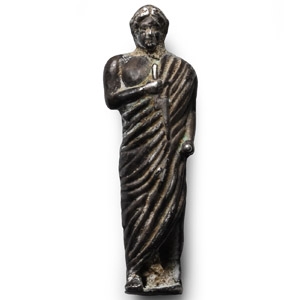
Roman Silver Statuette of a Togate Male
1st-4th century A.D.Sold for (Inc. bp): £182
Modelled in the round standing with toga drawn around his body, scroll clasped in his right hand. 3.85 grams, 30 mm
From the collection of a gentleman, acquired on the London art market in the 1990s. -
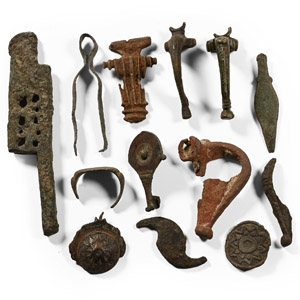
Roman Bronze and Silver Artefact Collection
2nd-4th century A.D.Sold for (Inc. bp): £72
Including key shank, tweezers, headstud brooch, T-shaped brooch and other items. 102 grams total, 21-93 mm
From a private Barnsley, UK, family collection. -
.jpg)
Late Roman Sheet-Gold Phalera Cover with Imperial Bust
4th-6th century A.D.Sold for (Inc. bp): £390
Discoid appliqué with beaded rim and a repoussé imperial bust to the centre, the bearded male looking right and wearing a laurel wreath and a military cloak. 3.46 grams, 64 mm
Acquired in the early 1990s. From the collection of a London antiquarian. Accompanied by an academic report by Dr Raffaele D'Amato.
The subject is represented as an imperator or field general, recalling the image of a victorious emperor, iconography widely in use in the late Roman Empire.
