
Loading, please wait...
LOT 0795
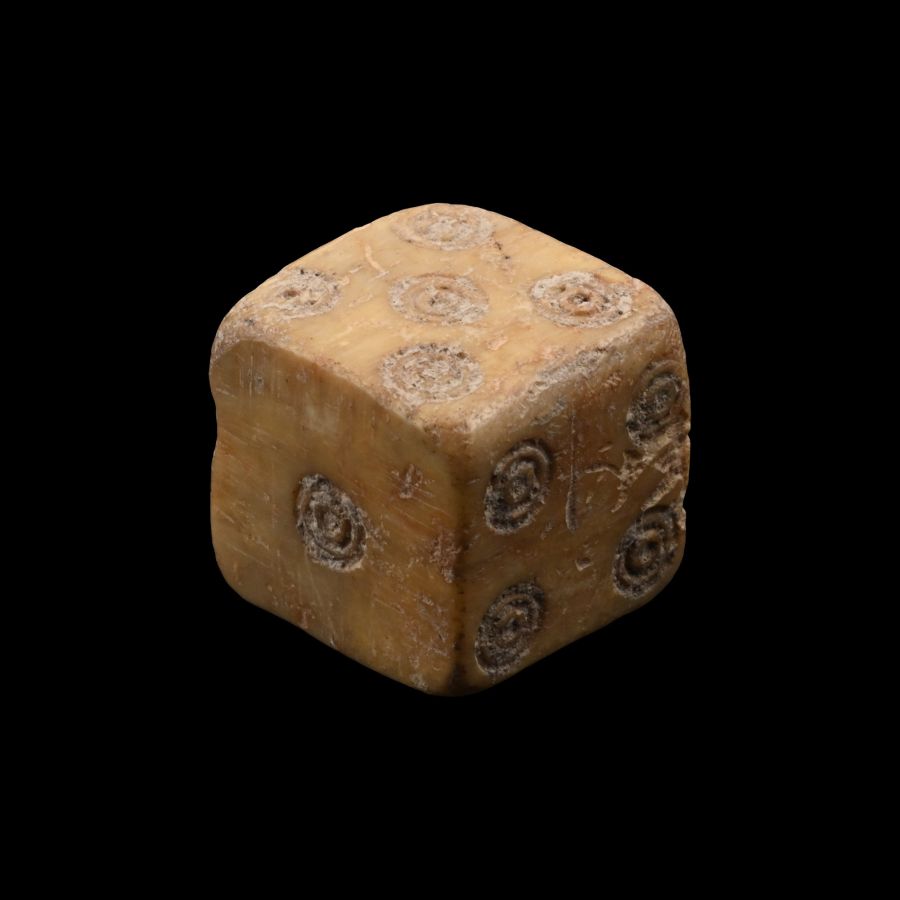
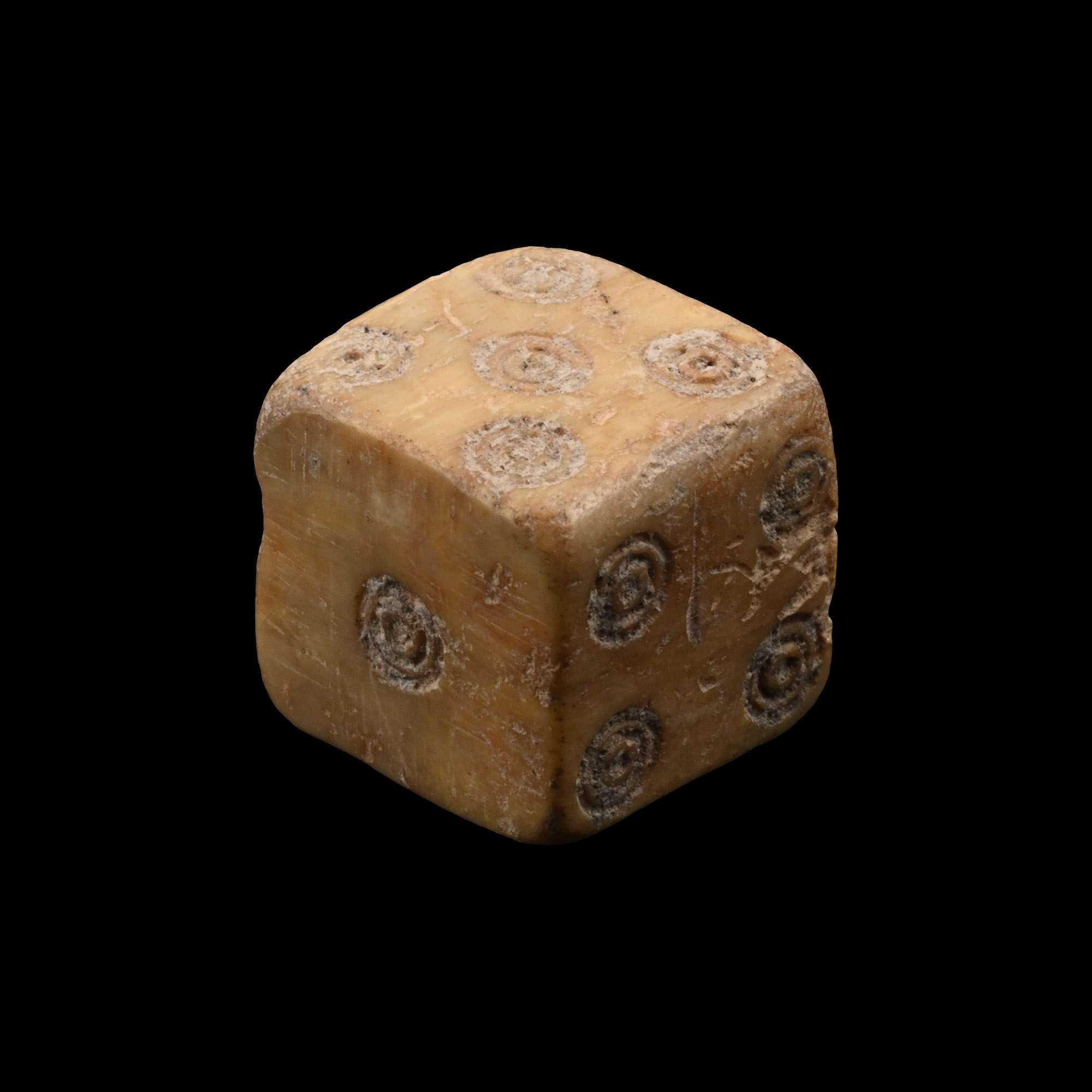
Roman Bone Die
1ST-4TH CENTURY A.D.
5/8 in. (5.07 grams, 14 mm).
Cuboid type with ring-and-dot markings disposed 1:6, 2:5, 3:4.
ProvenanceEx Abelita family collection, 1980s-2000s.
LiteratureCf. Allason-Jones, L. & Miket, R., The Catalogue of Small Finds from South Shields Roman Fort, Newcastle, 1984, item 2.82.
CONDITIONTimeLine Auctions follows a vetting process to ensure the authenticity and legality of all items, reinforcing our commitment to integrity and responsible trading. Each antiquity, antique, and coin lot undergoes thorough examination by a vetting committee of at least ten external specialists, professional trade association members, scientists, and archaeologists: Our Vetting Process
AUCTIONS:
TimeLine is a leading auction house specialising in antiquities, ancient art, collectables, natural history, coins, medals, and books. Our auctions offer museums, collectors, historians, and enthusiasts the opportunity to acquire unique and historically significant pieces.
-
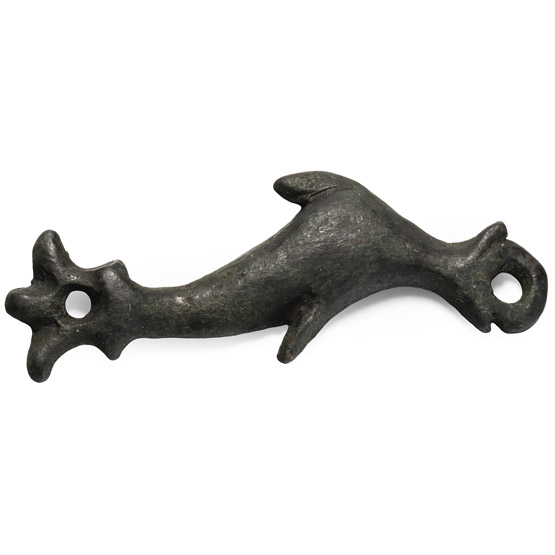
Roman Bronze Dolphin Mount
Circa 3rd century A.D.Sold for (Inc. bp): £91
Hollow to the reverse, formed as a dolphin with body and tail raised, lateral fins flared; a suspension loop to each end. 5.78 grams, 45 mm
Ex Cambridgeshire, UK, gentleman's collection. -
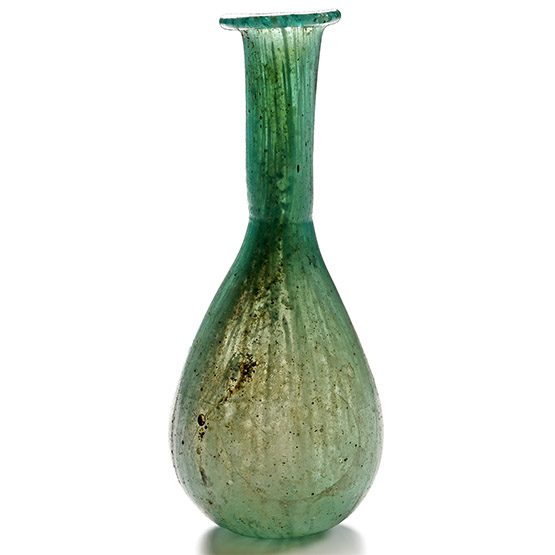
Roman Marbled Turquoise Glass Bottle
1st century A.D.Estimate: £500 - 700 (‡+bp*)
Opening Bid: £250
Comprising an iridescent piriform body, tapering tubular neck with pinched and everted rolled rim. 9.44 grams, 84 mm
Acquired on the European art market in 2001. -
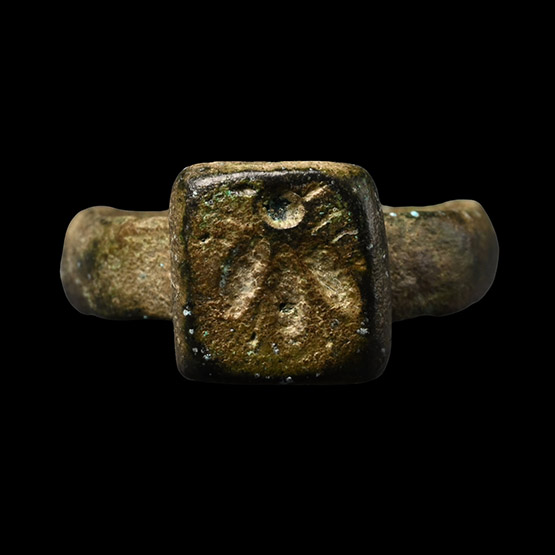
Roman Bronze Ring with Bee
4th century A.D.Sold for (Inc. bp): £72
Comprising a hoop with raised bosses, a large rectangular bezel with an incuse bee motif. 9.81 grams, 30.08 mm overall, 18.50 mm internal diameter (approximate size British Q 1/2, USA 8 1/4, Europe 18.12, Japan 17)
Acquired on the UK and EU art market before 2000. From the private collection of a Surrey, UK, gentleman.
Polygonal hoops appear to be generally 4th-century in date. The shape of the ring clearly belongs to the Guiraud type 8 rings.
