
Loading, please wait...
LOT 0778
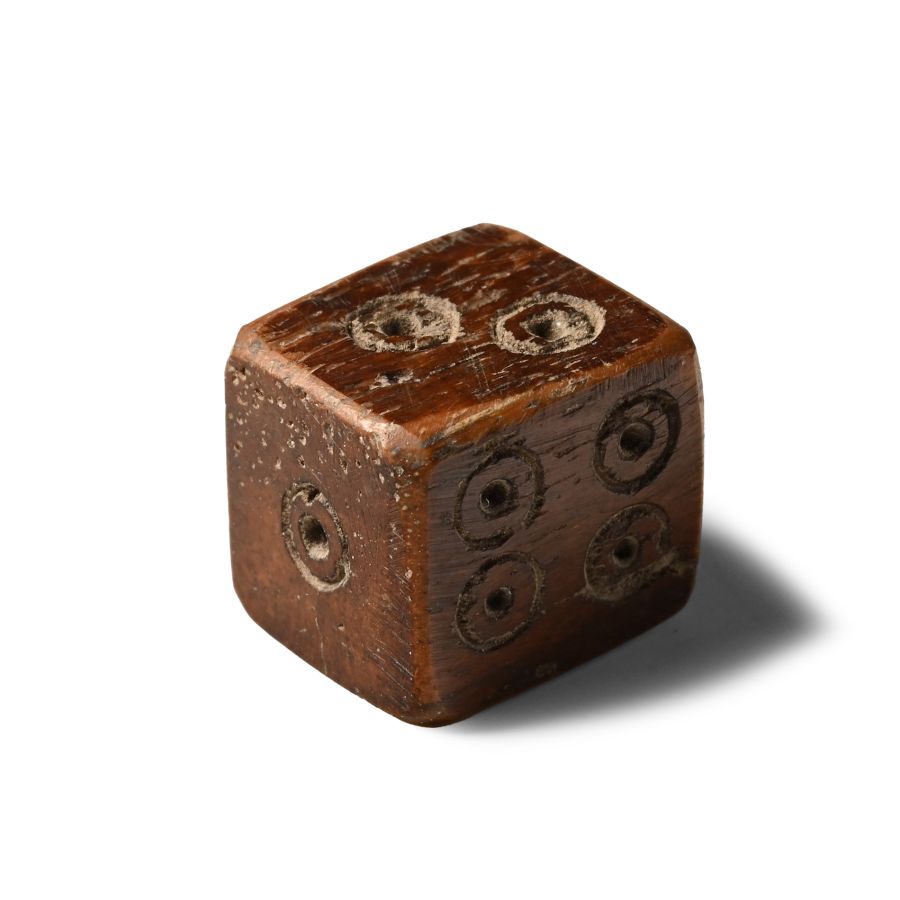
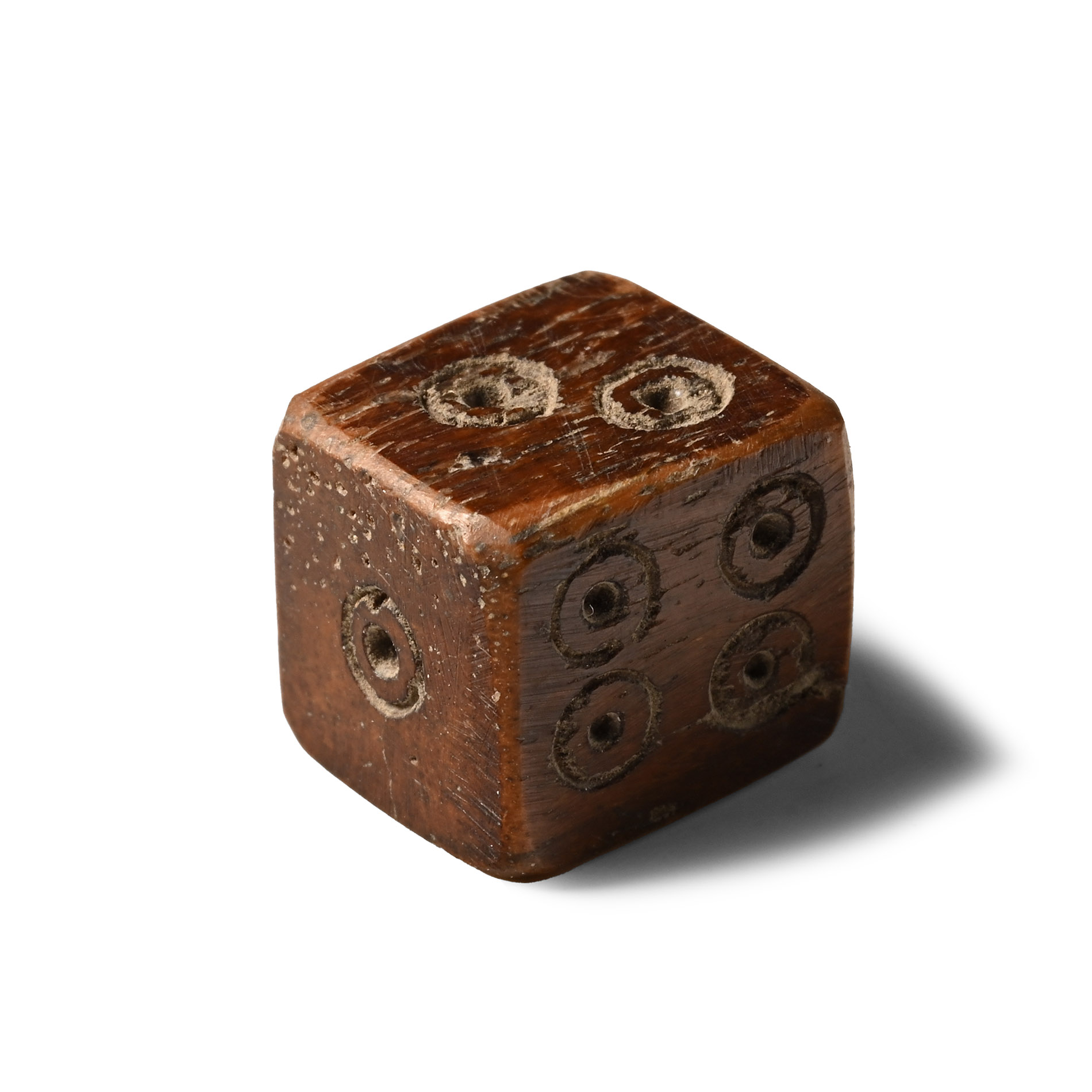
Roman Bone Dice
1ST-4TH CENTURY A.D.
3/8 in. (2.21 grams, 11 mm).
Cuboid with ring-and-dot markings disposed 1:6, 2:5, 3:4. [No Reserve]
ProvenanceAcquired on the London art market in the late 1980s-1990s.
From the family collection of an East London, UK, gentleman.
See Beutler, F. et al., Der Adler Roms. Carnuntum und der Armee der Cäsaren, Bad-Deutsch Altenberg, 2017, item 724, for type.
CONDITIONTimeLine Auctions follows a vetting process to ensure the authenticity and legality of all items, reinforcing our commitment to integrity and responsible trading. Each antiquity, antique, and coin lot undergoes thorough examination by a vetting committee of at least ten external specialists, professional trade association members, scientists, and archaeologists: Our Vetting Process
AUCTIONS:
TimeLine is a leading auction house specialising in antiquities, ancient art, collectables, natural history, coins, medals, and books. Our auctions offer museums, collectors, historians, and enthusiasts the opportunity to acquire unique and historically significant pieces.
-
.jpg)
Roman Piriform Glass Flask
1st century A.D.Estimate: £100 - 140 (+bp*)
Opening Bid: £50
An iridescent glass unguentarium with piriform body, tubular neck with everted rolled rim. 6.65 grams, 69 mm
Acquired 1980-2015. Ex Abelita family collection. -
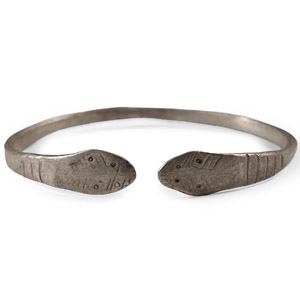
Roman Silver Snake-Headed Armilla Bracelet
1st-4th century A.D.Sold for (Inc. bp): £130
With narrow round-section shank, flattened leaf-shaped finials with transverse ribbing and punched serpent-head detailing. 6.57 grams, 49 mm
Private collection, Arundel, West Sussex, UK, 1980s-1990s.
The armilla was a Roman military decoration in the form of an arm-ring or bracelet, often with snake-head terminals. They were made in gold, silver or bronze, the latter normally awarded to the lower ranks as a visible mark of distinguished service. -
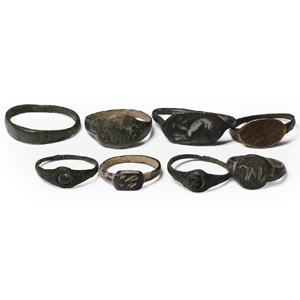
Roman and Later Bronze Ring Collection
2nd century B.C.-4th century A.D.Sold for (Inc. bp): £52
Including ellipsoid bezel with low-relief running hare, and other types. 9.62 grams total, 15-24 mm
UK private collection before 2000. Acquired on the UK art market. Property of a London gentleman.
