
Loading, please wait...
LOT 0827
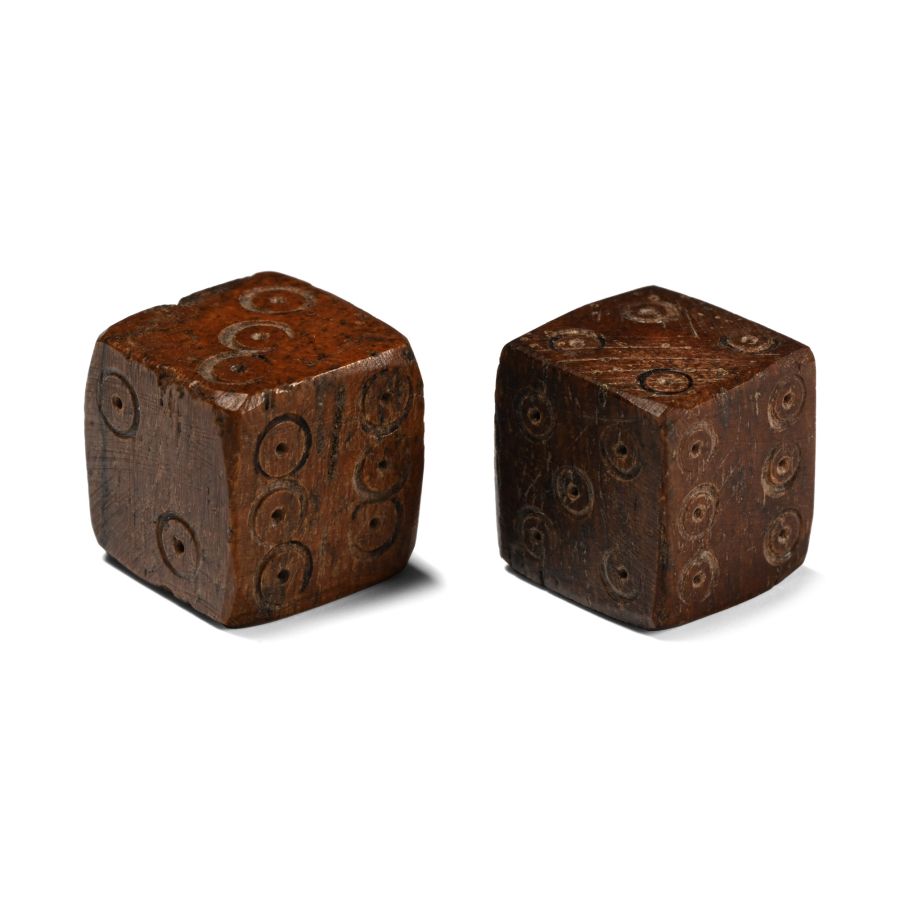
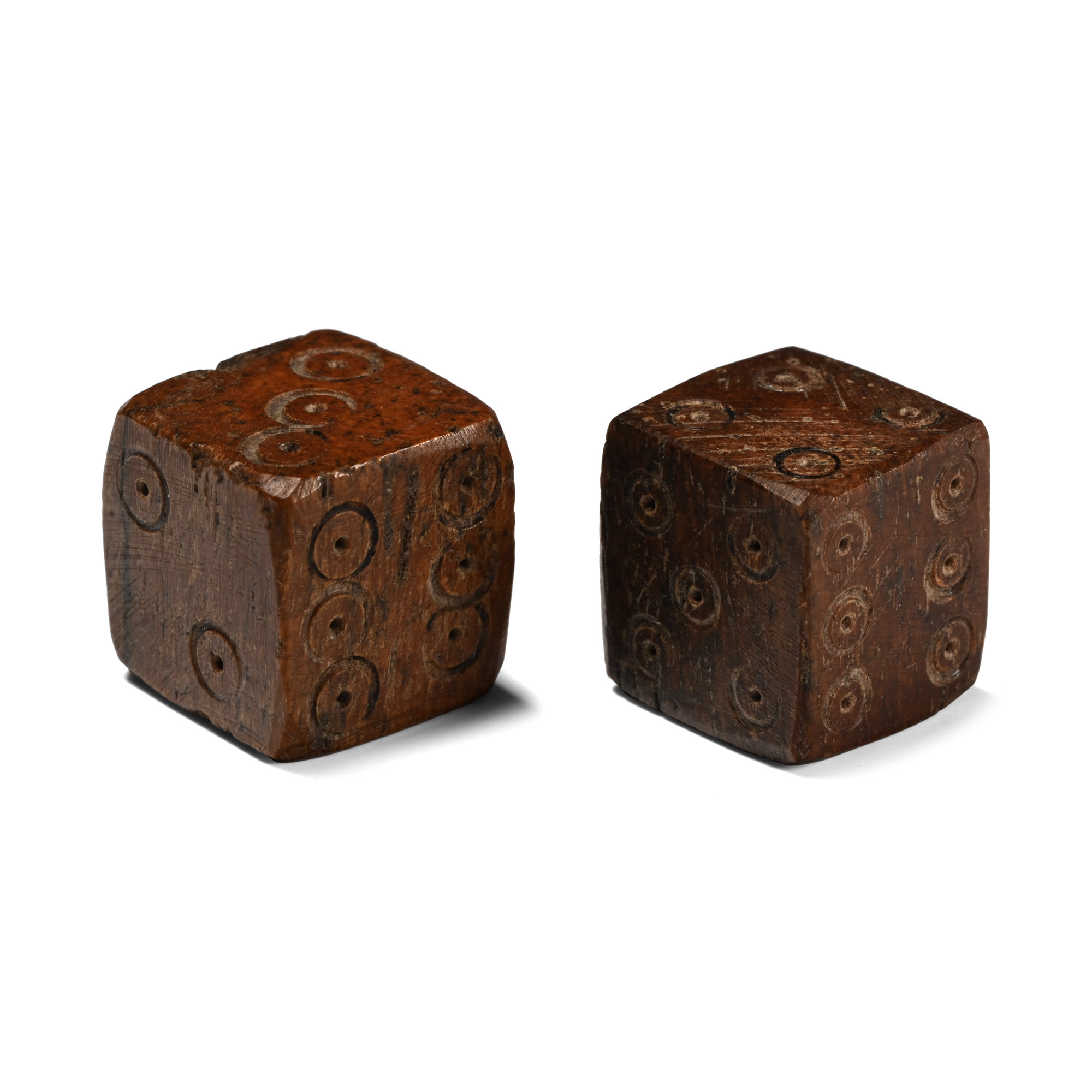
Roman Bone Dice Pair
1ST-4TH CENTURY A.D.
3/8 in. (8.16 grams total, 13.3-13.5 mm).
Each cuboid with ring-and-dot markings disposed 1:6, 2:5, 3:4. [2, No Reserve]
ProvenanceEx German art market, 2000s.
Acquired from an EU collector living in London.
From the collection of Surrey, UK, gentleman.
This lot is accompanied by an illustrated lot declaration signed by the Head of the Antiquities Department, Dr Raffaele D’Amato.
TimeLine Auctions follows a vetting process to ensure the authenticity and legality of all items, reinforcing our commitment to integrity and responsible trading. Each antiquity, antique, and coin lot undergoes thorough examination by a vetting committee of at least ten external specialists, professional trade association members, scientists, and archaeologists: Our Vetting Process
AUCTIONS:
TimeLine is a leading auction house specialising in antiquities, ancient art, collectables, natural history, coins, medals, and books. Our auctions offer museums, collectors, historians, and enthusiasts the opportunity to acquire unique and historically significant pieces.
-
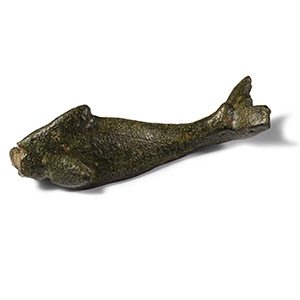
Roman Bronze Dolphin Mount
1st-2nd century A.D.Estimate: £100 - 140 (+bp*)
Opening Bid: £50
Substantial gently curving body with wide tail and showing all three fins, head absent. 49 grams, 67 mm
Ex German art market, 2000s. Acquired from an EU collector living in London. From the collection of Surrey, UK, gentleman. This lot is accompanied by an illustrated lot declaration signed by the Head of the Antiquities Department, Dr Raffaele D’Amato. -
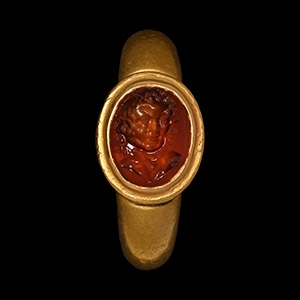
Roman Gold Ring with Satyr Bust Gemstone
1st century B.C.-1st century A.D.Estimate: £7,000 - 9,000 (+bp*)
Opening Bid: £3,500
Comprising a round-section tapering hoop with inset carnelian cloison, intaglio bust in three-quarter view; integral cup bezel, stepped cell with bust in three-quarter view; supplied with a museum-quality impression. 20.23 grams, 28.75 mm overall, 18.79 mm internal diameter (approximate size British R 1/2, USA 8 3/4, Europe 19.38, Japan 18)
From a deceased lady's collection, 1970s. This lot has been checked against the Interpol Database of stolen works of art and is accompanied by a search certificate number no.12524-231464. This lot has been cleared against the Art Loss Register database, and is accompanied by an illustrated lot declaration signed by the Head of the Antiquities Department, Dr Raffaele D’Amato. -
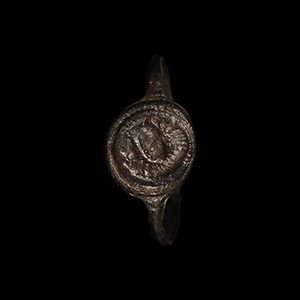
Roman Bronze Ring with Wolf
1st century A.D.Sold for (Inc. bp): £98
With slender hoop, discoid bezel with incuse image of the she-wolf suckling Romulus and Remus. 3.40 grams, 25.24 mm overall, 22.26 mm internal diameter (approximate size British X 1/2, USA 11 3/4, Europe 26.92, Japan 25)
Acquired on the London art market in the late 1980s-1990s. From the family collection of an East London, UK, gentleman. This lot is accompanied by an illustrated lot declaration signed by the Head of the Antiquities Department, Dr Raffaele D’Amato.
