
Loading, please wait...
LOT 0648
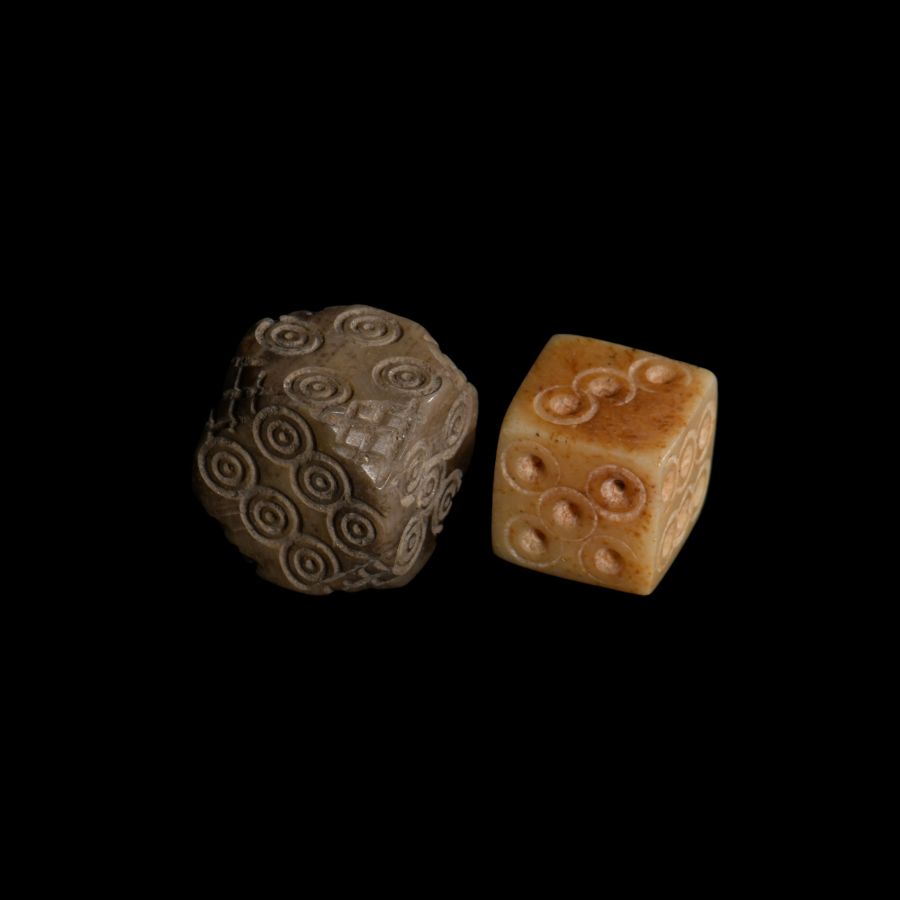
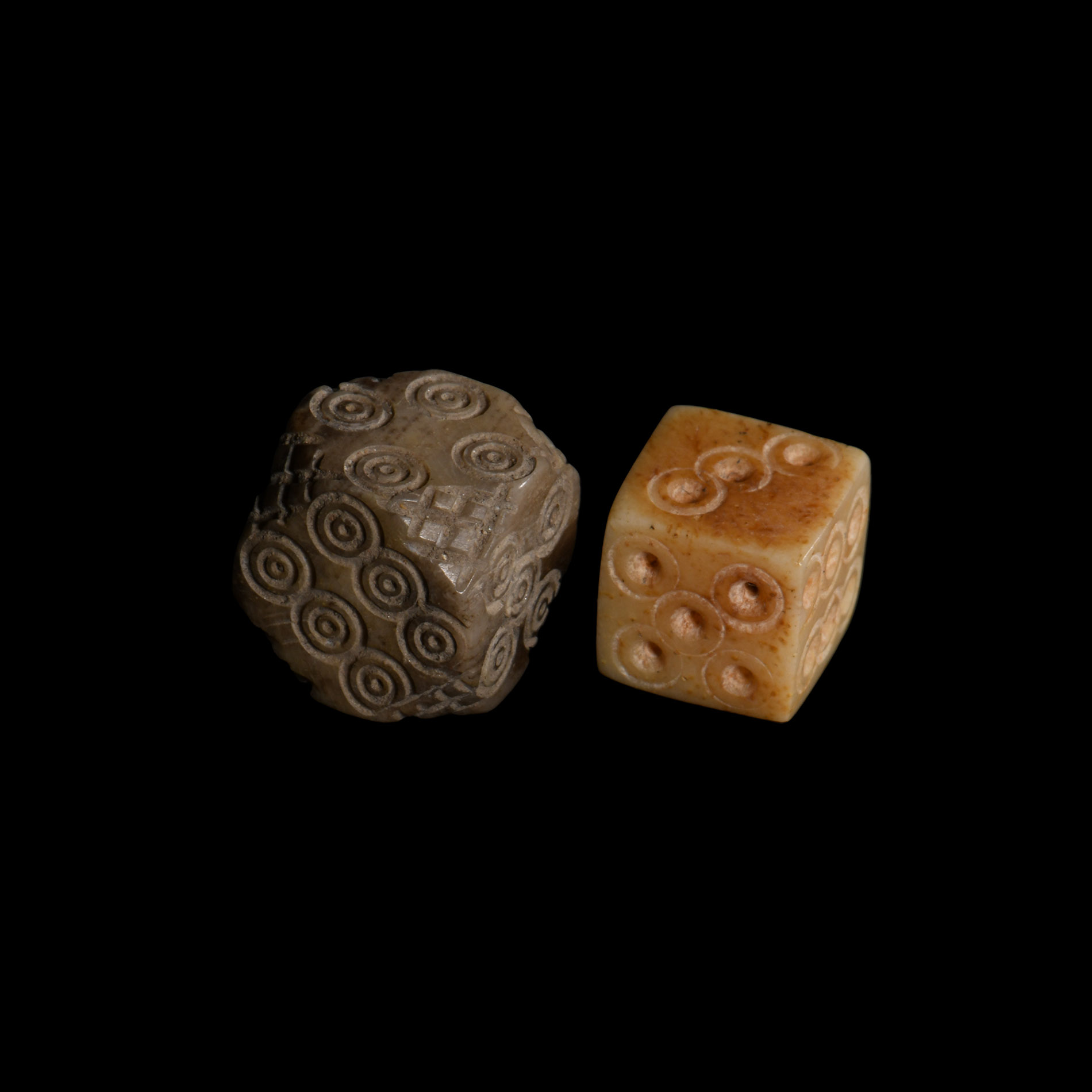
Roman Bone Dice Pair
1ST-4TH CENTURY A.D.
1/4 - 3/8 in. (2.31 grams total, 7-9 mm).
Comprising: one with ring-and-dot markings disposed 1:6, 2:5, 3:4; the other a cornerless cuboid with hatching to the corners, and markings disposed in a similar way. [2, No Reserve]
ProvenanceUK private collection.
Acquired from Redhouse Antiques, York, in 2006.
Property of a Nottinghamshire gentleman.
TimeLine Auctions follows a vetting process to ensure the authenticity and legality of all items, reinforcing our commitment to integrity and responsible trading. Each antiquity, antique, and coin lot undergoes thorough examination by a vetting committee of at least ten external specialists, professional trade association members, scientists, and archaeologists: Our Vetting Process
AUCTIONS:
TimeLine is a leading auction house specialising in antiquities, ancient art, collectables, natural history, coins, medals, and books. Our auctions offer museums, collectors, historians, and enthusiasts the opportunity to acquire unique and historically significant pieces.
-
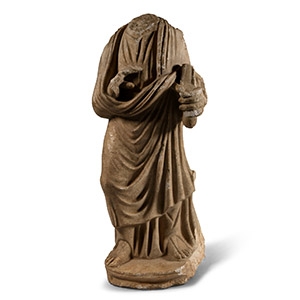
Roman Stone Statuette of a Priest
Circa 3rd-4th century A.D.Estimate: £6,000 - 8,000 (+bp*)
Opening Bid: £3,000
Depicted standing on a rounded base with rim, wearing a long-sleeved tunica talaris and pallium; his right hand hidden in the folds of the cloak and the left hand holding the remains of a scroll or sistrum; simple crepida footwear of Greek typology visible beneath the hem of the cloak; provincial workmanship. 11.4 kg, 41.5 cm high
Ex Paris collection. French gallery, Paris, 1990-2000s. Accompanied by an academic report by Dr Raffaele D’Amato. This item has been checked against the Interpol Database of stolen works of art and is accompanied by search certificate number no.11926-209625.
The dress and the posture of the character recalls that of the famous 4th century statue of a Roman priest in the Musée de Cluny (Paris) said by many to be the portrait of Emperor Julian II (361-363 A.D.). It has the same posture, the same garments, a scroll in the left hand, and wears the same Greek-style sandals that denote the characteristic costume of a social class. -
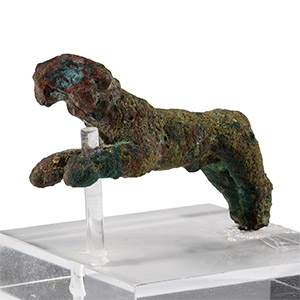
Roman Bronze Panther Statuette
Circa 3rd-4th century A.D.Sold for (Inc. bp): £124
Depicted in a leaping pose with the beast's foreleg extended and the head turned slightly right with open jaws; mounted on a custom-made display stand. 53.6 grams total, 47 mm including stand
Found near Newark/Lincoln, Nottinghamshire, UK. Acquired from Ancient & Oriental, Nottingham, UK, 2002. Property of a Nottinghamshire gentleman. -
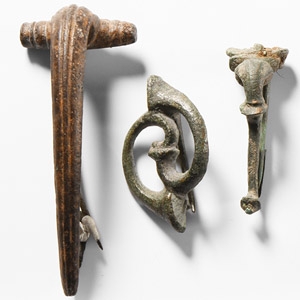
Roman Bronze Brooch Collection
Circa 1st-2nd century A.D.Sold for (Inc. bp): £124
Group of three brooches comprising: trumpet brooch with spring and pin; dolphin-type bow brooch with hinged pin; kräftig profilierte bow brooch. 53 grams total, 40-72 mm
Found East Anglia, UK. Acquired early 2000s. Property of a Stowmarket, UK, gentleman. Accompanied by three old handwritten cataloguing slips.
