Loading, please wait...
Details
LOT 0676
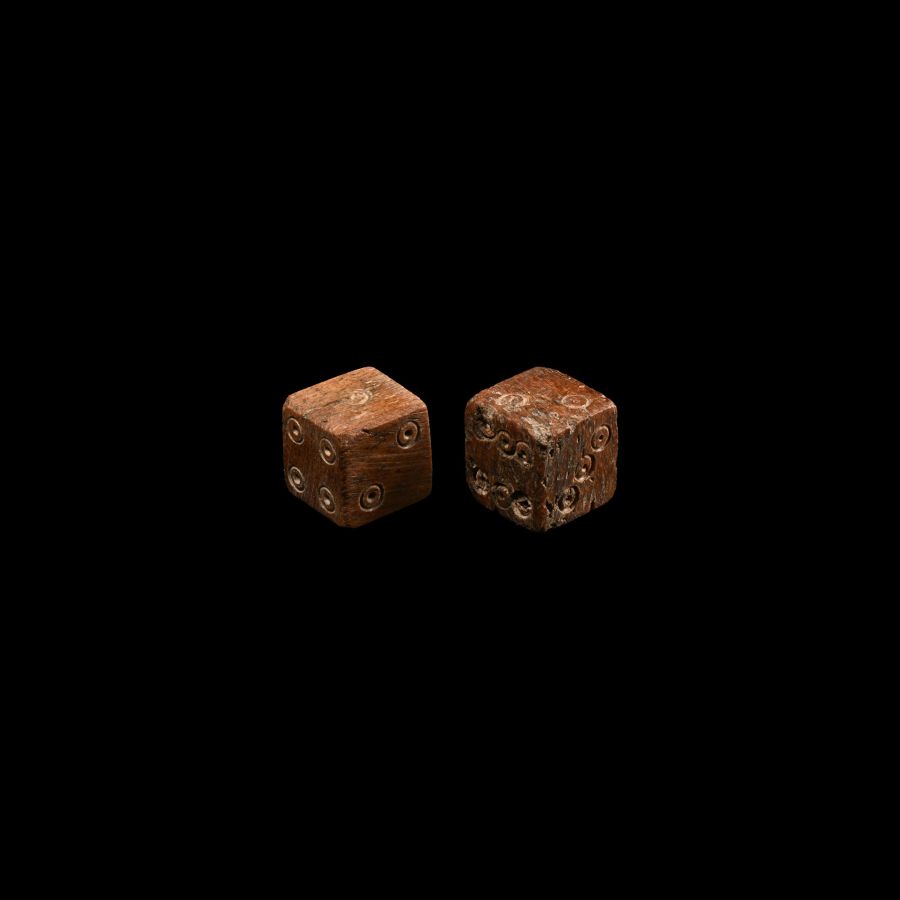
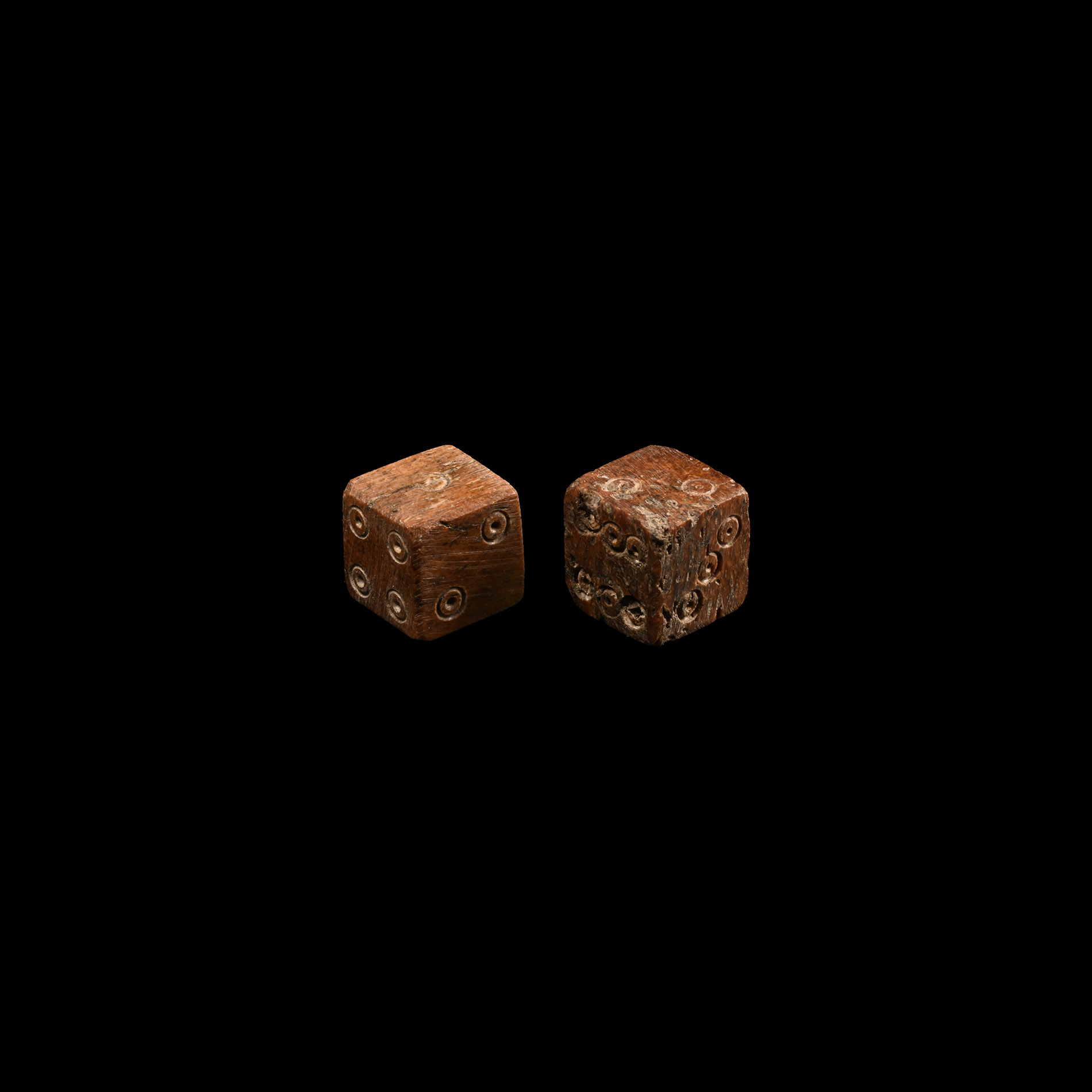
Roman Bone Dice Pair
1ST-4TH CENTURY A.D.
3/8 in. (6.19 grams total, 11-12 mm).
A pair of bone dice with ring-and-dot numerals configured: 1:6; 2:5; 3:4. [2, No Reserve]
Provenance
Acquired on the London art market before 2000.
Property of an Essex gentleman.
VETTING:
TimeLine Auctions follows a vetting process to ensure the authenticity and legality of all items, reinforcing our commitment to integrity and responsible trading. Each antiquity, antique, and coin lot undergoes thorough examination by a vetting committee of at least ten external specialists, professional trade association members, scientists, and archaeologists: Our Vetting Process
AUCTIONS:
TimeLine is a leading auction house specialising in antiquities, ancient art, collectables, natural history, coins, medals, and books. Our auctions offer museums, collectors, historians, and enthusiasts the opportunity to acquire unique and historically significant pieces.
RELATED LOTS
-
Roman Bone Dice Pair
1st-4th century A.D.Sold for (Inc. bp): £130
A pair of bone dice with punched ring-and-dot numbering, each composed: 1:6; 2:5; 3:4. 3.4 grams total, 10 mm each
Fine condition.
German art market, 1990s. Mr A.H., a North American collector living in the UK. -
Roman Gilt-Silver Phalera with Winged Head of Medusa
1st-2nd century A.D.Sold for (Inc. bp): £5,720
A substantial ornamental silver armour phalera with gilt detailing, embossed face of the Gorgon, Medusa, to the centre with detailed eyes, eyebrows and mouth, strong nasal ridge extending towards the forehead, furrowed brow with a pair of wings emerging from the curly hair framing the face, a pair of snakes knotted beneath the chin; wide edge with beaded rim and wavy pointillé decoration; accompanied by a discoid bronze sheet to which the fastening pins were attached to. 113 grams total, 8.8-12.5 cm
Cracked
Acquired in 1970. with Coins and Antiquities, formerly known as D.J. Crowther Ltd, Mayfair, London, UK. Private collection of a London antiquarian. English private collection. Accompanied by an academic report by Dr Raffaele D’Amato. This lot has been checked against the Interpol Database of stolen works of art and is accompanied by search certificate number no.10623-174245.
Discoid military decorations usually depicted the heads of the gods, spirits of the underworld, birds and lions, Medusa being the most popular subject. Sets of phalerae, similar to those shown on monuments dedicated to Marcus Caelius, Quintus Sertorius Festus and Celer Allius, were found in Neuss, Lauersfort and Newstead. Our phalera finds parallel in similar examples from the magnificent Lauersfort set, echoing the decoration visible on the gravestone of centurion Caelius from Bonn, depicted with a corona civica on his head, the best-known silver military decorations of the early Imperial Age. The higher officers in the Roman army had the custom of wearing such rich suits of phalerae with the straps attached directly to leather garments or doublets, worn over their armour. One such example can be seen on the gravestone of the Aquilifer G. Musius (Jahn, 1860, taf.II; D’Amato, 2018, p.54), where the phalerae are worn over a leather structure like a doublet over the subarmalis. Wearing a double-padded armour under the doublet provided twice as much protection to the warrior and enhanced the phalerae worn over the doublet. These decorations were awarded in sets, commonly of nine, although the sources confirm that this was not an absolute rule. They were worn in a similar fashion to medals on the chest, attached to a leather harness of straps, which ran straight around and up and down the front of the chest, and continued over the shoulders and around the back where they were fastened with buckles (Maxfield, 1981, pp.92-93). -
Roman Military Ring with Scorpion Gemstone
Circa 2nd century A.D.Sold for (Inc. bp): £111
A bronze finger ring with inset carnelian gemstone, intaglio scorpion. 4.31 grams, 21.20 mm overall, 17.45 mm internal diameter (approximate size British J, USA 4 3/4, Europe 8.69, Japan 8)
Acquired before 2000. From the collection of a European gentleman living in the UK.
The ring could have belonged to a praetorian guardsman. The scorpion was one of the main symbols of the praetorian guard since the age of Augustus.