
Loading, please wait...
LOT 0736
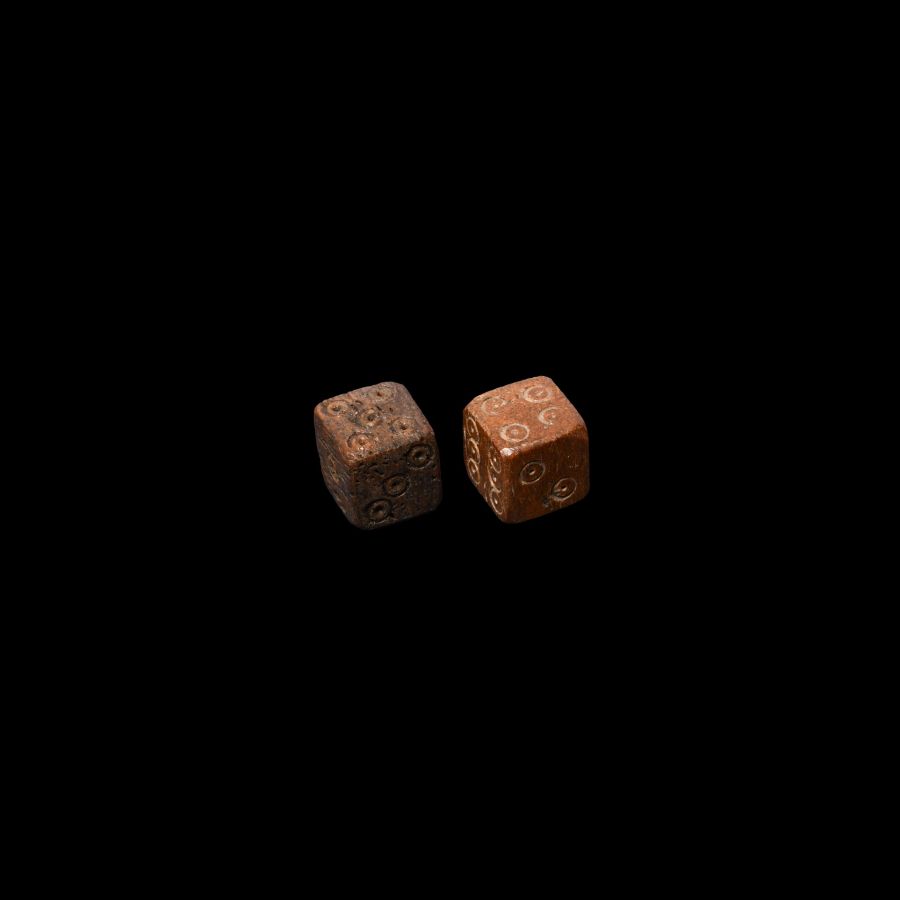
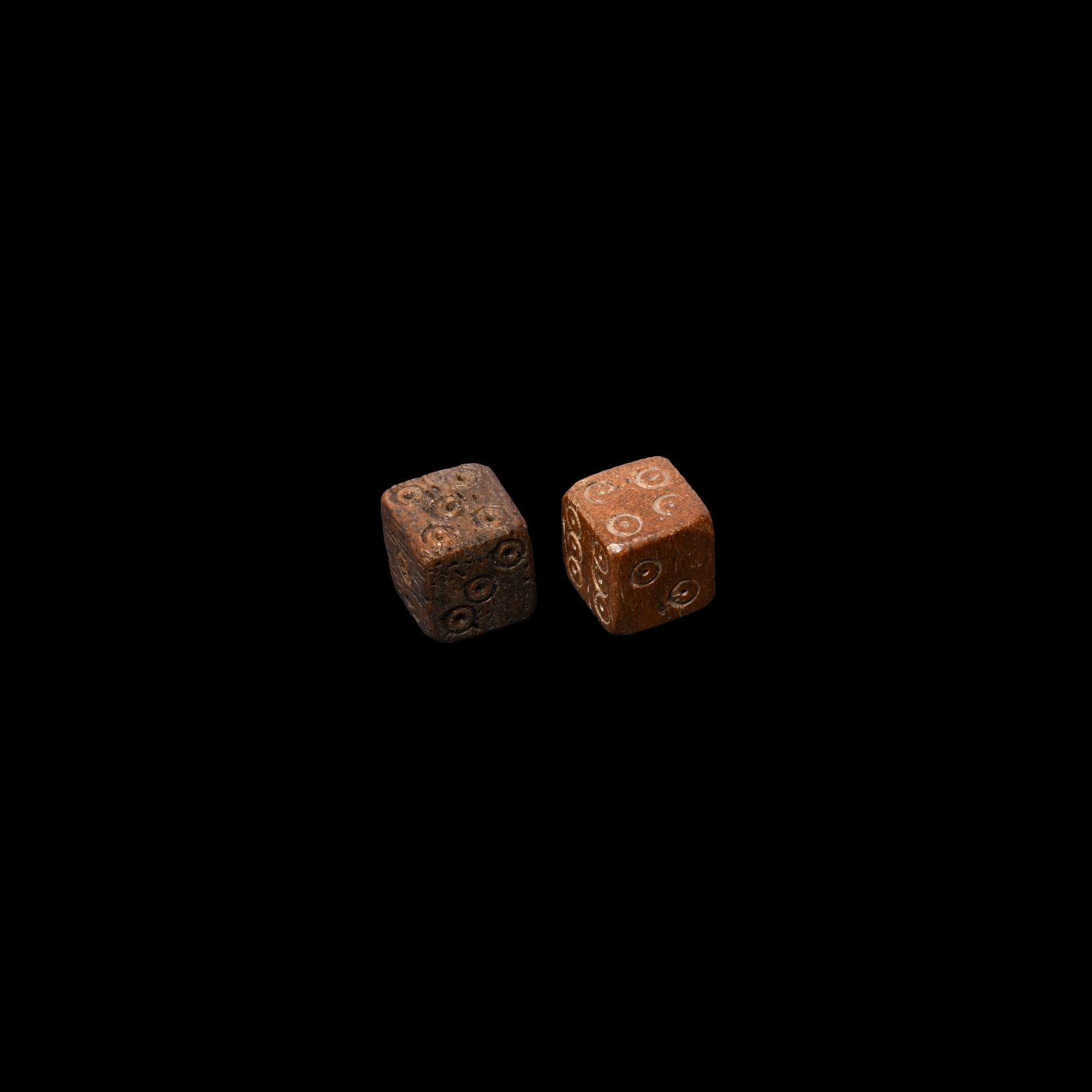
Roman Bone Dice Pair
1ST-4TH CENTURY A.D.
3/8 in. (4.28 grams total, 10 mm each).
A pair of bone dice with dot-in-ring numbering, both composed: 1:6, 2:5, 3:4. [2, No Reserve]
ProvenanceEnglish collection formed in the 1990s.
UK art market.
Property of an Essex gentleman.
TimeLine Auctions follows a vetting process to ensure the authenticity and legality of all items, reinforcing our commitment to integrity and responsible trading. Each antiquity, antique, and coin lot undergoes thorough examination by a vetting committee of at least ten external specialists, professional trade association members, scientists, and archaeologists: Our Vetting Process
AUCTIONS:
TimeLine is a leading auction house specialising in antiquities, ancient art, collectables, natural history, coins, medals, and books. Our auctions offer museums, collectors, historians, and enthusiasts the opportunity to acquire unique and historically significant pieces.
-
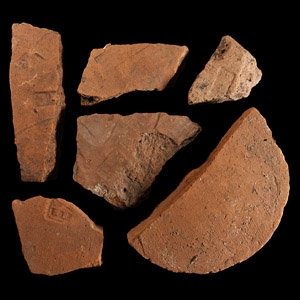
Roman Tile Fragment Group with Military Stamps
1st-4th century A.D.Sold for (Inc. bp): £59
A group of six ceramic tile fragments, each bearing a stamp. 3.3 kg total, 10.5-22.2 cm
Previously in a private collection since the 1990s. Property of a Sussex, UK, teacher. -
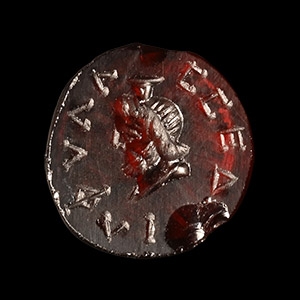
Roman Epigraphic Gemstone with Head of Zeus Serapis
3rd-4th century A.D.or laterSold for (Inc. bp): £468
A gemstone with one side incised with the head of Zeus Serapis wearing a modius crown, seen in profile to the left, surrounded by Greek letters I,Λ,φ, ν, Λ,Λ,Ϲ,Ϲ,Ε,Δ; the other side with enigmatic inscription 'BIKIω PIΗΔνMΗ IΔ φI ΛA'. 0.86 grams, 12 mm
Acquired before 1988. Ex family collection, by descent, Geneva.
Serapis was a Graeco-Egyptian god, whose cult was popularised during the 3rd century B.C. on the orders of Ptolemy I of Egypt, to facilitate the religious syncretism of his kingdom. During the Roman Empire his image was widely diffused in the east. Usually a third of these gems carry magical words which shows that they were used as amulets or for some other ritual purpose. These magical gems were inscribed with acclamations or prayers that suggest they were used as amulets for protection (in this case of Serapis) or to acquire charm, but only some of them can be linked with some divinatory or prophylactic purpose. -
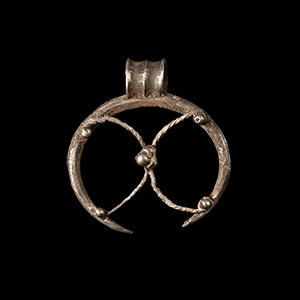
Roman Silver Openwork Lunar Pendant
2nd-3rd century A.D.Sold for (Inc. bp): £143
A silver lunula pendant composed of a crescentic body straddled by a slender silver wire X-motif embellished with granules; ribbed suspension loop. 3.77 grams, 29 mm
Acquired before 2000. From the collection of a European gentleman living in the UK.
