
Loading, please wait...
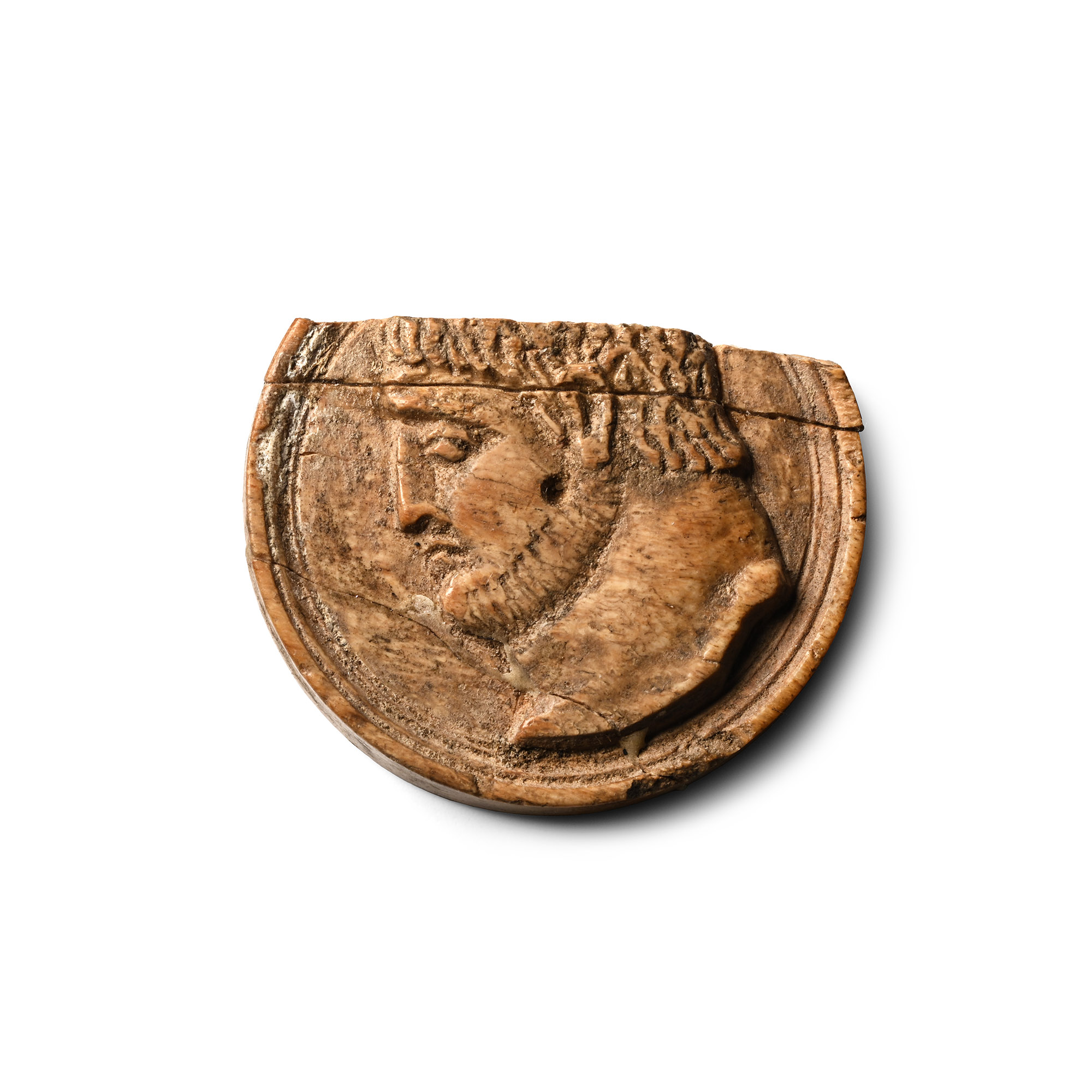
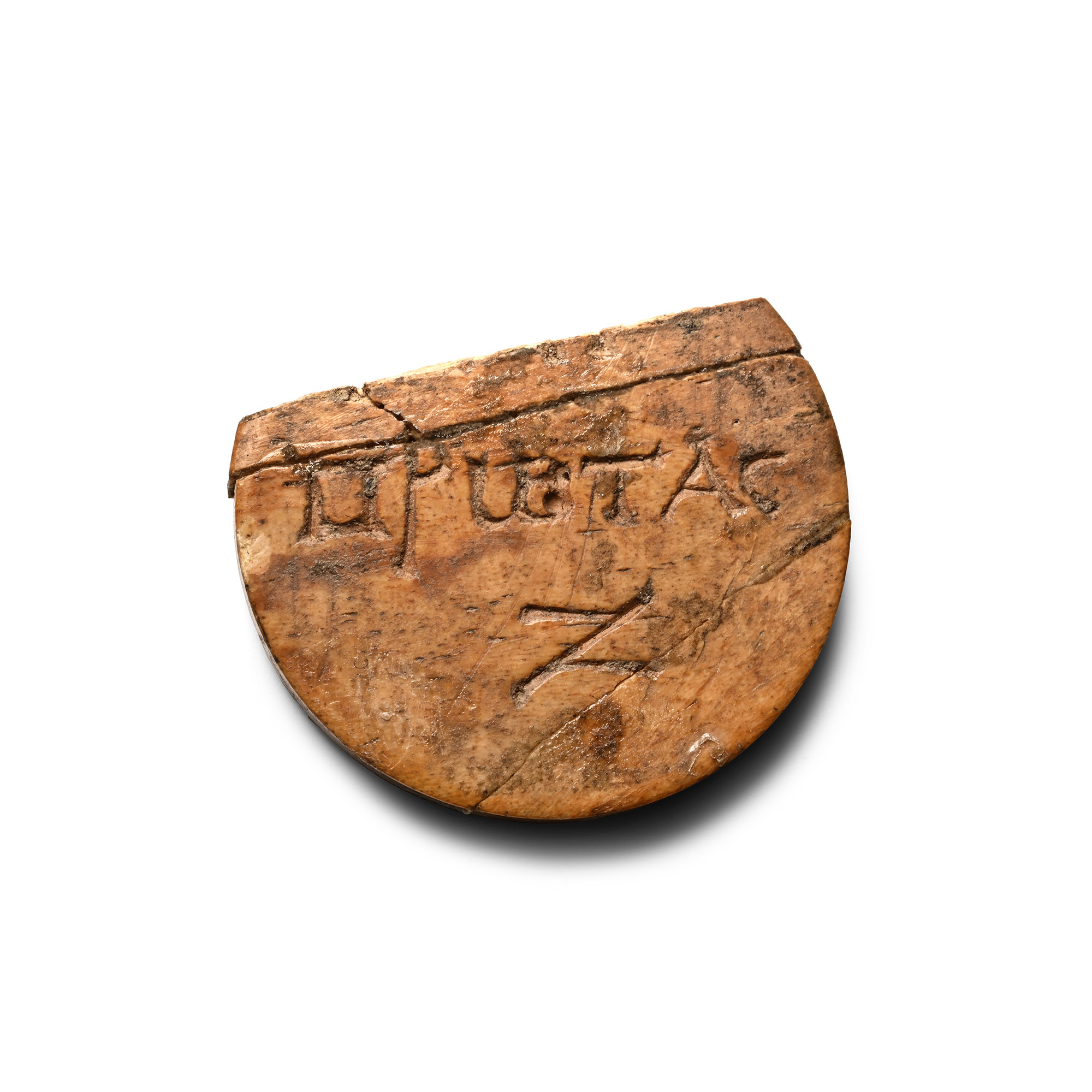
LOT 0761
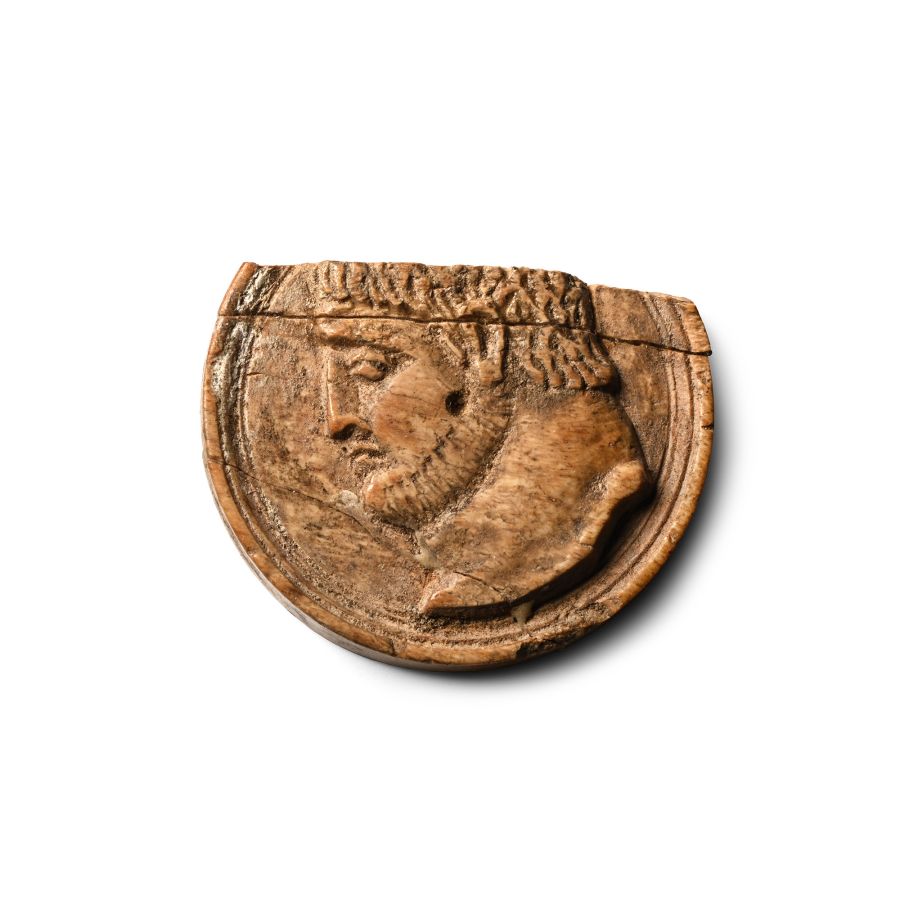
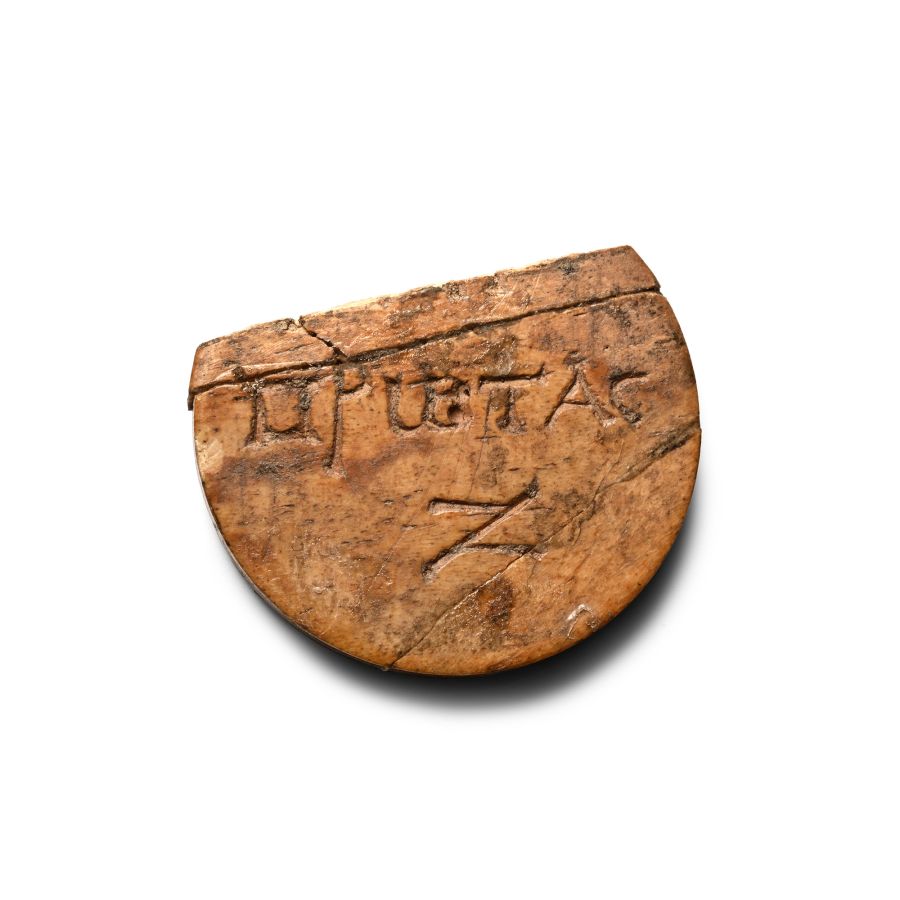
Roman Bone Bifacial Roundel with Imperial Bust of Maximinus II Daia and Inscription
3RD-4TH CENTURY A.D.
1 1/8 in. (3.84 grams, 29 mm).
Large section of a roundel with a profile bust of an emperor (Maximinus II Daia ?) with a short, dressed beard and hair, the reverse with an inscription '□PωTAC' and letter Z (or N) below. [No Reserve]
ProvenanceFrom the private collection of a European gentleman (1942-2024), formed since the 1970s.
LiteratureCf. for comparison a portrait of Maximinus II Daia on an intaglio in Malgouyres, P., Engraved Gems, Cameos, intaglios and rings of the Guy Ladriere Collection, Le Kremlin-Bicêtre, 2022, no.170.
CONDITIONTimeLine Auctions follows a vetting process to ensure the authenticity and legality of all items, reinforcing our commitment to integrity and responsible trading. Each antiquity, antique, and coin lot undergoes thorough examination by a vetting committee of at least ten external specialists, professional trade association members, scientists, and archaeologists: Our Vetting Process
AUCTIONS:
TimeLine is a leading auction house specialising in antiquities, ancient art, collectables, natural history, coins, medals, and books. Our auctions offer museums, collectors, historians, and enthusiasts the opportunity to acquire unique and historically significant pieces.
LOT 0761
Roman Bone Bifacial Roundel with Imperial Bust of Maximinus II Daia and Inscription
Sold for (Inc. bp): £208
-
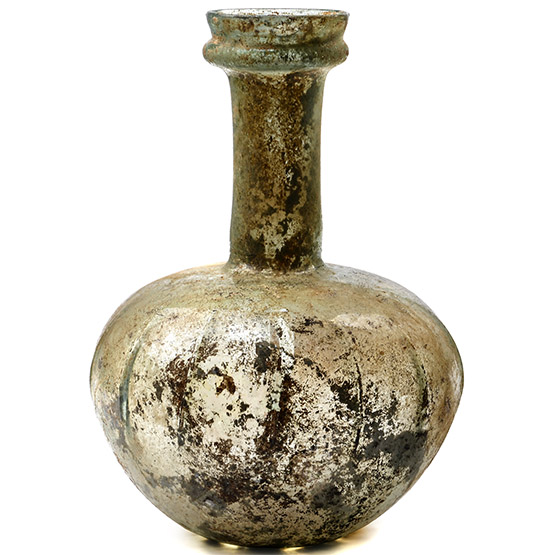
Roman Ribbed Glass Bottle
4th-5th century A.D.Estimate: £400 - 600 (‡+bp*)
Opening Bid: £200
With globular body, dimple foot, slight vertical ribbing to body, broad funicular mouth with folded rim. 174 grams, 19 cm
Acquired in the late 1980s. Private collection, thence by descent. Private collection, since the late 1990s.
Similar vessels (bottles) were found in 4th-5th century tombs at Beit Ras, Jordan, and from Samaria-Sebaste, Israel. The most recognisable characteristic of these bottles was the faint ribs on the body. The type survived until the Arab conquest in the 7th century A.D. -
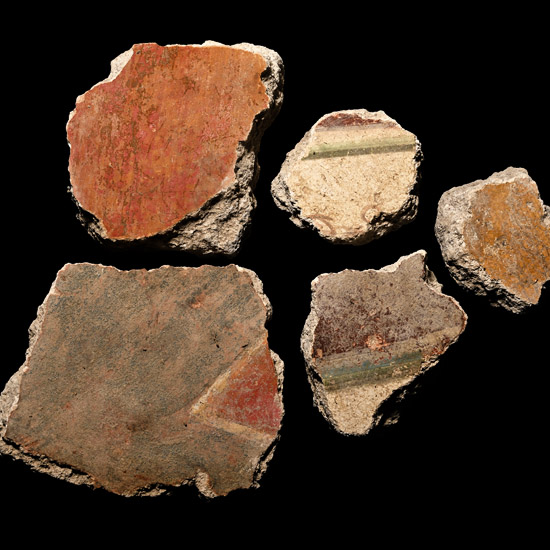
Roman Fresco Wall Plaster Collection
1st century A.D.Sold for (Inc. bp): £104
Fragments of wall plaster with rendered surface painted with mainly Pompeii red, pale blue, brown, cream and white detailing; some with an impression of timber laths to the reverse. 1.28 kg total, 7.3-13.4 cm
Acquired in the 19th century. Ex Jeger collection, Switzerland. UK gallery, early 2000s.
These small fragments, for analogies with the fragments of Pompeii, seem to belong to the second style of Roman painting, red panels representing highlight and shadow, decorated with vegetal interlaces. A red grenade fillet probably framed some panels. A fragment shows alternate blue and red colours over a cream background, maybe pertinent to a socle. -
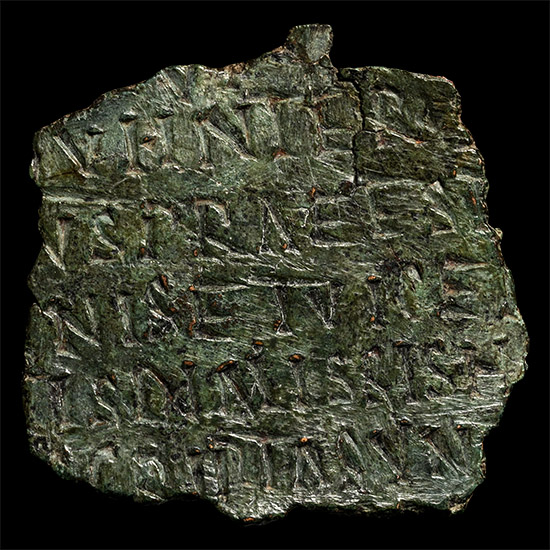
Fragment of a Roman Bronze Military Diploma Granted by Emperor Septimius Severus
195 A.D.Sold for (Inc. bp): £1,300
Issued for a member of the equites singulares Augusti, the emperor’s horse guards; granted by Septimius Severus in the summer of AD 195, during his Parthian expedition; obverse with seven lines of text with well engraved letters: (1) [… IMP] • VI • C[OS …] / (2) [EQVITIBVS Q]VI•INTER•S[INGVLAR MILITAVERVNT CASTRIS] / (3) [NOVIS QVIB]VS PRAEEST [. . .] / (4) [TRIBVNVS QVI]NIS ET VICEN[IS PLVRIBVSVE STIPENDIS] / (5) [EMERI]TIS DIMISSIS H[ONESTA MISSIONE QVORVM] / (6) [NOMINA SVB]SCRIPTA SVNT [CIVITATEM ROMANAM] / (7) . . . + ++ . . . . On the inner face traces of 7 lines of text: (1) [- - -]MAX·TR[IB / (2) [- - -]+ COS [- - -] / (3)[EQVITIBVS QVI I]NTER·SINCV[LAR MILITAVER CASTRIS] / (4) [NOVIS QVIBVS] PRAEEST + [- - -] /(5) TRIBVNVS] QVINIS ET VI[CENIS PLVRIBVSVE STIPENDIS] / (6) [EMERITIS] DIM[ISSIS HONESTA MISSIONE QVORVM] / (7) +++. 27.13 grams, 50 mm
Property of a European gentleman, acquired on the London art market.
