
Loading, please wait...
LOT 0593
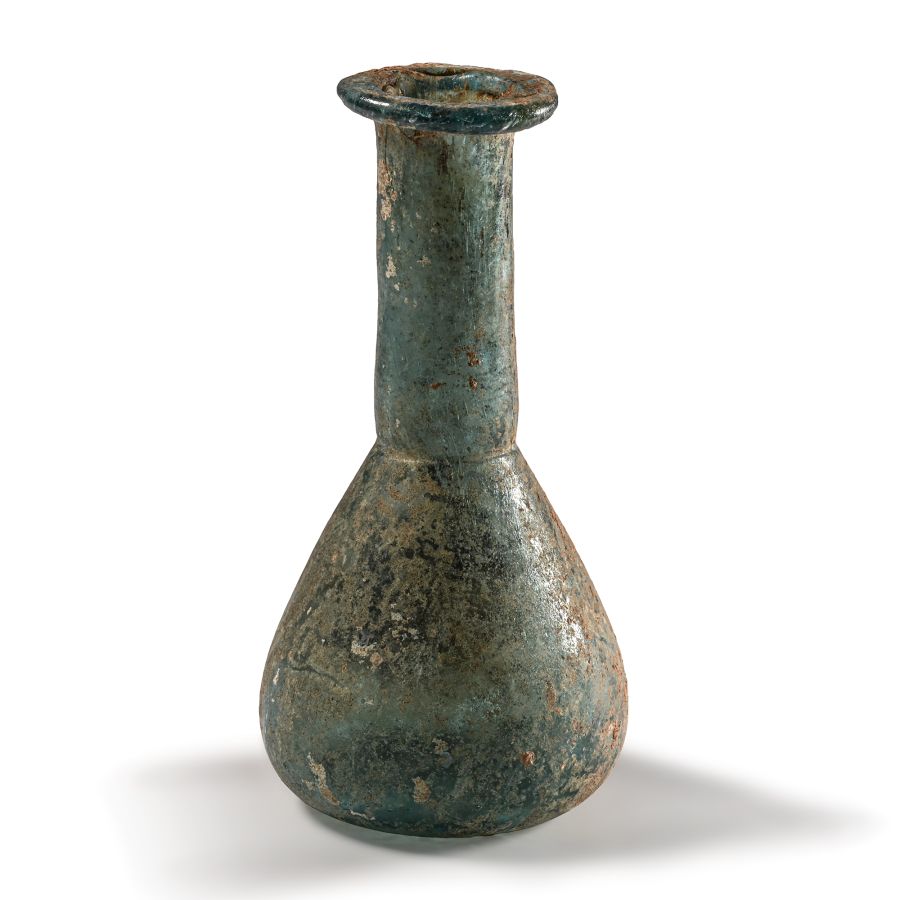
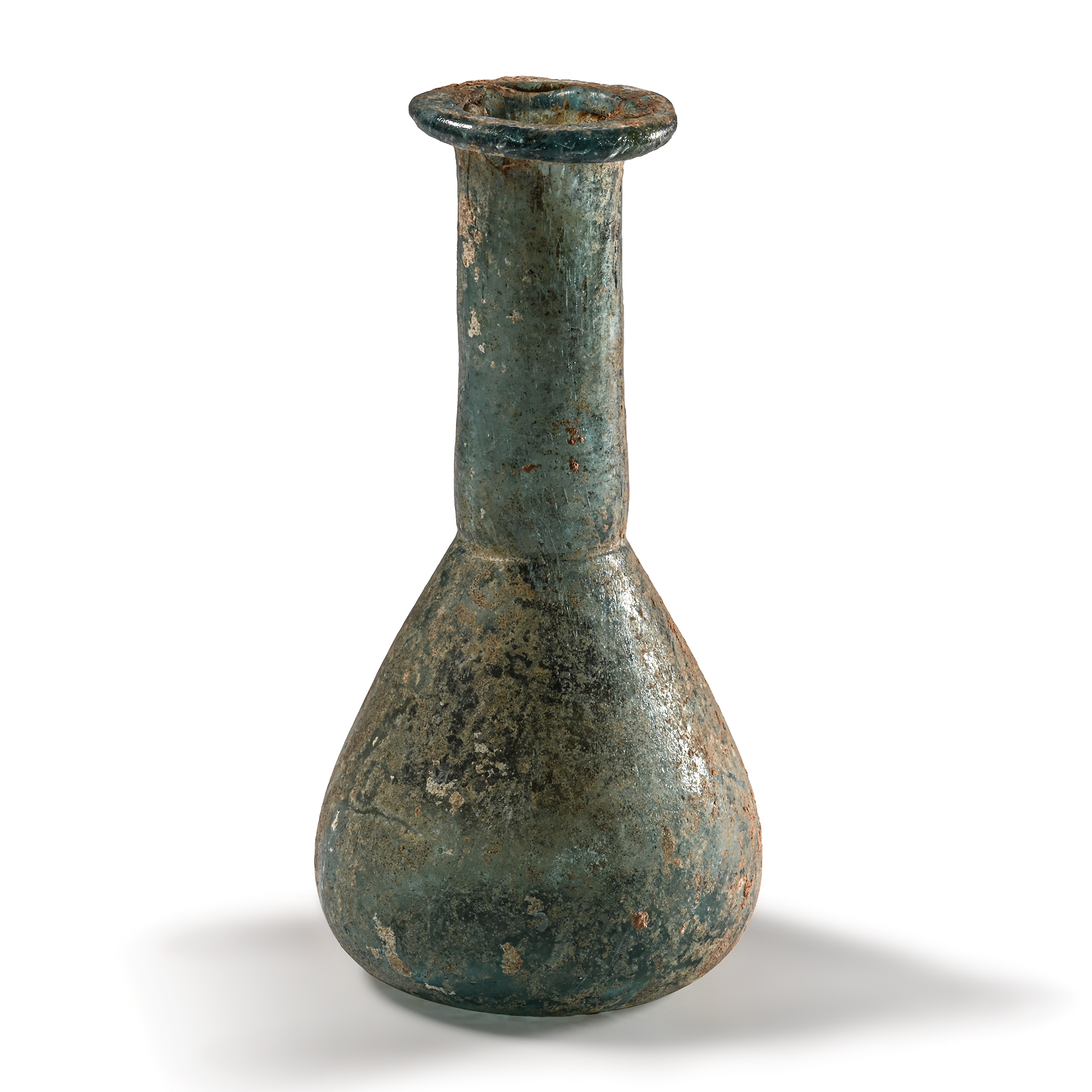
Roman Blue-Green Glass Ampulla
1ST-2ND CENTURY A.D.
4 1/2 in. (81 grams, 11.6 cm high).
Slightly concave base, a piriform body with tapered shoulders, a lightly corseted neckline beneath a cylindrical neck, and a splayed rim with an in-folded lip.
ProvenanceAcquired 1980-2015.
Ex Abelita family collection.
Cf. Filarska, B., Szkla Starozytne (Ancient Glass) II vol., Warszawa, 1972, II, cat.116, pl.XXVI,2, for similar vessel.
FootnotesThe ampulla was, in Ancient Rome, a small round vessel, usually made of glass and used for sacred purposes. The term can also refer to later flasks, often flatter and without handles, typically used as pilgrim souvenirs. Materials include glass, ceramics and metal. An unguentarium is a bottle believed to have been used to store perfume. Such vessels were often produced in Gaul.
CONDITIONTimeLine Auctions follows a vetting process to ensure the authenticity and legality of all items, reinforcing our commitment to integrity and responsible trading. Each antiquity, antique, and coin lot undergoes thorough examination by a vetting committee of at least ten external specialists, professional trade association members, scientists, and archaeologists: Our Vetting Process
AUCTIONS:
TimeLine is a leading auction house specialising in antiquities, ancient art, collectables, natural history, coins, medals, and books. Our auctions offer museums, collectors, historians, and enthusiasts the opportunity to acquire unique and historically significant pieces.
-
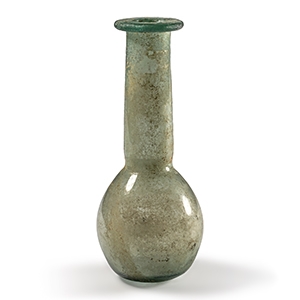
Roman Tall Pale Blue Glass Vial
3rd century A.D.Sold for (Inc. bp): £117
Bulbous with flat base, tall stem neck, splayed rim with an in-folded lip. 46 grams, 12.7 cm high
Acquired 1980-2015. Ex Abelita family collection.
During the early Roman period the glass-making techniques used by the Greeks were continued. Much of the glass was buried and as a result acquired an attractive lustrous patination. Roman glass became a medium for the promotion of the emperor and imperial propaganda, as well as having utilitarian purposes. Glass blowing, a new technique, meant that quantities of identical bottles could be produced. -
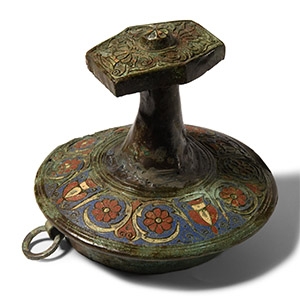
Roman Enamelled Bronze Vessel Lid
2nd-4th century A.D.Estimate: £10,000 - 14,000 (‡+bp*)
Opening Bid: £5,000
With carinated body and gently inverted lower rim, circumferential frieze displaying 'yellow' and red champlevé enamelled flower heads within foliate roundels, alternating with stylised amphoras and volute scrolls creating heart shapes set against a rich blue field; central projecting stem with hexagonal plate, ornamented with a central domed flower head, amphora and foliate motifs surrounding; two suspension lugs with loops to the perimeter of the lower rim; repaired. 435 grams, 15 cm wide
Acquired from Ariadne Galleries Inc, New York, 30 October 2003. This lot has been checked against the Interpol Database of stolen works of art and is accompanied by search certificate no.11622-198955.
Champlevé is a decorative technique which involves cutting cells into a metal surface and filling the void with enamel, using the raised metal borders between the cells to create the design outline. -
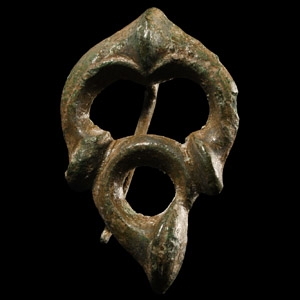
British Roman Military Bronze Trumpet-Whorl Plate Brooch
1st-2nd century A.D.Sold for (Inc. bp): £98
With openwork sub-triangular body made up of three curved trumpets motifs; to the reverse the double pin lug supporting the hinged copper alloy pin, and, at the opposite end is a flat longitudinal catch plate. 7.19 grams, 35 mm
Found whilst searching with a metal detector near Conistone with Kilnsey, North Yorkshire, UK, early 2022. This is a find of note and has been designated to be of Regional importance. Accompanied by a copy of the British Museum's Portable Antiquities Scheme (PAS) report no.SWYOR-A187CC.
