
Loading, please wait...
LOT 0874
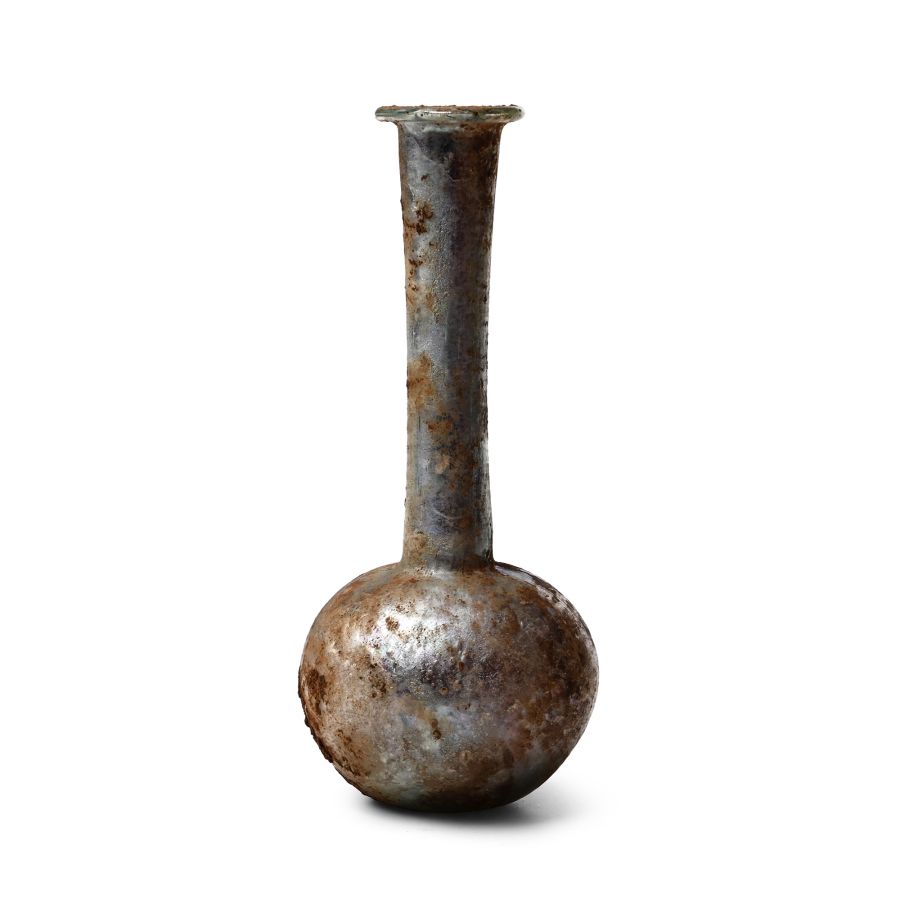
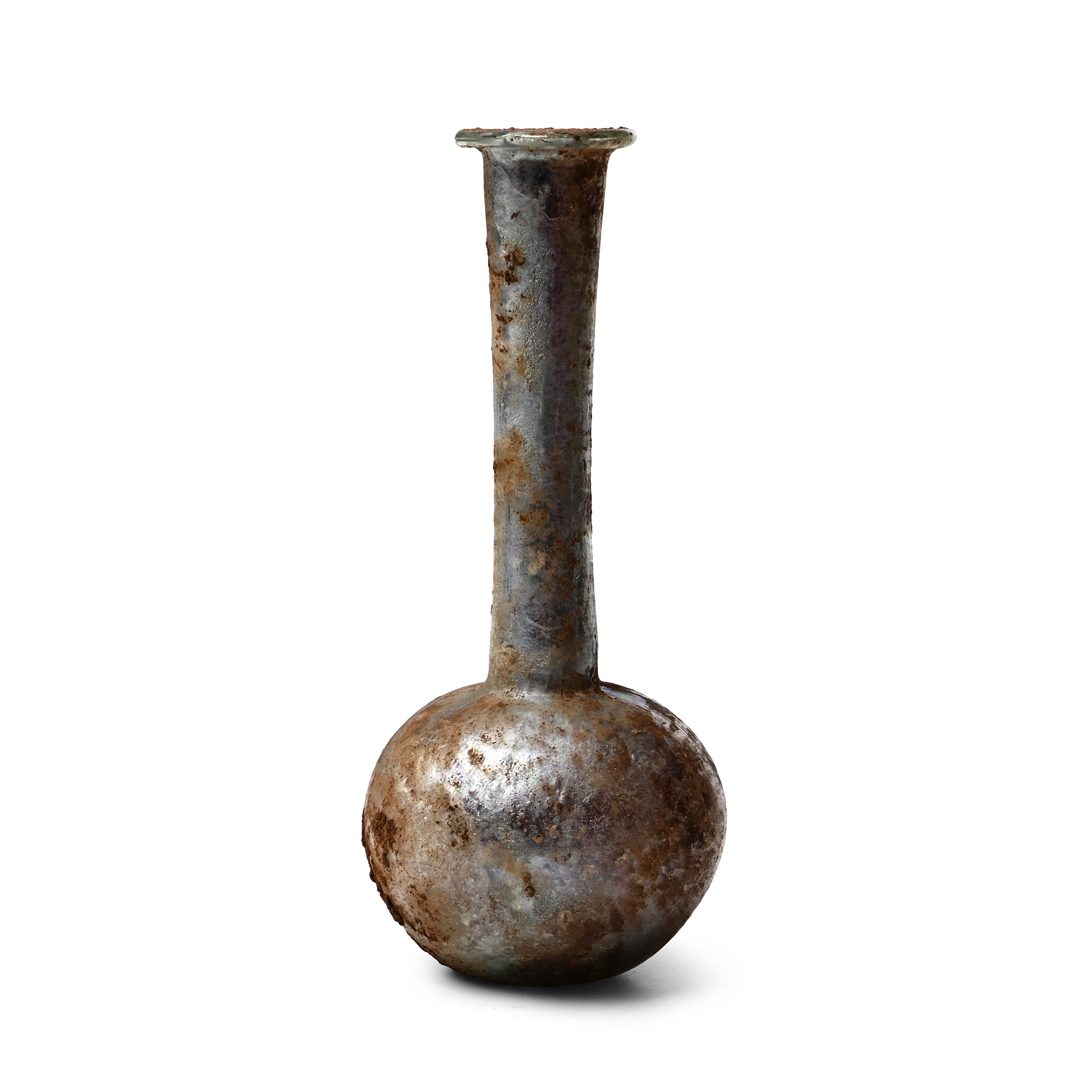
Roman Blue Glass Flask
CIRCA 1ST-4TH CENTURY A.D.
4 in. (14 grams, 10.3 cm).
Bulbous body and a long tubular neck with rolled rim.
ProvenanceFrom a London, UK, collection of glass, 1970-2000s.
CONDITIONTimeLine Auctions follows a vetting process to ensure the authenticity and legality of all items, reinforcing our commitment to integrity and responsible trading. Each antiquity, antique, and coin lot undergoes thorough examination by a vetting committee of at least ten external specialists, professional trade association members, scientists, and archaeologists: Our Vetting Process
AUCTIONS:
TimeLine is a leading auction house specialising in antiquities, ancient art, collectables, natural history, coins, medals, and books. Our auctions offer museums, collectors, historians, and enthusiasts the opportunity to acquire unique and historically significant pieces.
-
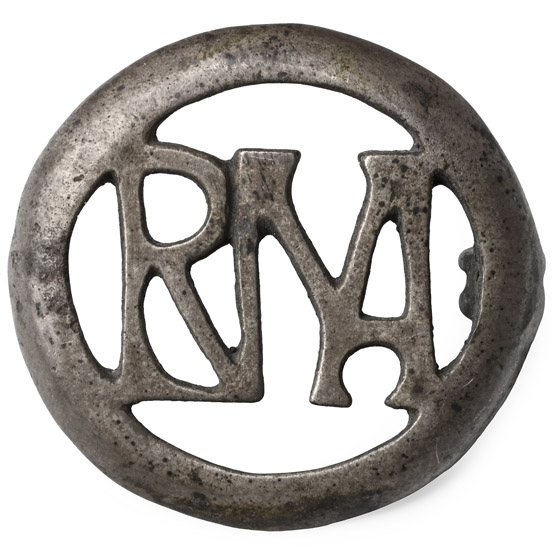
Roman Silver 'ROMA' Plate Brooch
2nd century A.D.Sold for (Inc. bp): £182
With openwork monogram of 'ROMA', hinge and catchplate to the reverse. 8.71 grams, 31 mm
Acquired on the UK art market. Private collection, England. -
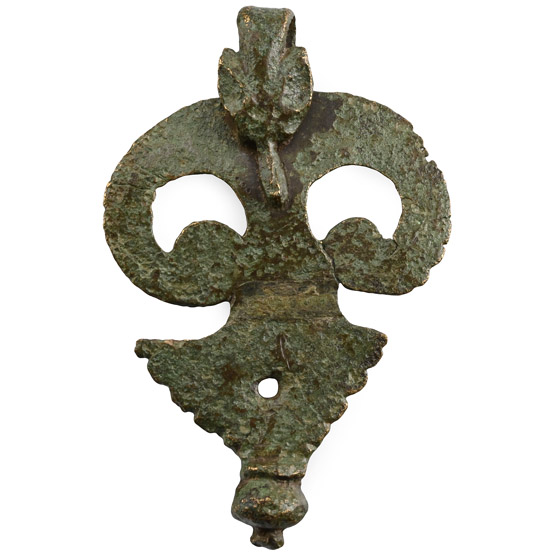
Roman Bronze Military Pendant
Circa 2nd-3rd century A.D.Sold for (Inc. bp): £33
Formed as a leaf with lobed scrolls above, looped suspension point with wolf-head detailing; knop finial below. 4.66 grams, 46.6 mm
Ex German art market, 2000s. Acquired from an EU collector living in London. From the collection of a Surrey, UK, gentleman. -
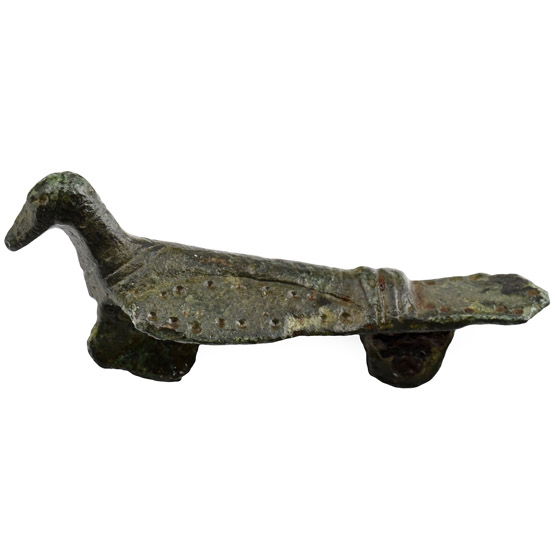
Roman Bronze Bird Brooch
Mid 2nd-3rd century A.D.Sold for (Inc. bp): £234
Mackreth's Type 4.a.2 zoomorphic brooch in the form of a water bird, with folded wings and tail outlined with dots, transverse bands to the rear body, remains of a catchplate and pin lug to the reverse. 7.9 grams, 42 mm
Found whilst searching with a metal detector near Bottisham, East Cambridgeshire, UK, on Friday 13th December 2024. Accompanied by a copy of the British Museum's Portable Antiquities Scheme (PAS) report no.SF-9DEECA.
