
Loading, please wait...
LOT 0694
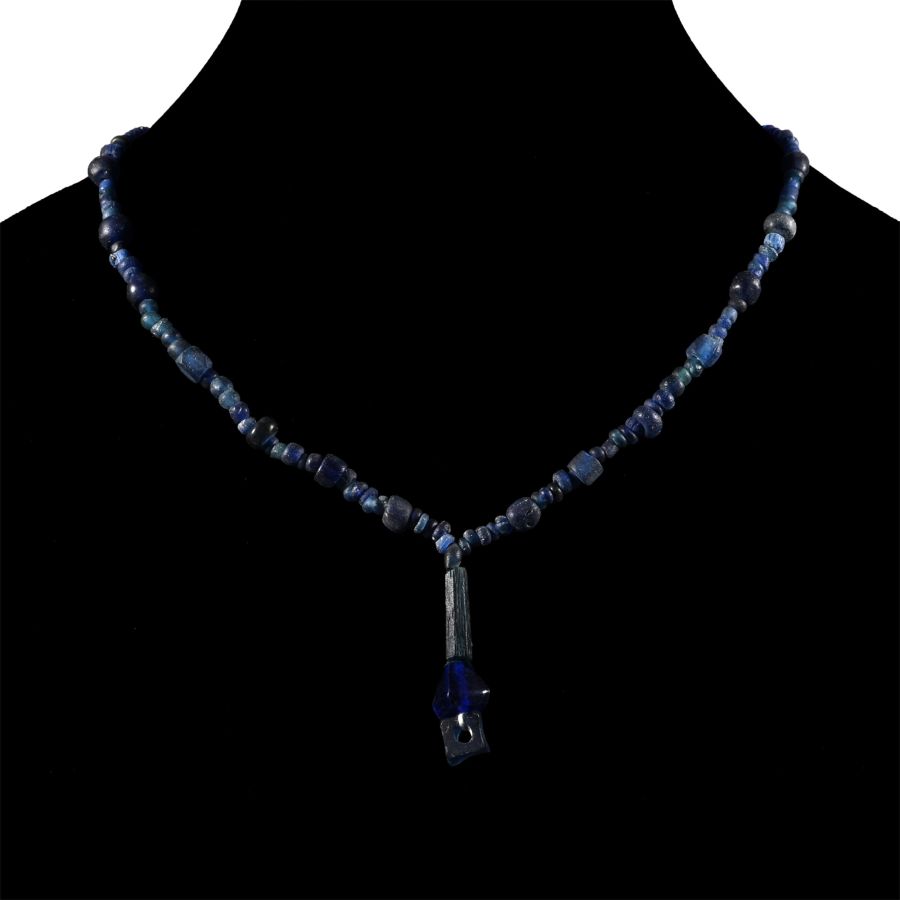
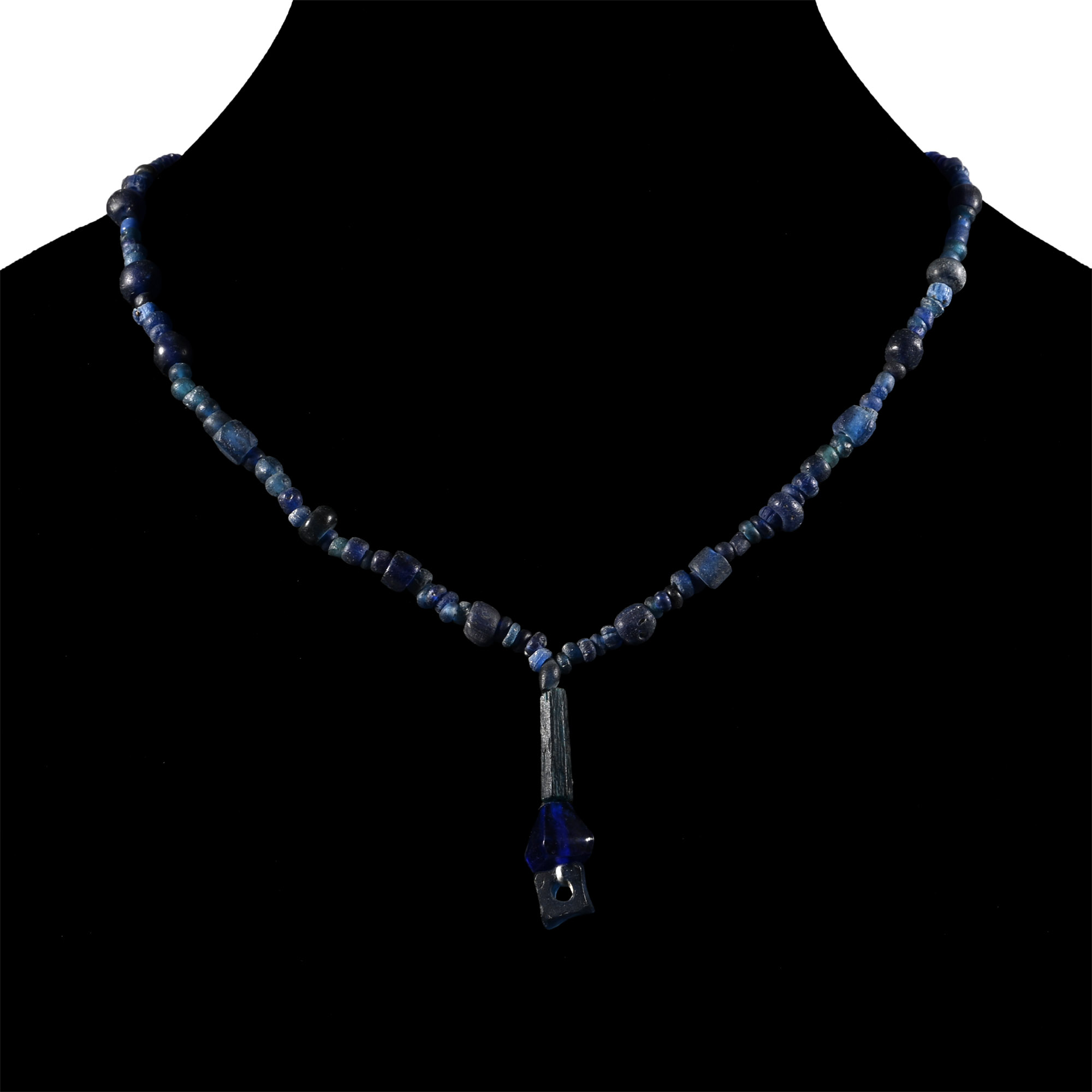
Roman Blue Glass Bead Necklace String
1ST-4TH CENTURY A.D. AND LATER
12 3/4 in. (15.8 grams, 32.5 cm).
Composed of mainly oblate and annular beads, central feature composed of a long tubular bead with a later pyramidal and an irregular bead dangle. [No Reserve]
ProvenanceAcquired 1980-2015.
Ex Abelita family collection.
This lot is accompanied by an illustrated lot declaration signed by the Head of the Antiquities Department, Dr Raffaele D’Amato.
TimeLine Auctions follows a vetting process to ensure the authenticity and legality of all items, reinforcing our commitment to integrity and responsible trading. Each antiquity, antique, and coin lot undergoes thorough examination by a vetting committee of at least ten external specialists, professional trade association members, scientists, and archaeologists: Our Vetting Process
AUCTIONS:
TimeLine is a leading auction house specialising in antiquities, ancient art, collectables, natural history, coins, medals, and books. Our auctions offer museums, collectors, historians, and enthusiasts the opportunity to acquire unique and historically significant pieces.
-
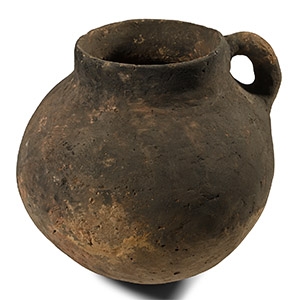
Roman Round-Bottomed Terracotta Jar
1st-4th century A.D.Sold for (Inc. bp): £130
With bulbous body and broad shoulder, low neck, loop handle; domestic ware. 1.15 kg, 17.5 cm high
From a London, UK, gentleman's collection of ancient pottery and artefacts, 1990s. This lot is accompanied by an illustrated lot declaration signed by the Head of the Antiquities Department, Dr Raffaele D’Amato. -
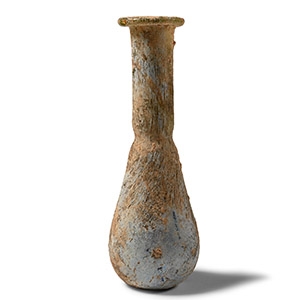
Roman Glass Vessel
1st-2nd century A.D.Estimate: £100 - 140 (+bp*)
Opening Bid: £56
With piriform lower body, extended cylindrical neck and flange rim; iridescent surfaces. 31.4 grams, 10.1 cm
From a London, UK, collection, 1990s. This lot is accompanied by an illustrated lot declaration signed by the Head of the Antiquities Department, Dr Raffaele D’Amato. -
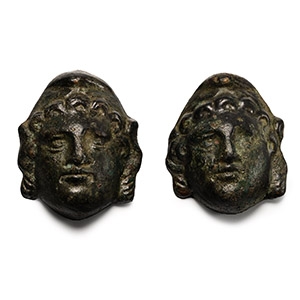
Roman Bronze Attis Mount Pair
1st-2nd century A.D.Sold for (Inc. bp): £169
Each depicted with a clean shaven rounded face, short curls emerging from underneath the peaked cap; hollow reverse. 17.6 grams total, 27-29 mm
Ex German art market, 2000s. Acquired from an EU collector living in London. From the collection of Surrey, UK, gentleman. This lot is accompanied by an illustrated lot declaration signed by the Head of the Antiquities Department, Dr Raffaele D’Amato.
