
Loading, please wait...
LOT 0886
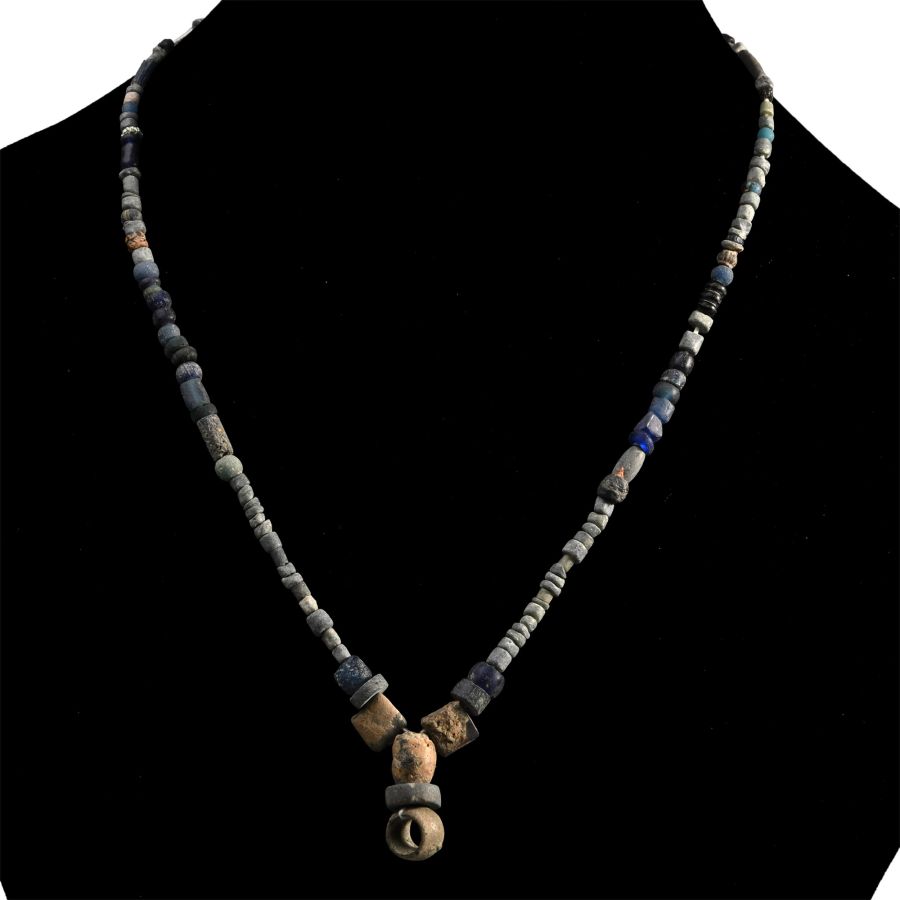
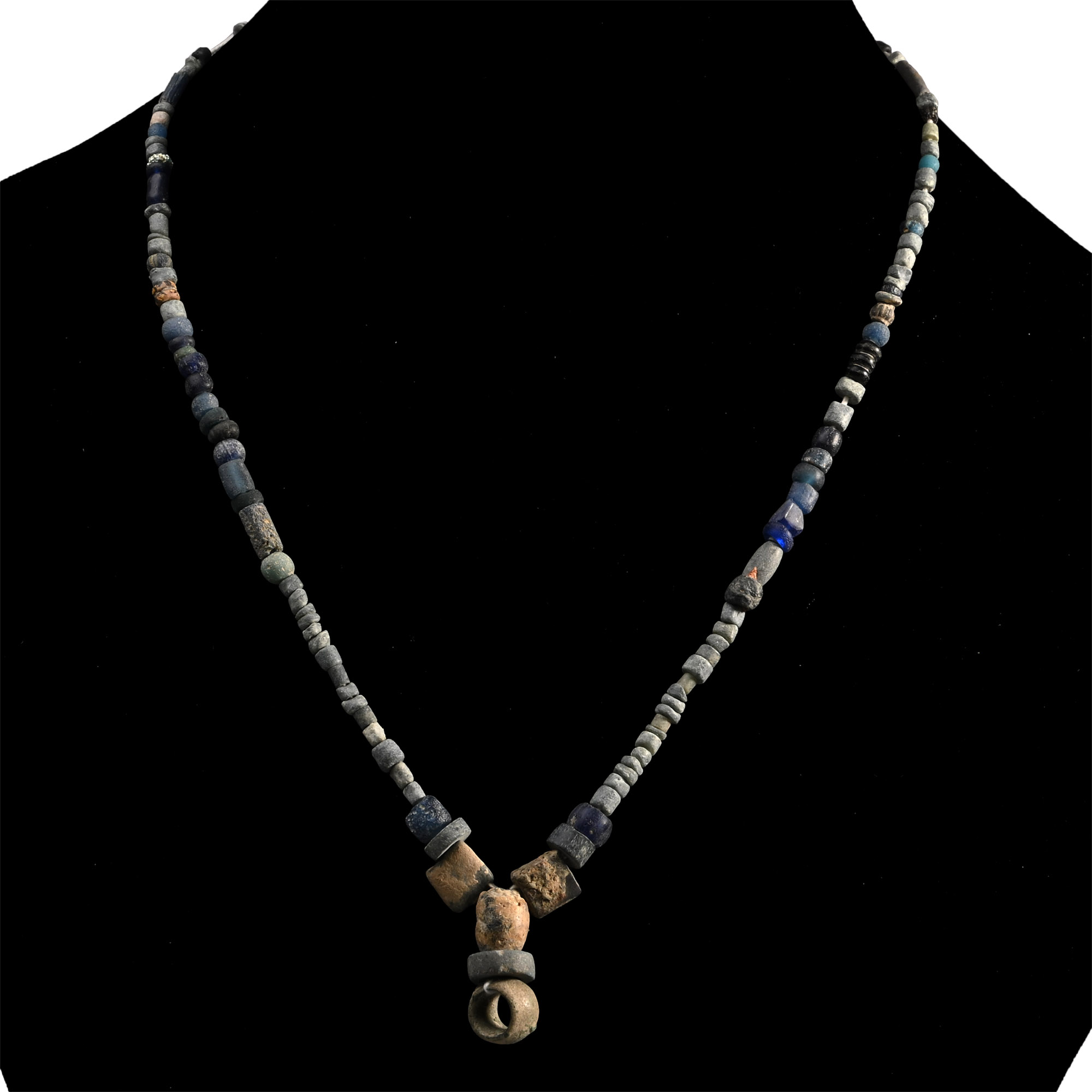
Roman Blue Glass and Stone Bead Necklace String
1ST-4TH CENTURY A.D. AND LATER
16 1/8 in. (21 grams, 41 cm).
Composed of variously shaped beads, central feature composed of tabular, annular, and ellipsoid beads; restrung. [No Reserve]
ProvenanceFrom the London, UK, art market in the 1990s.
This lot is accompanied by an illustrated lot declaration signed by the Head of the Antiquities Department, Dr Raffaele D'Amato.
Cf. for similar necklaces in blue glass Johns, C., The Jewellery of Roman Britain, Celtic and Classical Traditions, London, 1996, p.100.
FootnotesSuch necklaces testify to the popularity of glass ornaments across the Roman Empire. Roman jewellery at first followed trends set by the Etruscans, using gold and glass beads, but with the extension of the Empire and the adoption of different styles from Greece, Egypt and North Africa, jewellery designs became increasingly various and elaborate. Each bead of this beautiful necklace is unique in shape, lustre and speckling, creating a mosaic-like impression. Blue glass beads can be grouped into opaque mid-blue and deep translucent cobalt blue types.
CONDITIONTimeLine Auctions follows a vetting process to ensure the authenticity and legality of all items, reinforcing our commitment to integrity and responsible trading. Each antiquity, antique, and coin lot undergoes thorough examination by a vetting committee of at least ten external specialists, professional trade association members, scientists, and archaeologists: Our Vetting Process
AUCTIONS:
TimeLine is a leading auction house specialising in antiquities, ancient art, collectables, natural history, coins, medals, and books. Our auctions offer museums, collectors, historians, and enthusiasts the opportunity to acquire unique and historically significant pieces.
-
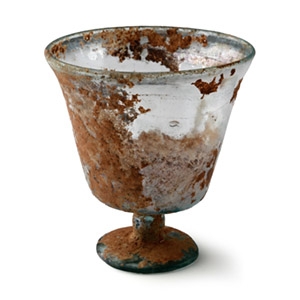
Roman Glass Wine Cup
1st century A.D.Sold for (Inc. bp): £1,105
Aqua glass cup with squat bell-shaped sidewall, rounded neck, footed base. 15 grams, 90 mm
Ex Mayfair, London, UK, gallery, 1990s-2000s. From an important collection of glass, the property of a London gentleman. This lot is accompanied by an illustrated lot declaration signed by the Head of the Antiquities Department, Dr Raffaele D'Amato. -
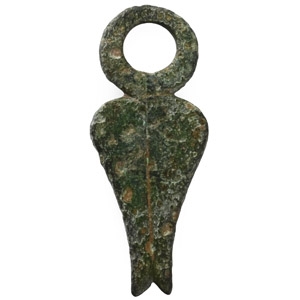
Romano-British Bronze Cosmetic Nail Cleaner
43-410 A.D.Sold for (Inc. bp): £39
Flat teardrop-shaped with round loop to the top, narrow bifurcated tip. 2.66 grams, 37 mm
Found near Bainton, East Riding of Yorkshire, UK, on Monday 23rd August 2021. Accompanied by a copy of the British Museum's Portable Antiquities Scheme (PAS) report no.NLM-7712AE. This lot is accompanied by an illustrated lot declaration signed by the Head of the Antiquities Department, Dr Raffaele D'Amato. -
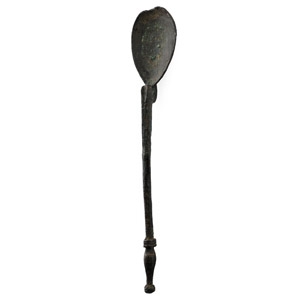
Roman Bronze Swan-Necked Spoon
1st-4th century A.D.Sold for (Inc. bp): £85
Shallow piriform bowl attached to a stepped baluster, hexagonal-section handle with baluster finial. 14.7 grams, 12.1 cm
Acquired on the UK art market during the late 20th century. From the private collection of David King (1940-2024), Hoddesdon, Hertfordshire, UK. This lot is accompanied by an illustrated lot declaration signed by the Head of the Antiquities Department, Dr Raffaele D'Amato.
