
Loading, please wait...
LOT 0558
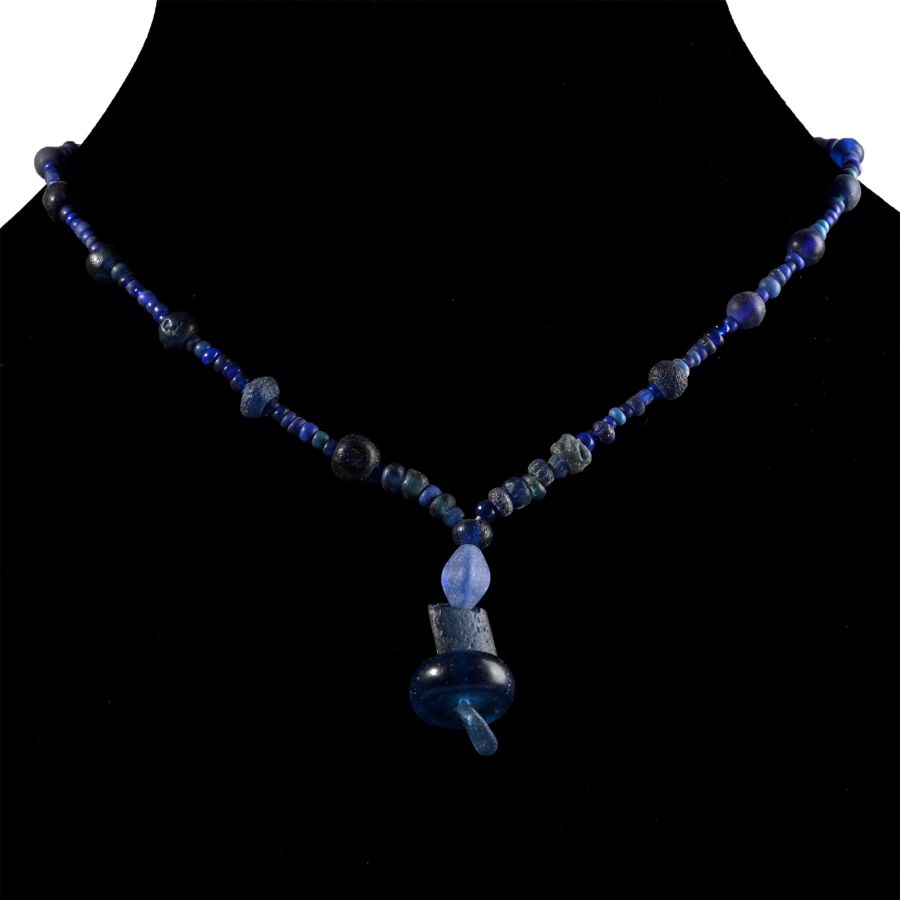
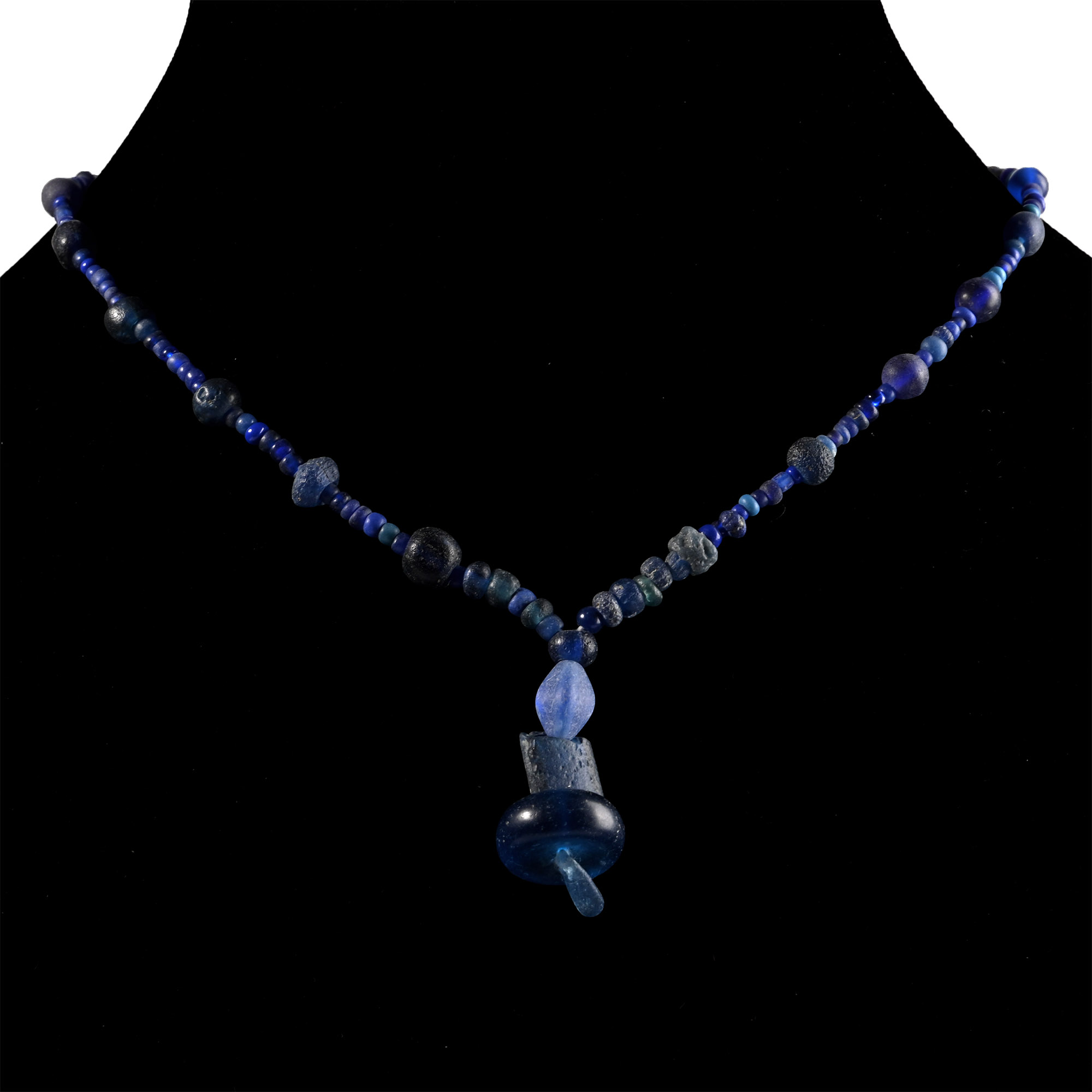
Roman Blue Glass and Other Bead Necklace String
1ST-4TH CENTURY A.D. AND LATER
13 5/8 in. (12 grams, 34.5 cm).
Composed of small oblate and larger spherical beads, the central feature composed of larger beads, restrung. [No Reserve]
ProvenanceAcquired in the 1990s.
Ex London, UK, collection.
TimeLine Auctions follows a vetting process to ensure the authenticity and legality of all items, reinforcing our commitment to integrity and responsible trading. Each antiquity, antique, and coin lot undergoes thorough examination by a vetting committee of at least ten external specialists, professional trade association members, scientists, and archaeologists: Our Vetting Process
AUCTIONS:
TimeLine is a leading auction house specialising in antiquities, ancient art, collectables, natural history, coins, medals, and books. Our auctions offer museums, collectors, historians, and enthusiasts the opportunity to acquire unique and historically significant pieces.
-
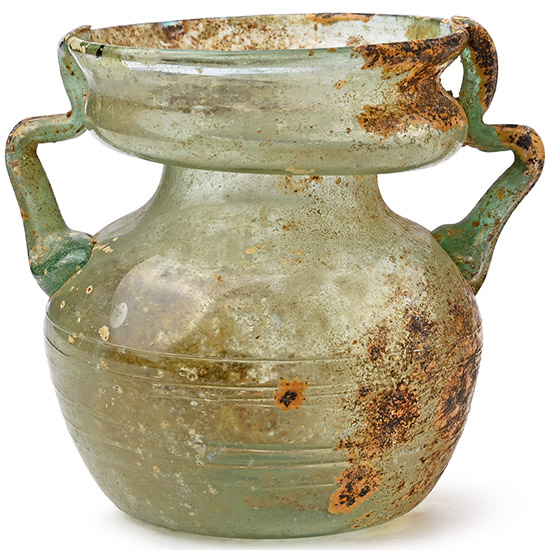
Roman Green Glass Handled Jar
2nd-3rd century A.D.Estimate: £400 - 600 (+bp*)
Opening Bid: £200
With a dimpled base, bulbous body with a carinated flange to the neck and a broad mouth, applied lateral handles. 74.4 grams, 95 mm wide
From an important London, UK, collection 1980-2020. -
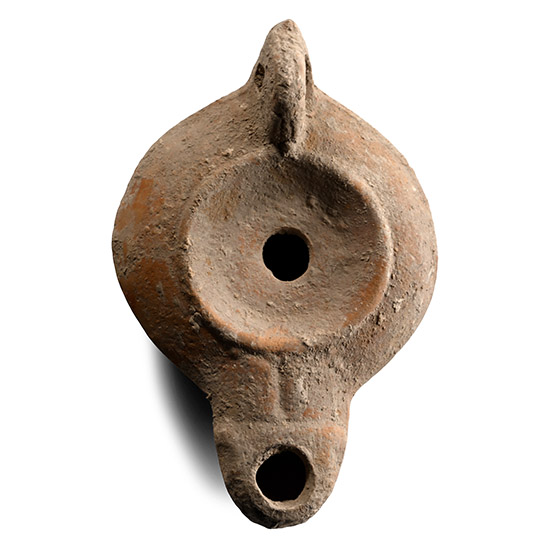
Roman Terracotta Oil Lamp
2nd century A.D.Sold for (Inc. bp): £72
Squat in profile with broad shoulder and recessed discus with central filler hole; elongated nozzle, carinated sidewall. lug handle with tapering hole. 49 grams, 96 mm
From the private collection of a Canadian gentleman living in Essex, UK, formed since the 1920s-circa 1990. Property of an Essex lady until the late 1990s; thence by descent. From the private collection of an Essex gentleman since the late 1990s. -
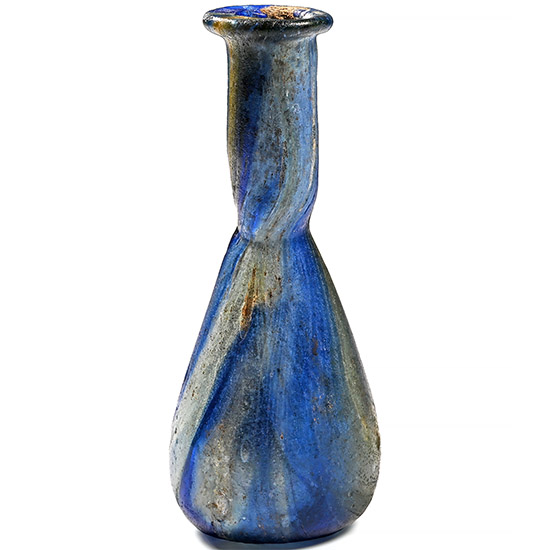
Roman Marbled Blue Glass Toilet Bottle
1st-2nd century A.D.Sold for (Inc. bp): £1,820
An iridescent unguentarium with piriform body, tubular neck with everted rolled rim. 19.7 grams, 83 mm
Acquired on the European art market in 2001.
This typology was produced mainly in Egypt (Karanis class XIII.B). They were characteristic of the Eastern Mediterranean as well, and characterised by the irregular curved depression on the underside of the base and by the narrow cylindrical neck with slight constriction at the bottom.
